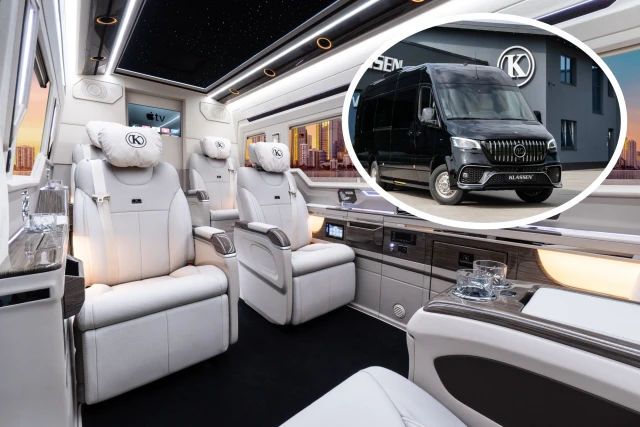
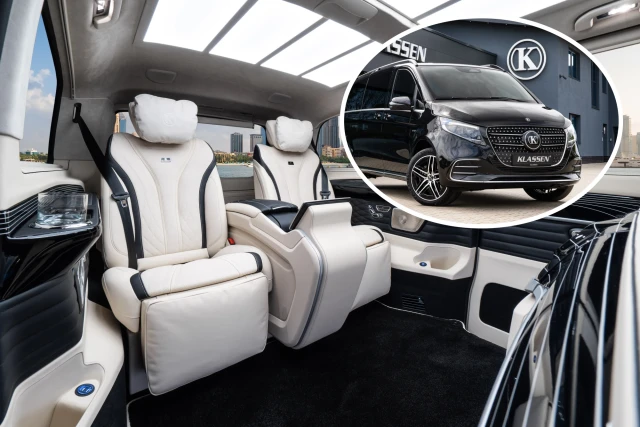
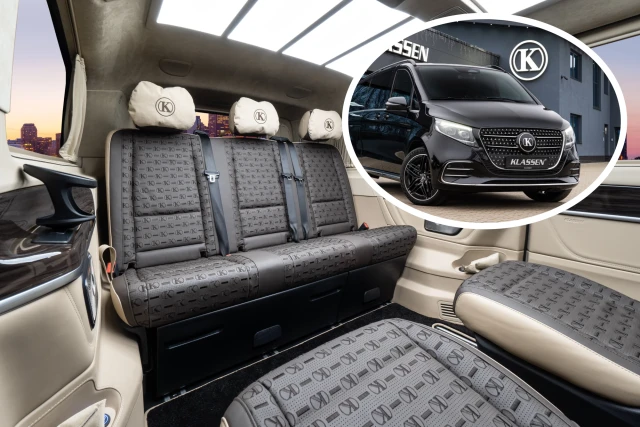
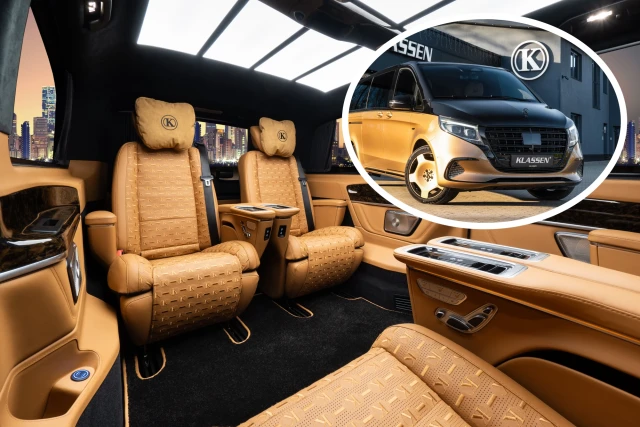
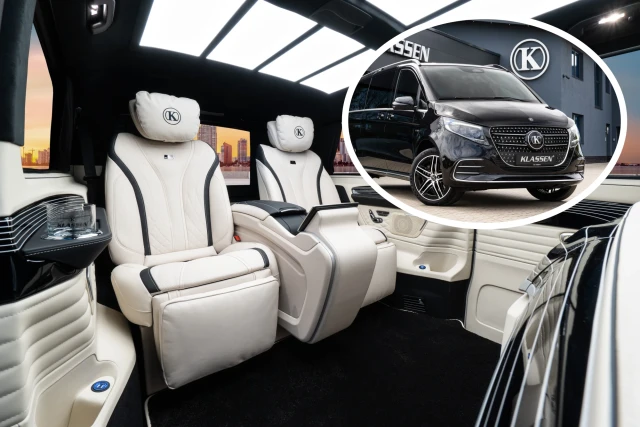
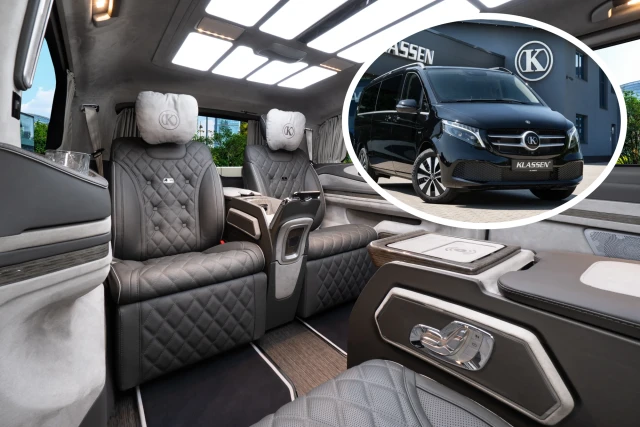
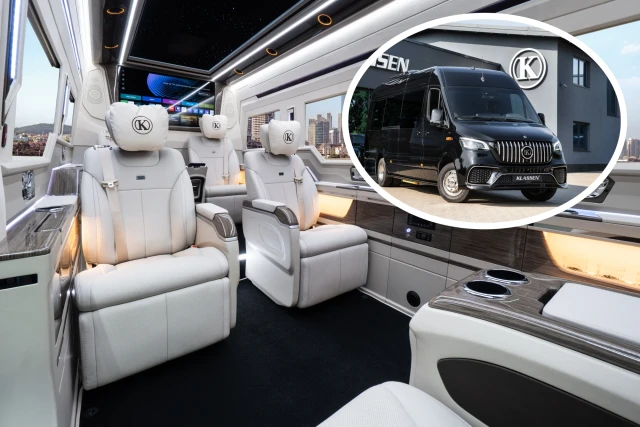
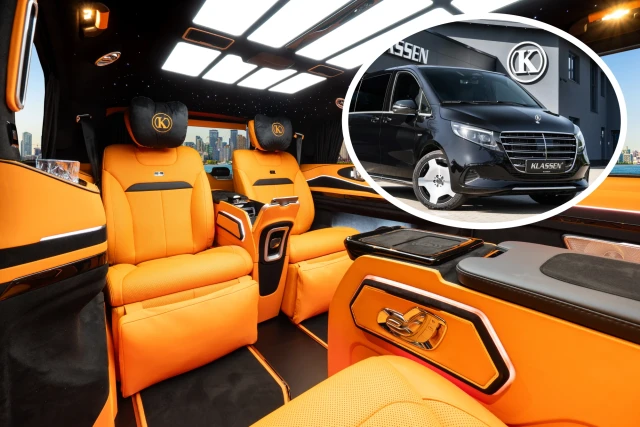
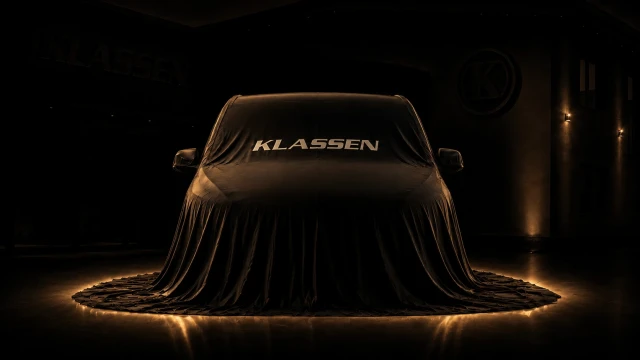
Anyone who wants to have a VIP vehicle converted, buy a Mercedes-Benz Sprinter VIP conversion or register a Mercedes-Benz V-Class as a luxury vehicle in Europe should not only pay attention to design, comfort and price. The decisive factors for long-term, safe and legal use are above all certification, homologation, TÜV conformity, safety documentation and correct vehicle documentation.
A high-quality VIP conversion is far more than an exclusive interior with leather seats, multimedia systems, partition wall, lighting and comfort equipment. Every technical modification to the vehicle can have an impact on safety, weight, axle loads, registration and operating permit.
Therefore, the most important question is not only:
How luxurious does the vehicle look?
But:
Is the VIP vehicle fully certified, TÜV-compliant and legally registrable in Europe?
Why the certification of a VIP vehicle
is so important
A VIP vehicle conversion changes a standard vehicle technically and structurally. Especially in vehicles such as the
Mercedes-Benz V-Class or the Mercedes-Benz Sprinter, additional components are installed during the conversion:
- VIP seats
- electric seat systems
- multimedia and sound systems
- partition walls
- interior trim panels
- lighting systems
- comfort modules
- additional electronics
- safety and restraint systems
These modifications must be technically inspected and correctly documented. Without complete VIP vehicle certification, significant problems may arise.
Possible consequences of missing or incomplete certification:
- problems with TÜV approval
- difficulties with registration in Germany
- problems with EU-wide vehicle registration
- objections during inspections by authorities
- problems with BAG inspections on motorways
- difficulties with resale
- problems with export to other European countries
- loss of vehicle value
- in the worst case, immobilization or loss of the operating permit
A VIP vehicle must therefore not only be visually high-quality. It must also fully comply with European requirements from a technical, legal and safety-relevant perspective.
Which ECE certifications does a VIP vehicle need?
For the legal use of a converted VIP vehicle in Europe, various ECE regulations are particularly important. These standards concern safety-relevant areas of the vehicle and must be demonstrably fulfilled after the conversion.
The most important regulations include:
ECE R10 – Electromagnetic compatibility
The ECE R10 certification concerns the electromagnetic compatibility of the vehicle. Especially in VIP conversions with additional electronics, multimedia, screens, control units, sound systems or lighting, this proof is particularly important.
ECE R13 – Brake systems
The ECE R13 certification concerns the brake system. Due to the additional weight in a VIP conversion, the driving behavior may change. Therefore, it must be ensured that the brake system continues to meet the legal requirements.
ECE R14 – Seat belt anchorages
The ECE R14 certification concerns the anchorage points of the seat belts. If new seats are installed or seating positions are changed, the belt anchorage points must be correctly tested and approved.
ECE R16 – Seat belts and restraint systems
The ECE R16 certification concerns seat belts and restraint systems. This regulation is crucial for the safety of passengers in the vehicle.
ECE R17 – Seats and seat anchorages
The ECE R17 certification concerns seats, backrests and seat anchorages. Especially with VIP seats, comfort seats or electrically adjustable seats, this proof is indispensable.
Only when these certifications are fully available is a VIP vehicle truly professionally built and legally safe to use.
VIP vehicle registration in Germany:
§21 StVZO and §13 FZV
For individually converted VIP vehicles, correct registration plays a central role.
§21 StVZO – Individual approval for VIP vehicles
The §21 StVZO individual approval is particularly important when a vehicle has been individually converted and there is no general series approval for the specific conversion.
In this process, the vehicle is technically inspected by a recognized testing body. Among other things, the following are assessed:
- all safety-relevant conversions
- seat systems
- seat belts
- belt anchorages
- brake system
- electrical system
- vehicle weight
- axle loads
- documentation of components
- technical conformity
After successful inspection, an expert report can be issued, which serves as the basis for registration.
§13 FZV – Entry and updating of vehicle data
After a conversion, relevant changes must be correctly entered in the vehicle documents. Here, the Vehicle Registration Ordinance (FZV) is relevant.
Important points are:
- changes must be documented
- vehicle data must be updated
- permissible gross vehicle weight must be correct
- seating capacity must be correctly entered
- axle loads must be correctly recorded
- technical changes must be traceable
Only when these steps are carried out correctly does the vehicle remain legally safe in the long term.
Weight and axle loads in VIP conversion:
A decisive safety factor
An often underestimated issue in VIP vehicle conversion is the additional weight. The installation of exclusive equipment significantly increases the vehicle weight.
Additional weight is caused, for example, by:
- VIP individual seats
- electric seat consoles
- leather upholstery
- wood or carbon trim panels
- multimedia technology
- sound systems
- refrigerator
- partition wall
- additional batteries
- comfort lighting
- floor structure
- sound insulation material
Therefore, before and after the conversion, the following must be carefully checked:
- Is the permissible gross vehicle weight being observed?
- Does the front axle load remain within the permissible values?
- Does the rear axle load remain within the permissible values?
- Is the weight distribution correct?
- Are all values correctly entered in the vehicle registration certificate?
Overloading can have serious consequences:
- problems with TÜV approval
- fines during inspections
- restrictions on operation
- increased accident risk
- deterioration of braking behavior
- overloading of tires, chassis and brake system
- possible immobilization
A professional VIP vehicle manufacturer therefore takes weight, axle loads and technical reserves into account already during planning.
Why the manufacturer is decisive
Many buyers first look at images, interior design and price when purchasing a VIP vehicle. These points are important, but they are not enough.
What matters is whether the manufacturer:
- has verifiable certifications
- can document technical inspections
- builds vehicles that can be legally registered
- can provide ECE documentation
- offers after-sales service
- can carry out repairs and maintenance reliably
- offers long-term spare parts and service support
- has experience with European registration procedures
A reputable manufacturer delivers not only a luxurious vehicle, but also safety, documentation and long-term support.
KLASSEN – certified manufacturer of VIP vehicles in Europe
KLASSEN stands for high-quality VIP vehicles, professional vehicle conversions and certified solutions for the European market.
As a specialized manufacturer for VIP vehicle conversion, luxury van conversion, Sprinter VIP conversion and V-Class VIP conversion, KLASSEN places particular emphasis on safety, quality, certification and long-term usability.
KLASSEN is, according to the information provided by the company:
- ISO-certified
- registered as a manufacturer with the KBA (Federal Motor Transport Authority)
- registered as the KLASSEN brand
- internationally protected as a brand name
- specialized in VIP vehicle certification and homologation
- experienced in the registration of VIP vehicles in Europe
KLASSEN vehicles are developed with a special focus on technical conformity, safety and documentation.
KLASSEN vehicles and complete certification
All VIP vehicles from KLASSEN are built in such a way that they comply with the relevant European requirements.
These include, in particular, certifications and documentation in accordance with:
- ECE R10
- ECE R13
- ECE R14
- ECE R16
- ECE R17
In addition, relevant processes concerning:
- §21 StVZO individual approval
- §13 FZV entry
- technical documentation
- weight control
- axle load inspection
- registrability
are taken into account.
The goal is that every KLASSEN VIP vehicle not only looks high-quality, but is also legally safe, documented and usable in the long term.
After-sales service: Important for long-term safety
A VIP vehicle is a complex product. That is why quality does not end with delivery.
Professional after-sales service is crucial when:
- a technical problem occurs
- electronics need to be serviced
- seats or comfort systems need to be checked
- spare parts are needed
- repairs must be carried out quickly
- a reinspection or documentation is required
KLASSEN places importance on long-term technical support so that customers can not only buy their vehicle, but also use it safely on a permanent basis.
Buying a VIP vehicle: Checklist before making a decision
Before you buy a VIP vehicle or have one converted, you should check the following points:
- Are complete ECE certificates available?
- Are ECE R10, R13, R14, R16 and R17 documented?
- Is a §21 StVZO approval possible or already available?
- Are all changes entered in the vehicle documents?
- Are the permissible gross vehicle weight and axle loads correct?
- Is the manufacturer officially registered?
- Are there ISO-certified processes?
- Is reliable after-sales service available?
- Can the vehicle also be registered in other EU countries?
- Are all technical documents transparently available?
Anyone who checks these points before purchasing avoids later problems with TÜV, registration office, authorities or resale.
Conclusion: Use a VIP vehicle safely, legally and with stable value
A VIP vehicle is a high-quality investment. In order for this investment to remain protected in the long term, comfort, design, safety and certification must fit together.
Decisive factors are:
- complete ECE certification
- correct TÜV and §21 StVZO approval
- clean entry according to FZV
- control of weight and axle loads
- transparent technical documentation
- reliable after-sales service
- an experienced manufacturer such as KLASSEN
With a fully certified VIP vehicle from KLASSEN, customers receive not only luxury and comfort, but also safety, legal conformity and long-term value stability.
FAQ – Frequently asked questions about VIP vehicle registration
How can a VIP vehicle be registered in Europe?
A VIP vehicle must be technically inspected, documented and registered in accordance with legal requirements. In Germany, this is often done through a §21 StVZO individual approval and the entry of relevant changes according to the FZV.
Which certificates does a VIP vehicle need?
Important certificates include, among others, ECE R10, ECE R13, ECE R14, ECE R16 and ECE R17. These concern electronics, brakes, seat belts, belt anchorages and seats.
Why is ECE R17 important for VIP seats?
ECE R17 concerns seats and seat anchorages. In VIP conversions with new or modified seats, this proof is crucial for safety and registrability.
What happens if a VIP vehicle does not have complete certification?
Problems may arise with TÜV, registration, authority inspections, export, resale or even immobilization.
Why are weight and axle loads important in VIP conversion?
The conversion increases the vehicle weight. If the gross vehicle weight or axle loads are exceeded, the vehicle may become unsafe and registration may be jeopardized.
Is KLASSEN a certified manufacturer of VIP vehicles?
KLASSEN is ISO-certified, registered with the KBA as a manufacturer and specialized in certified VIP vehicles for the European market.
Are KLASSEN VIP vehicles TÜV- and EU-compliant?
KLASSEN vehicles are developed with the aim of fully meeting the relevant ECE, TÜV and registration requirements for Europe.
VIP Vehicle Registration and Certification in Europe – KLASSEN V-Class & Sprinter Conversion
VIP vehicle registration Europe, have a VIP vehicle converted, Mercedes V-Class VIP conversion, Sprinter VIP conversion, VIP vehicle TÜV, §21 StVZO VIP vehicle, ECE R10 R13 R14 R16 R17 certification, VIP vehicle homologation, luxury van registration, KBA manufacturer VIP vehicles, KLASSEN VIP vehicles, certified vehicle conversion Europe.