First Admiration, Then a Public Attack: The Full Story of the Conflict Between Viktor Dietrich, VD AluSysteme, and KLASSEN
1676
|
10 Jul 2026
|
KLASSEN
Today, Viktor Dietrich and VD AluSysteme Dietrich GmbH publicly criticize KLASSEN, the KLASSEN MVV_6_1695 vehicle, and the after-sales service. However, the documented chronology begins with the deliberate choice of a used vehicle, special terms of the transaction, positive publications, and friendly communication—and only later turns into accusations.
Public Accusations—and the Central Contradiction
The conflict between Viktor Dietrich, VD AluSysteme Dietrich GmbH, and KLASSEN did not become public during the purchase or immediately after the vehicle was handed over. The negative publications appeared later: critical videos began to be posted on social media, while Viktor Dietrich’s previously positive Google review was completely edited, reduced to one star, and turned into an accusation of insufficient quality and unsatisfactory service.
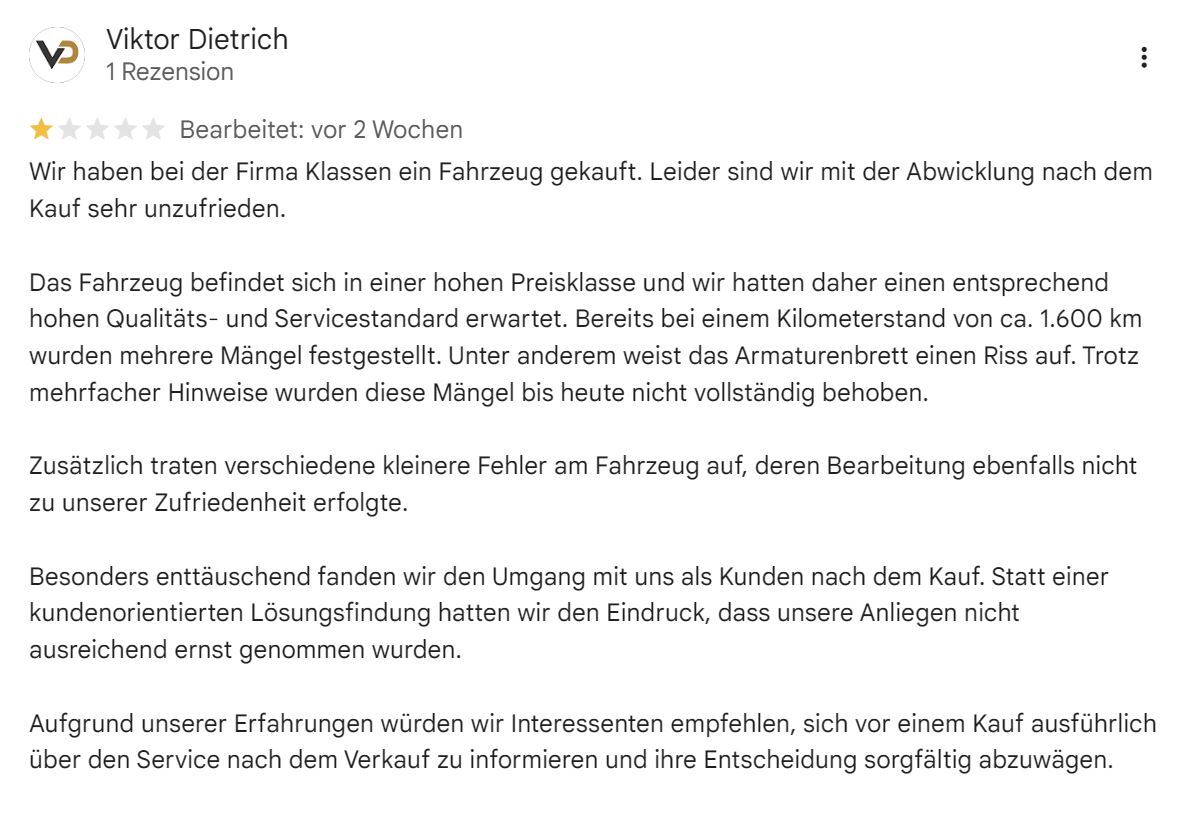
In the current version of the story, VD AluSysteme purchased an expensive vehicle and, at a mileage of approximately 1,600 kilometers, allegedly encountered a crack in the dashboard and a number of other defects that, according to Viktor Dietrich, were not fully rectified. This presentation creates the impression that the vehicle was new, that the problems arose almost immediately after the handover, and that the relationship with KLASSEN had been confrontational from the very beginning.
The documented circumstances tell a different story. VD AluSysteme purchased a specific KLASSEN MVV_6_1695 that had already been in use. Its history, mileage, and actual condition were known before the transaction. Viktor Dietrich saw the completed vehicle, agreed to purchase this particular example, and received special terms that took its previous use into account. After the purchase, he publicly praised the vehicle and KLASSEN, spoke positively about Paul Klassen, and left a positive review.
Any customer has the right to change their opinion if genuine technical issues arise later. However, such a change does not erase the original facts and does not allow a later assessment to be presented as a position that existed from day one. That is why we are publishing not an emotional exchange of accusations, but a sequence of events: which vehicle was sold, what the buyer knew, how he assessed the transaction after the purchase, and which claims appeared only later.
What Exactly Did VD AluSysteme Purchase?
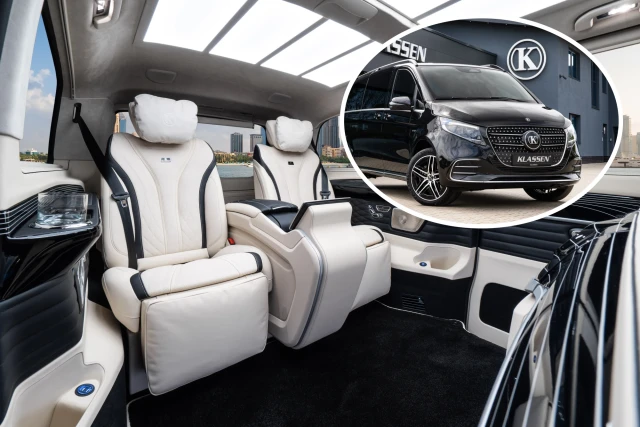
The KLASSEN MVV_6_1695 was not a new vehicle built specifically to Viktor Dietrich’s order. It was a completed KLASSEN project based on the Mercedes-Benz V-Class, created for the company’s own use and used for more than a year in everyday operations and representative duties.
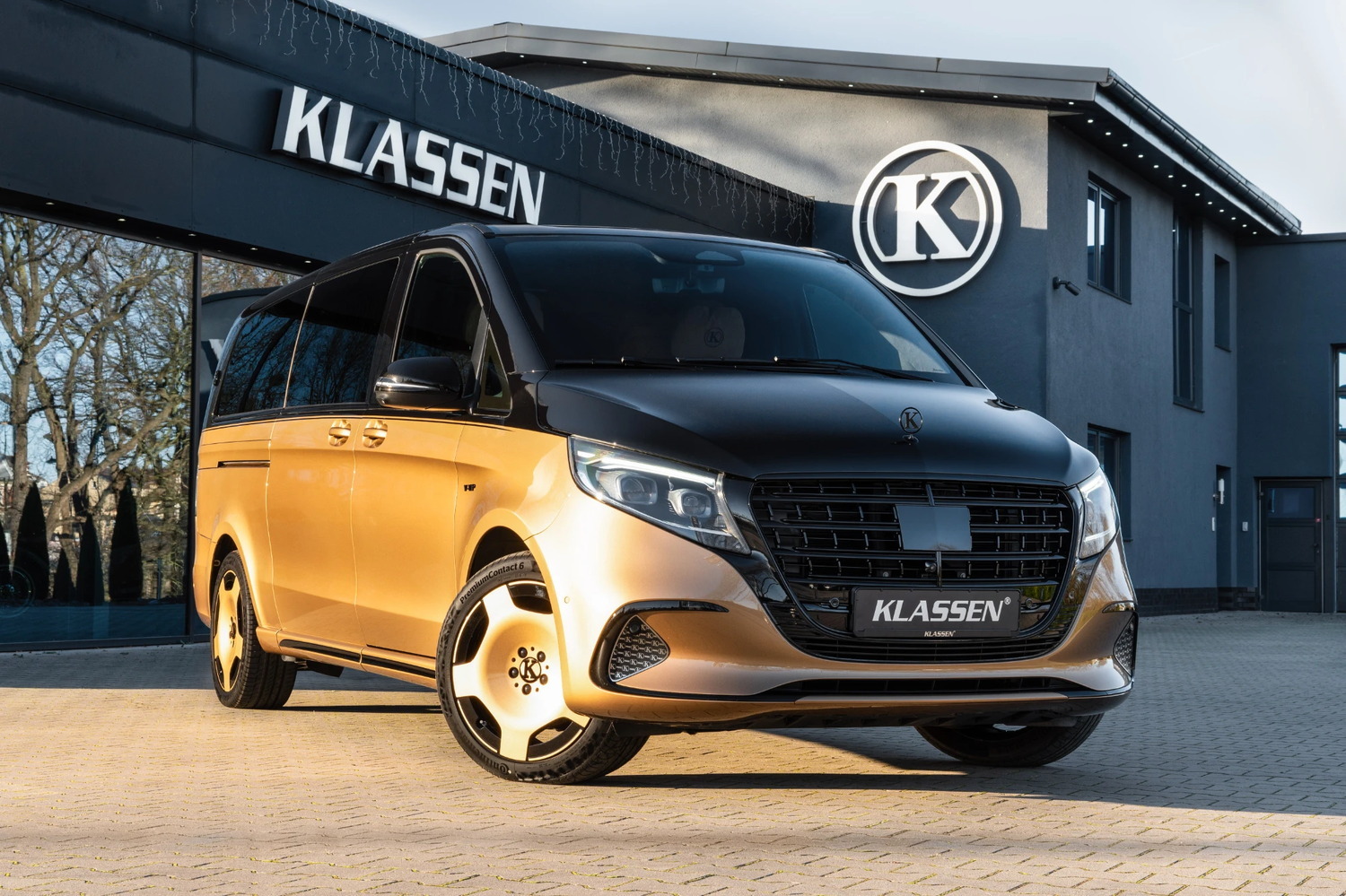
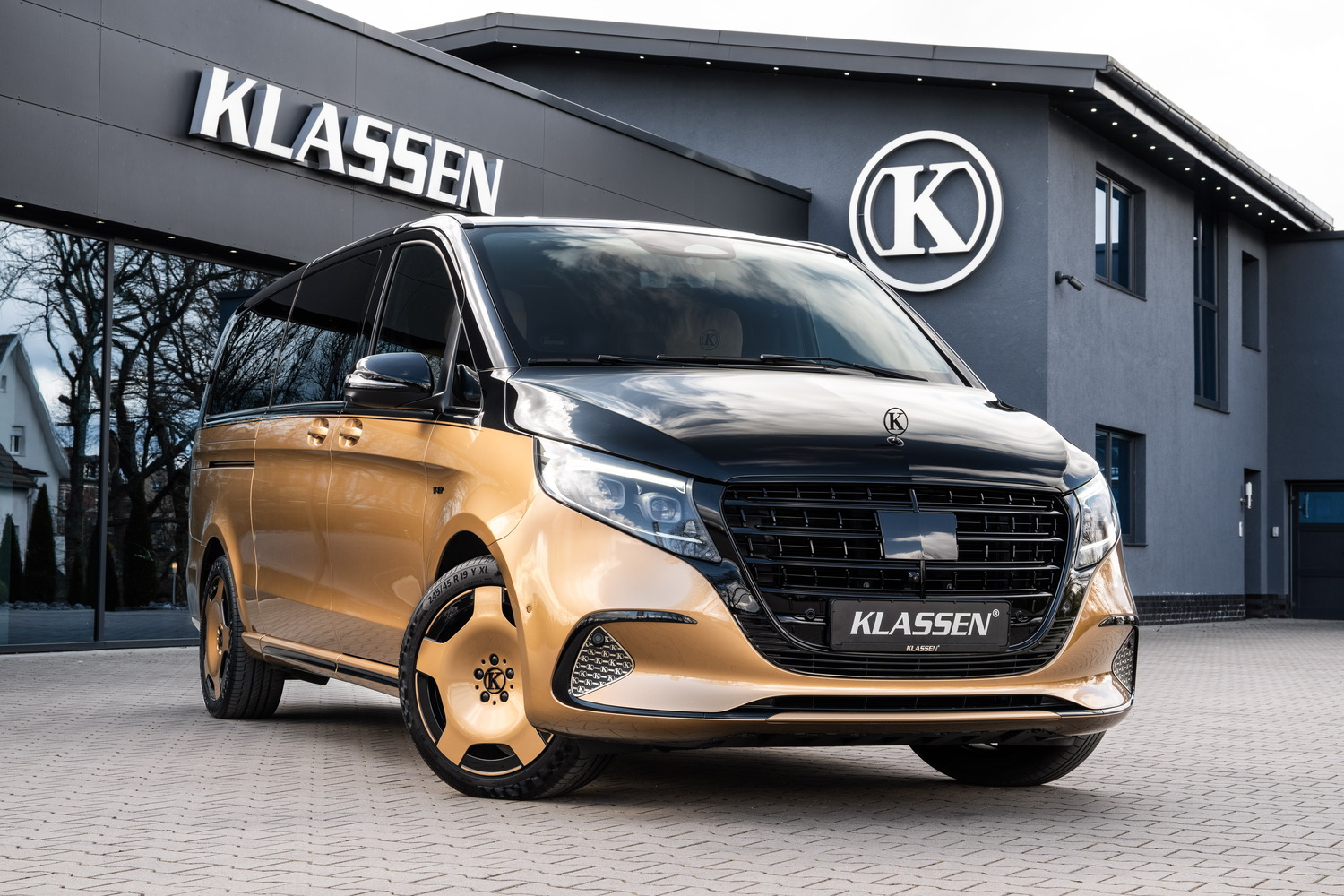
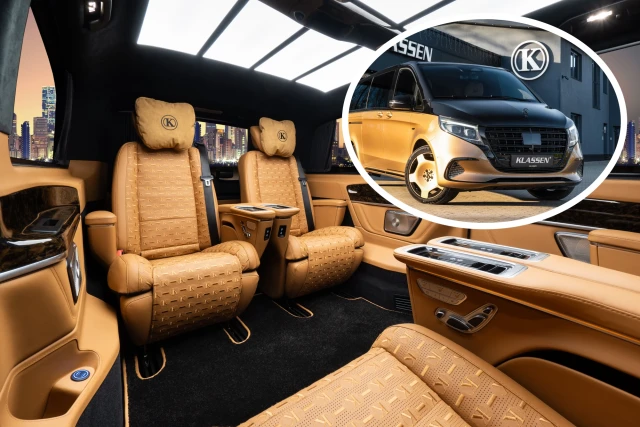
The vehicle was personally used by Paul Klassen. The MVV_6_1695 took part in business trips, client meetings, transfers, photo and video shoots, demonstrations, and international events. It regularly appeared in KLASSEN’s public materials and was easily recognizable by its two-tone body, custom front end, and fully redesigned VIP interior.
In 2025, the vehicle was used by KLASSEN in Monaco. This was not a concealed part of its past, but a public episode in its representative use. The vehicle performed real transportation duties: it carried passengers, was used within a demanding business schedule, and demonstrated the project’s capabilities in an international environment.
When Viktor Dietrich expressed interest in the MVV_6_1695, he was not choosing a future vehicle from a catalog or a bespoke project that still had to be manufactured. An already existing example was in front of him. He could inspect it and assess the body, dashboard, driver’s area, VIP cabin, seats, doors, decorative elements, lighting, climate system, and installed equipment.
This fundamentally distinguishes the transaction from an order for a new vehicle. In bespoke production, the customer evaluates the future result based on specifications, samples, and visualizations. In this case, Viktor Dietrich saw the actual finished result before the purchase and voluntarily chose that exact vehicle.
Why the MVV_6_1695 Was a Special Project
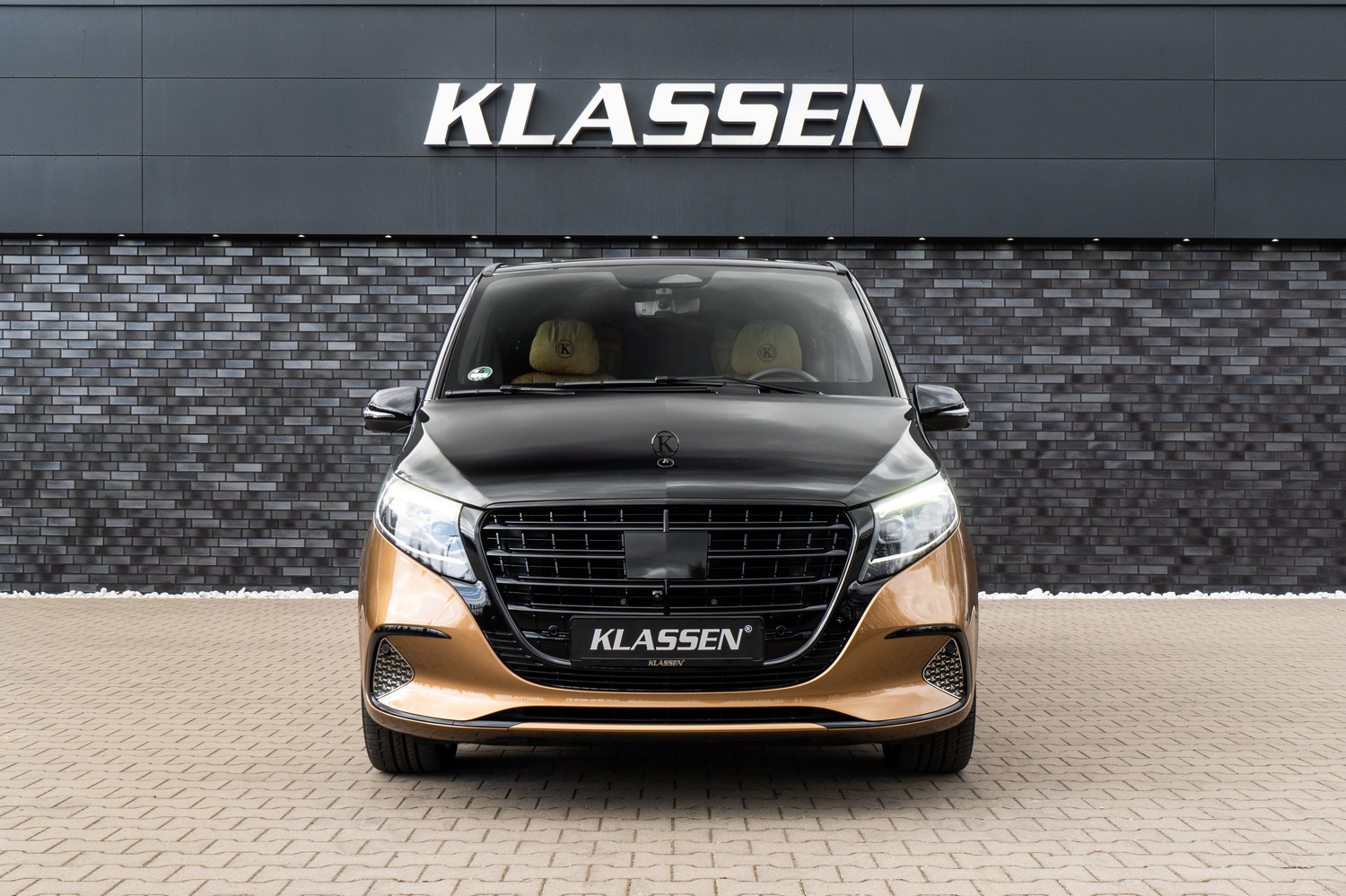
The MVV_6_1695 cannot be reduced to a standard Mercedes-Benz V-Class with a few decorative modifications. KLASSEN completely shaped both the exterior appearance and the passenger compartment of the vehicle. The two-tone body, signature radiator grille, redesigned front bumper, special wheels, and tinted glazing created a distinctive representative vehicle that could not be mistaken for a production model.
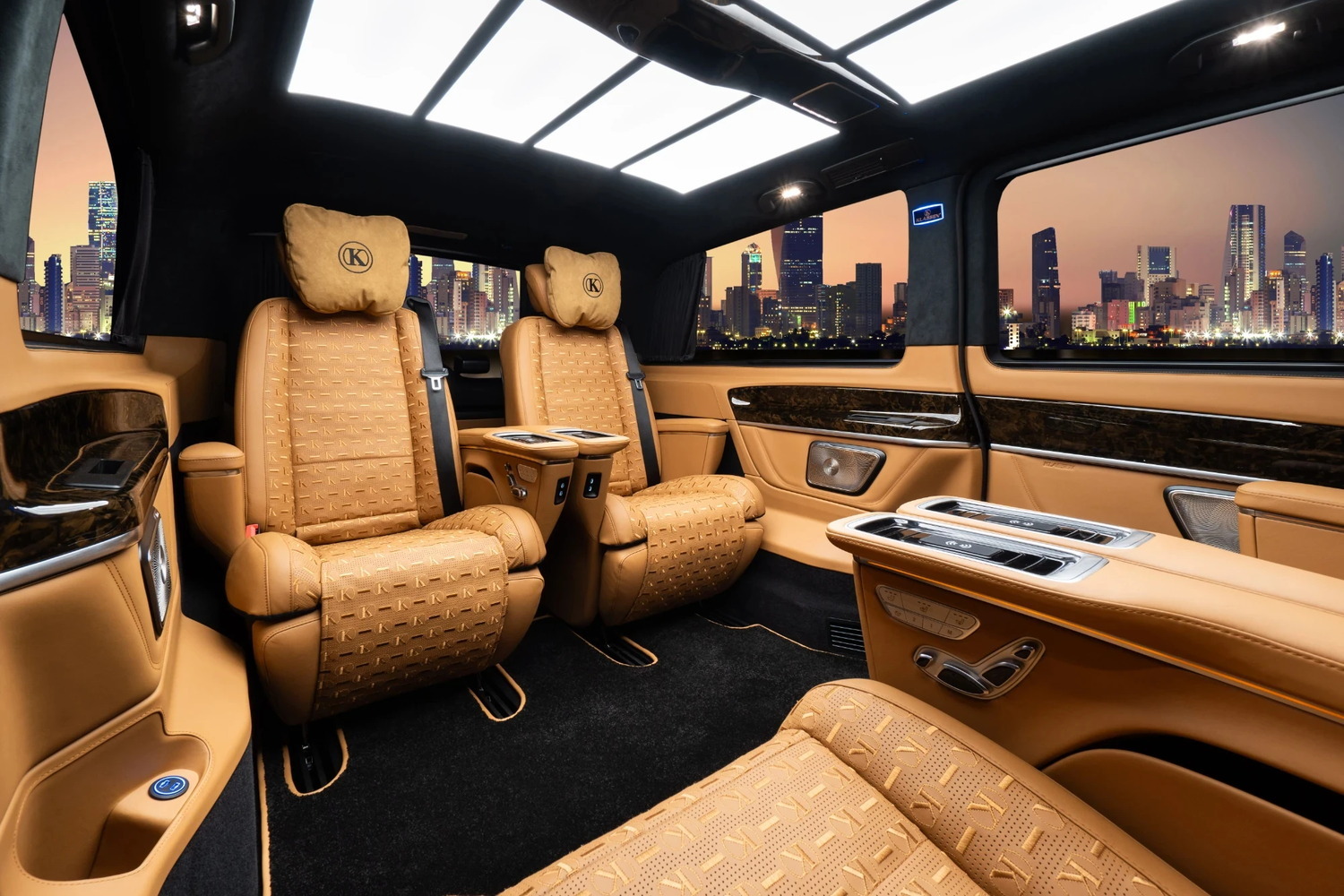
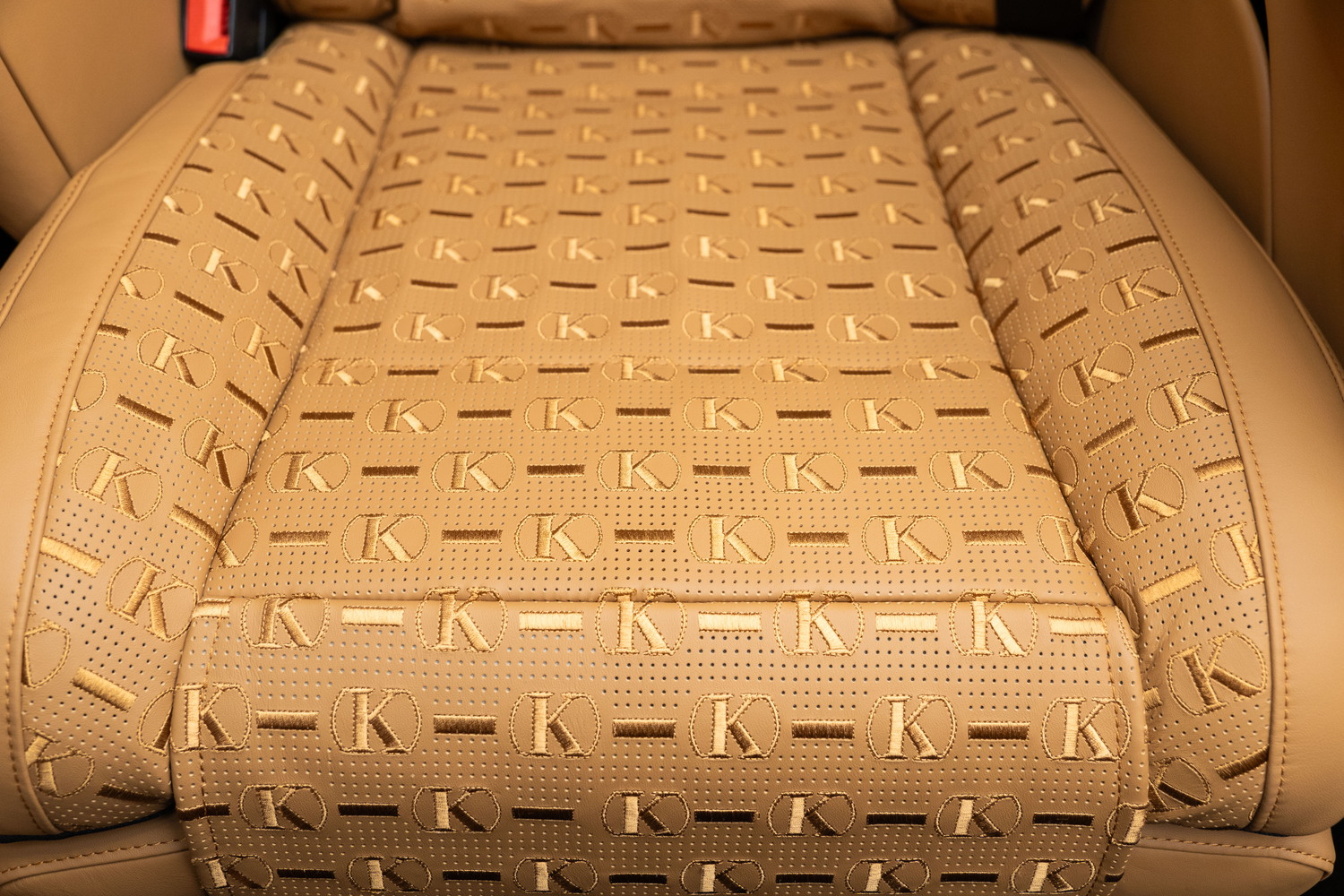
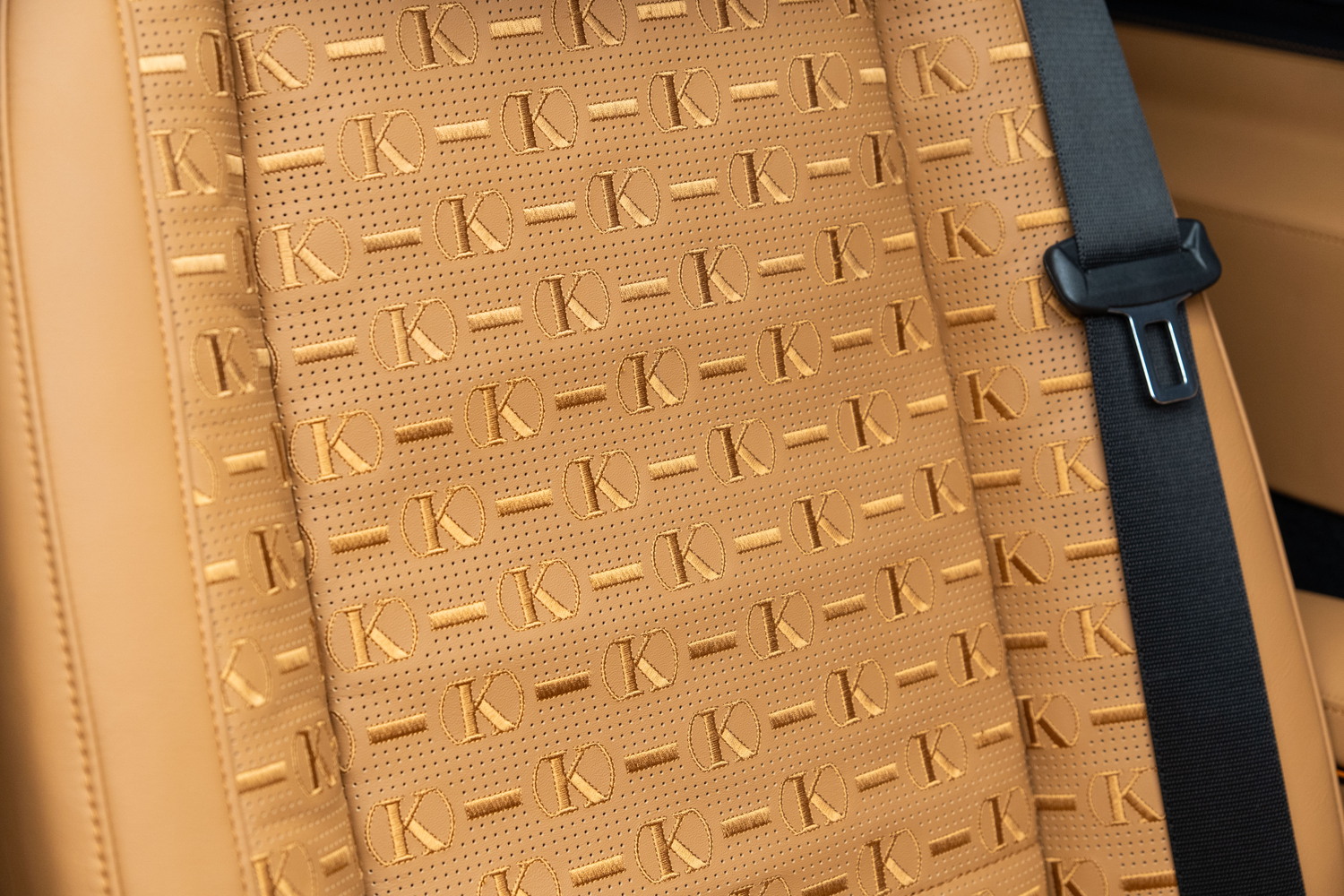
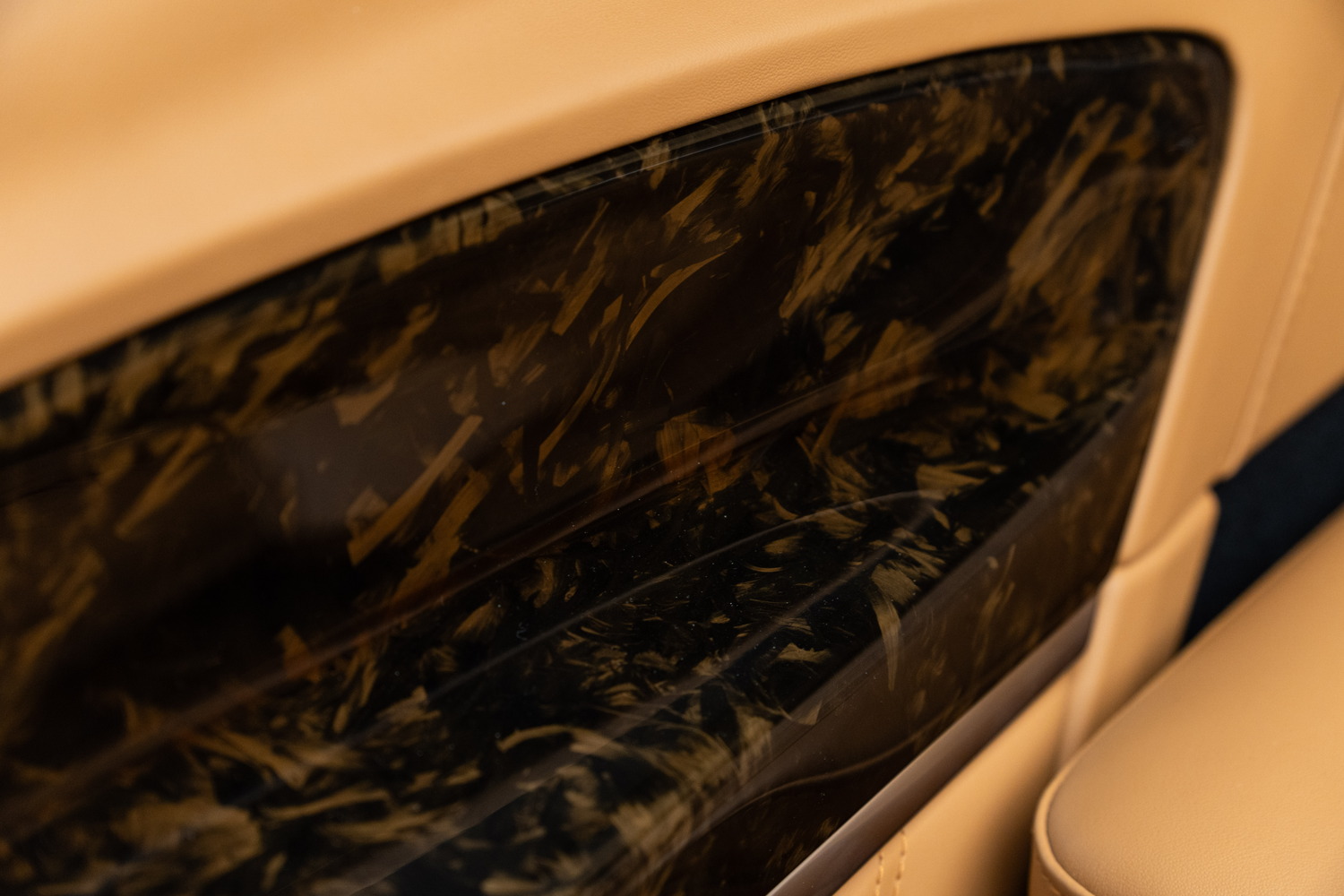
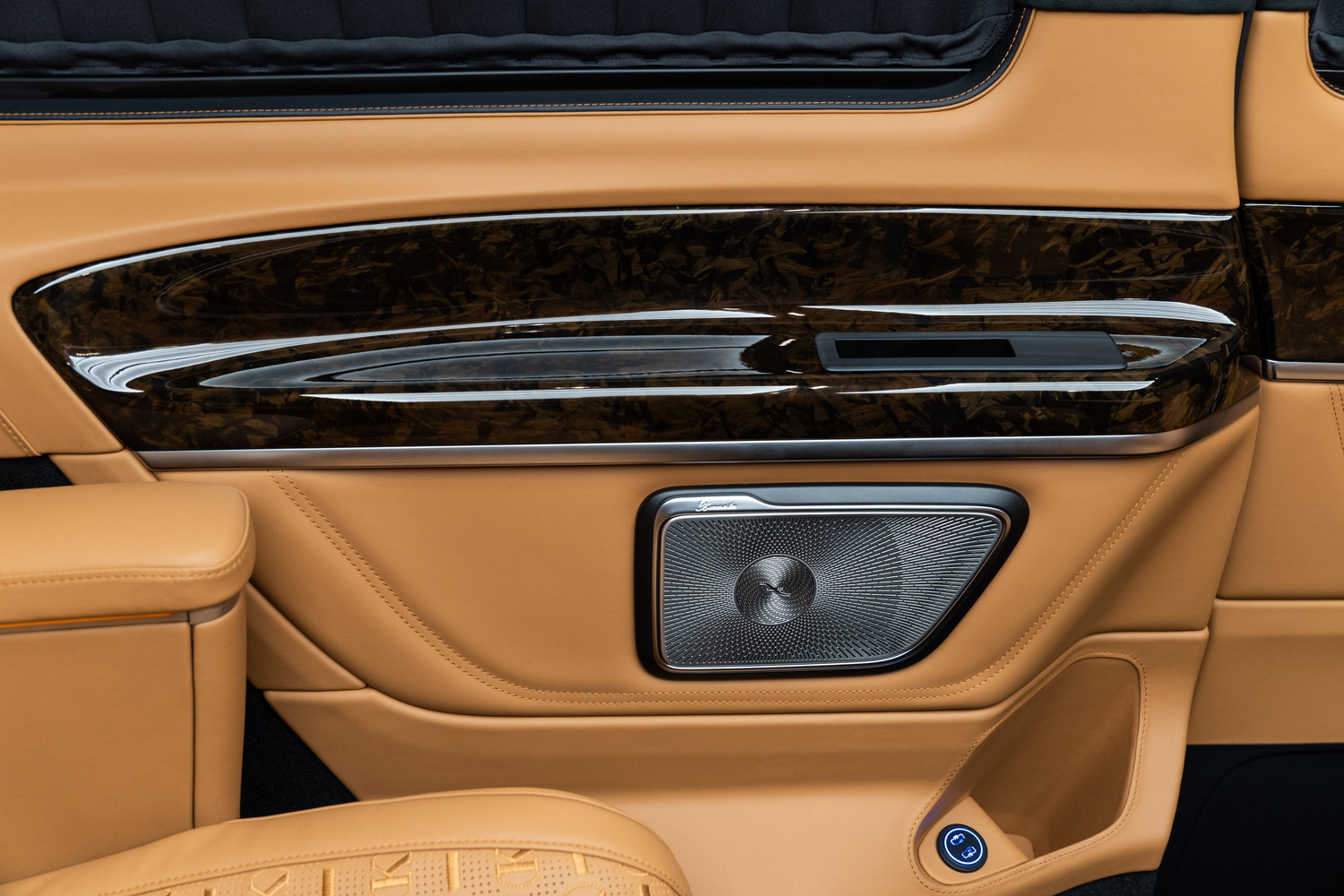
The unique design occupies a special place in the history of the MVV_6_1695. The vehicle received an exclusive gold paint finish developed specifically for this project. The gold theme continued in the interior: the decorative elements of the cabin incorporated particles of genuine gold, while approximately 15 kilometers of gold thread were used for the trim, with upholstery elements stitched by hand.
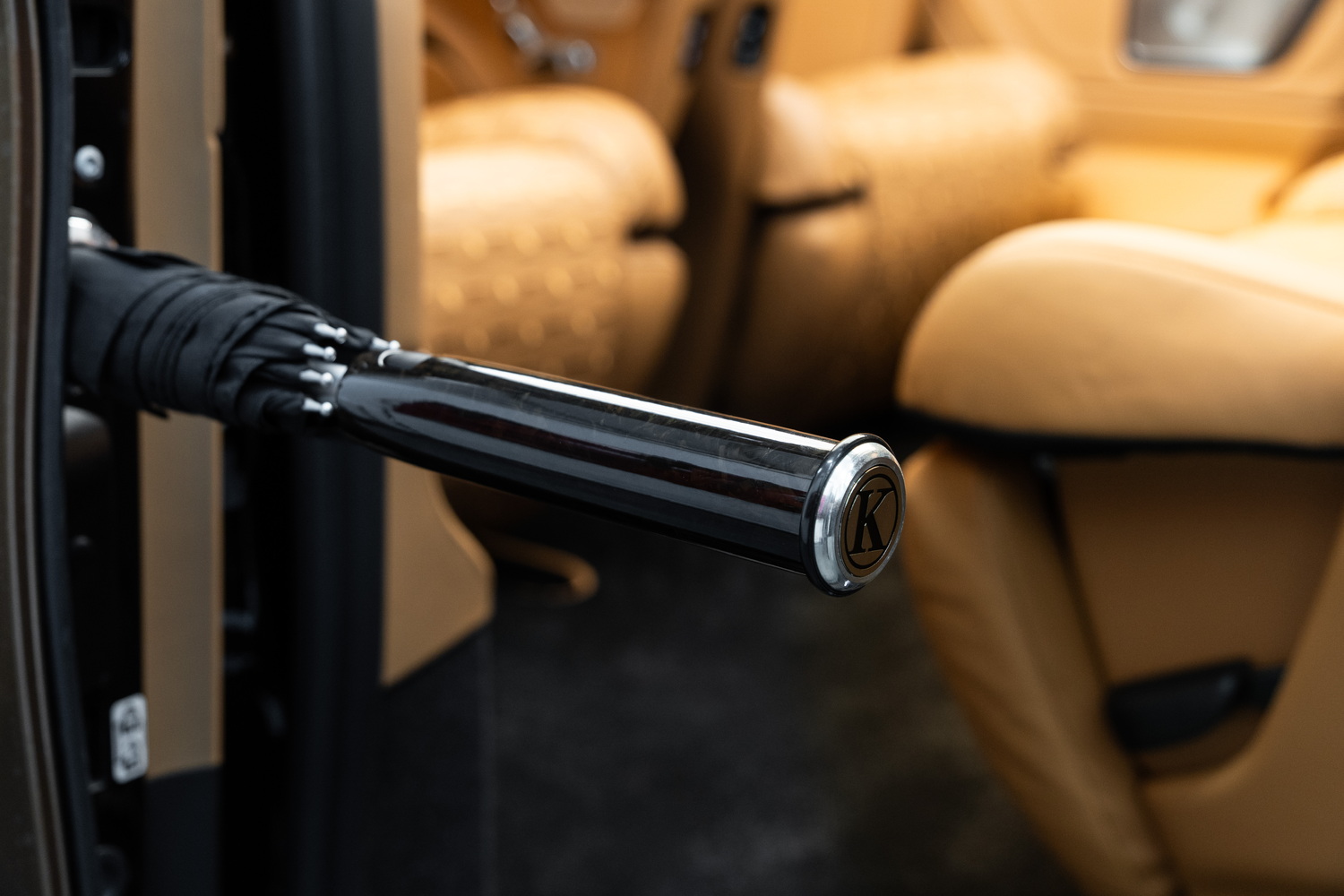
Another unusual detail was a custom umbrella integrated into the vehicle according to the principle of solutions known from Rolls-Royce models. It was created specifically for the MVV_6_1695 and became part of the overall concept, in which attention was paid not only to major elements, but to every functional detail.
The MVV_6_1695 was built as a one-off. It is neither a production model nor a project that was intended to be repeated for other customers. The vehicle was created as a unique calling card for KLASSEN and reflected our own understanding of luxury, individuality, and the highest level of execution.
We did not originally plan to sell this vehicle. For us, it was important not simply to find a buyer, but to pass the MVV_6_1695 on to someone who truly understood its value, respected the history of the project, and would be able to preserve its unique character. That is why this was not a standard sale, but a desire to place the vehicle in good hands.
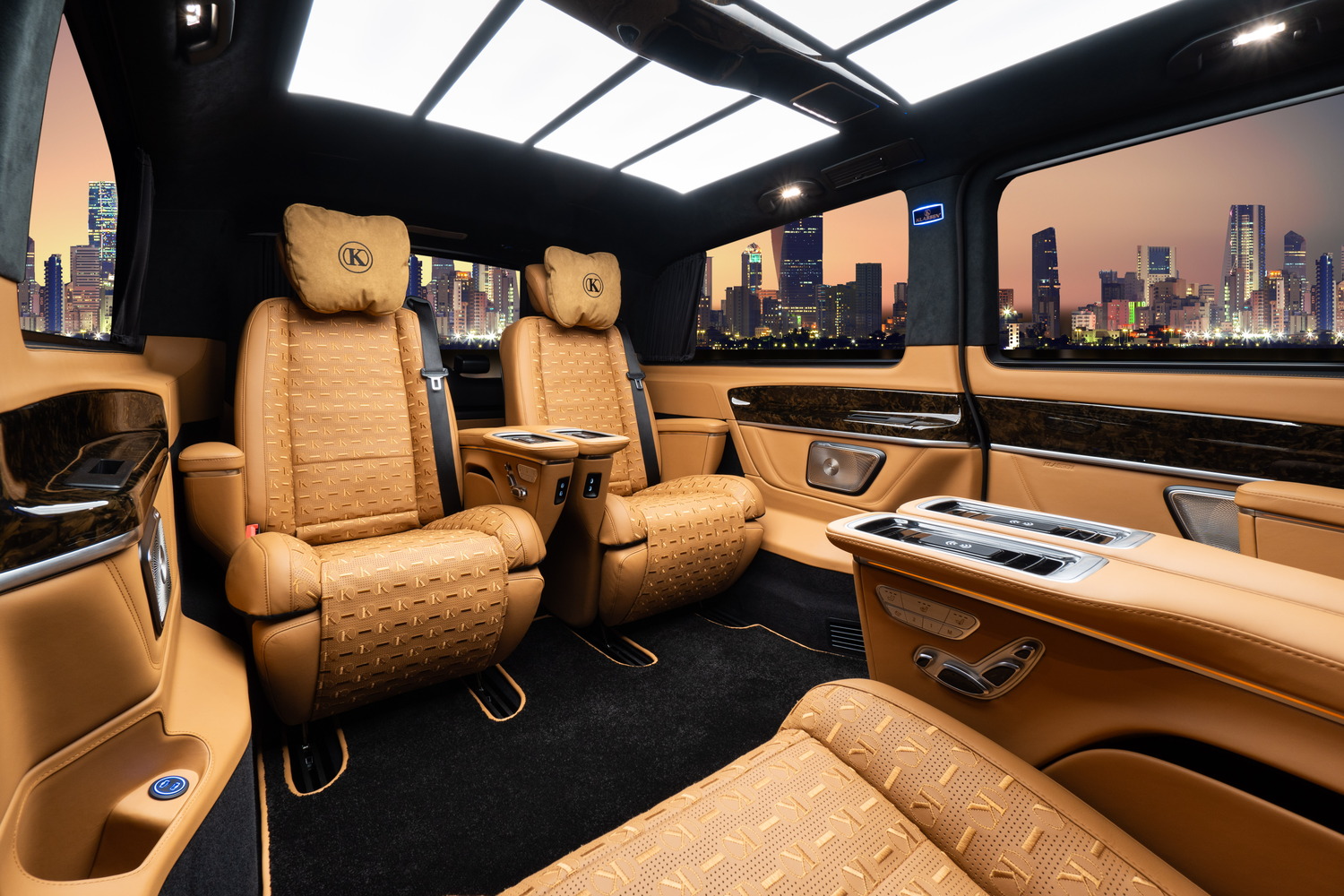
The VIP area was equipped with four individual seats featuring electric adjustment, heating, ventilation, massage, and extendable footrests. Natural leather in a warm caramel-beige shade, decorative stitching, signature KLASSEN embossing, leather armrests, and headrest cushions created a cohesive interior designed not for maximum seating capacity, but for the comfort of every passenger.
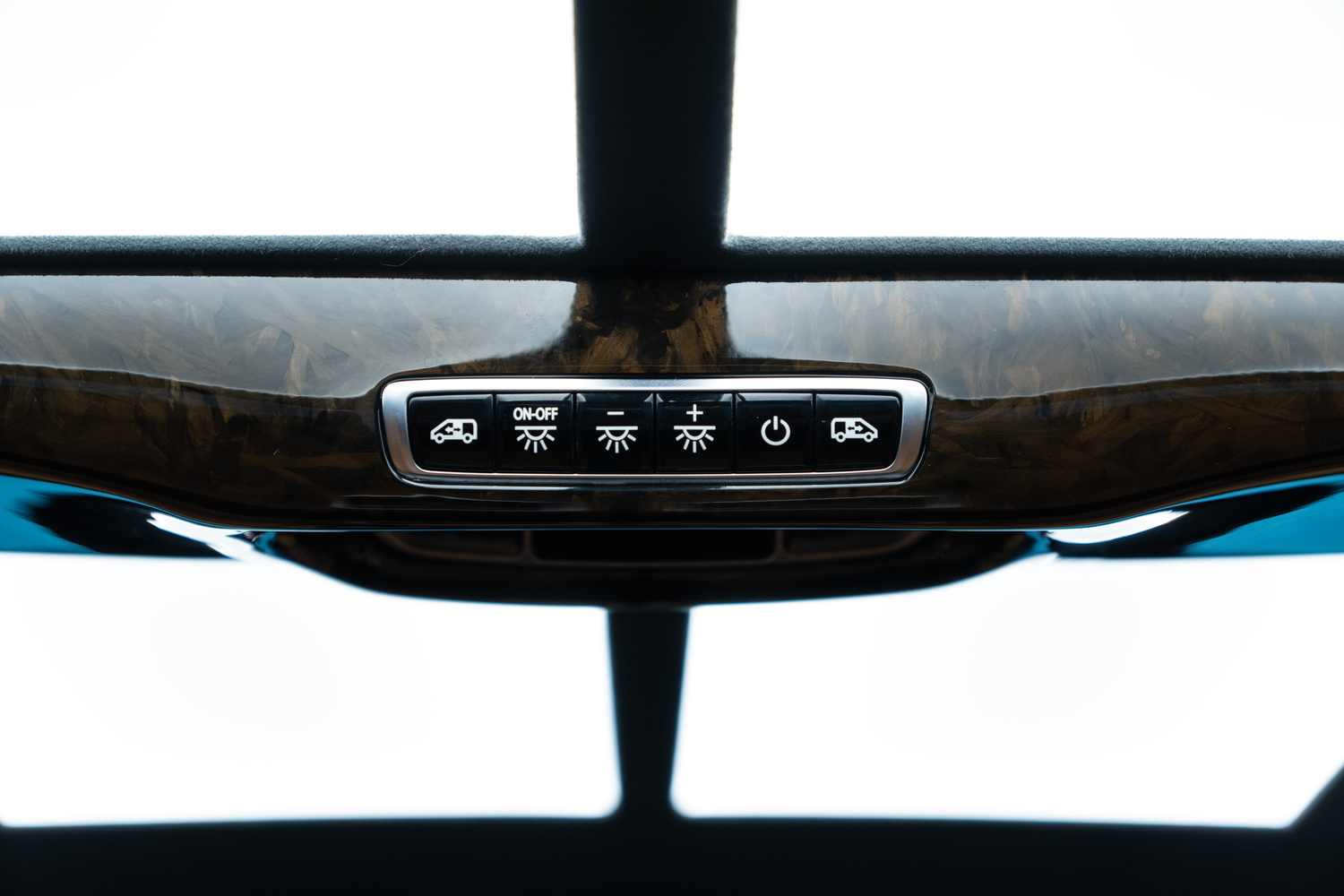
The central consoles combined seat controls, wireless charging, USB ports, and 220 V power outlets. A bespoke ceiling with RGB lighting, illuminated lines, and mirrored elements created different settings for work and relaxation. The side panels and sliding doors were completely redesigned, privacy curtains were installed in the cabin, and the Mercedes-Benz climate-control ducts were adapted to the new interior architecture.
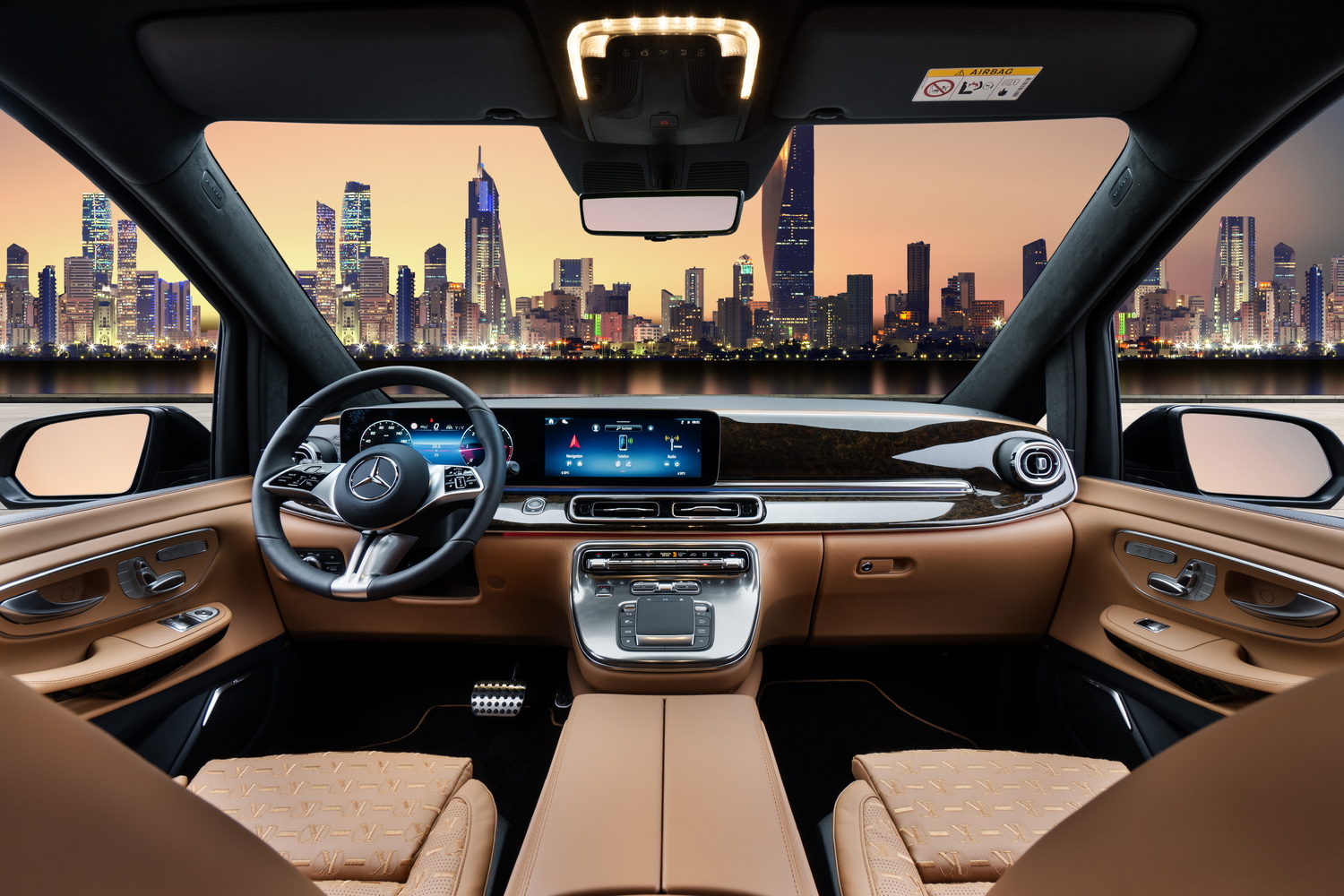
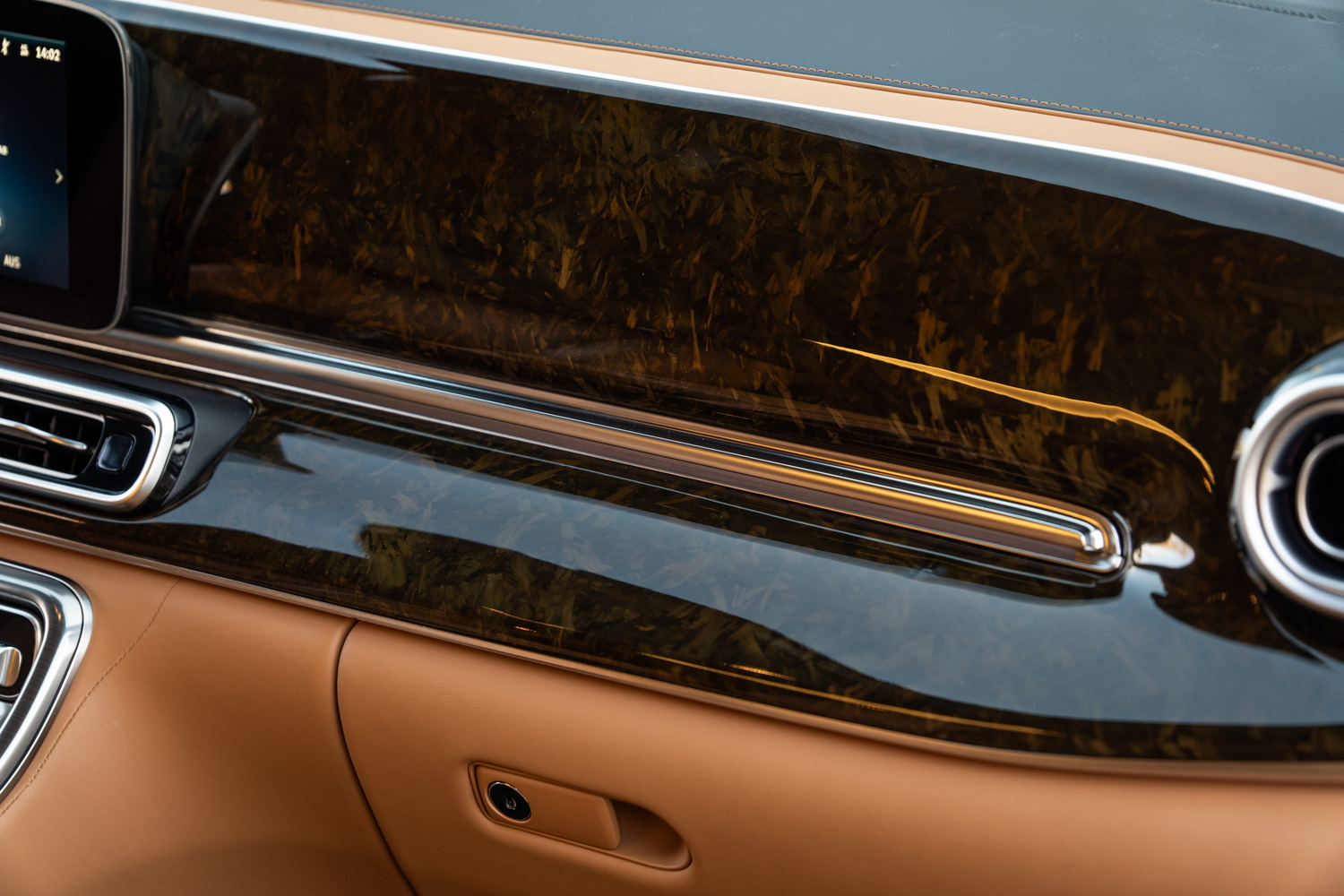
Special attention was paid to sound and thermal insulation, the floor construction, and the driver’s area. The front seats, steering wheel, dashboard, and door elements received bespoke trim so that the cockpit would not look like a separate standard section of the vehicle. It was in this fully completed form that Viktor Dietrich inspected and purchased the MVV_6_1695.
The detailed description of the equipment is important not as a distraction from the conflict, but as confirmation that the subject of the transaction was a specific completed project. Before making his decision, the buyer could check not only the overall appearance, but also the operation of the seats, lighting, climate system, doors, and equipment.
A Vehicle with Known Mileage and a Transparent History
At the time of the transaction, the KLASSEN MVV_6_1695 had approximately 1,600 kilometers on the odometer. This figure did not appear after the vehicle was handed over to VD AluSysteme and was not discovered by the new owner later. Viktor Dietrich purchased the vehicle with roughly this mileage already recorded and knew that it had previously been used by KLASSEN and Paul Klassen.
This is precisely why the wording in the current Google review—“several defects were already discovered at a mileage of approximately 1,600 km”—requires essential clarification. Without context, a reader may conclude that VD AluSysteme received a new vehicle, drove it for 1,600 kilometers, and then encountered signs of premature wear. In fact, the vehicle was purchased with approximately that mileage already on the odometer.
The fact that the vehicle was used does not, in itself, deprive the buyer of the right to report a specific malfunction. However, that status cannot later be presented as a concealed circumstance or as proof that KLASSEN delivered a new vehicle of inadequate quality. The known terms of the transaction must be distinguished from technical observations that arose or were reported afterward.
If the crack in the dashboard genuinely appeared after the purchase, the date, cause, and circumstances of its occurrence must be established. If it existed before the handover, this should be confirmed by a report, photographs, or other materials. A single later statement does not automatically establish either the time when the damage appeared or the responsibility of a particular party.
Special Purchase Terms
The previous use of the MVV_6_1695 was reflected not only in the vehicle description, but also in the commercial terms. We did not offer Viktor Dietrich a used representative vehicle at the price of a new bespoke project with no mileage. VD AluSysteme received special terms related to the vehicle’s status, mileage, and history of use.
This matters because, in the later public version, the vehicle’s previous use is employed as an argument against KLASSEN, while the benefit the buyer received precisely because of that circumstance is not mentioned. The history of the vehicle cannot be separated from the price and the terms on which it was voluntarily purchased.
The special terms do not mean that KLASSEN refuses to consider substantiated technical issues. A discount does not deprive the buyer of the right to submit a complaint. However, there is a difference between a specific malfunction and an attempt to present the vehicle’s previously known status as a concealed breach by the seller.
After the Purchase, Viktor Dietrich Publicly Praised KLASSEN
Viktor Dietrich’s conduct after purchasing the vehicle does not correspond to the image of a buyer who believed from day one that he had been misled. In April 2026, he left a positive Google review, published materials praising the vehicle, and maintained friendly communication with Paul Klassen.
On April 24, 2026, KLASSEN officially announced the sale of the MVV_6_1695 to VD AluSysteme Dietrich GmbH. The publication openly stated that the vehicle had been created for KLASSEN, had been used by the company for more than a year, had been in Paul Klassen’s possession, and had participated in an event in Monaco. Viktor Dietrich made no public objection to this information.
On May 11, 2026, another video was published on Viktor Dietrich’s page describing KLASSEN as “the very best VIP car dealership.” The positive attitude was not limited to the moment of handover: it continued after the purchase and was demonstrated to VD AluSysteme’s own audience.
Joint meetings, the transfer of documents, a gift from KLASSEN, personal communication, and subsequent contacts likewise do not prove the flawless condition of every detail of the vehicle. But they document something else: the initial public picture was fundamentally different from the later account of an uninterrupted negative experience.
When and How the Public Position Changed
The transition from praise to accusations was not presented as a consistent update to the story. Viktor Dietrich did not publish a separate new review with a precise chronology: when the first complaint arose, what exactly was discovered, how KLASSEN responded, and why the previous assessment changed. Instead, the existing positive Google review was completely edited: the former text disappeared, and the rating was changed to one star.
The saved Google screenshot states “Edited: 2 weeks ago,” meaning that the text had been changed approximately two weeks before it was recorded. A new visitor to the page sees only the negative version and does not learn that, in April, the same author had assessed KLASSEN positively.
Changing one’s opinion is permissible. What is not permissible is using the final edited version as though it reflected the buyer’s attitude from the moment of the transaction, while simultaneously excluding the earlier praise, the known history of the vehicle, and the special purchase terms from the public picture.
The chronology became even less clear after the publication dated July 5, 2026, in which Viktor Dietrich himself reported a personal invitation from Paul Klassen to a restaurant. This material does not eliminate a possible technical dispute, but it shows that contact between the parties continued and that the real relationship was more complex than the image of a complete rupture immediately after the purchase.
From a Technical Complaint to a Campaign Against the Brand
After the change in position, the criticism ceased to be limited to the condition of a specific component of the MVV_6_1695. Under various KLASSEN publications unrelated to Viktor Dietrich’s vehicle, the same comment began to appear repeatedly: “Viktor Dietrich has already said everything ;) about your Chinese garbage.” It appeared under materials about other vehicles, interior designs, the company’s anniversary, and new projects.
KLASSEN does not claim that these comments were posted by Viktor Dietrich himself or at his instruction: we have no grounds to attribute the actions of third-party accounts to him. However, the content of the messages directly refers to his name and shows how a dispute concerning one vehicle began to be used to discredit the company’s entire product range.
This transition is fundamental. A crack in the dashboard can be examined using photographs, a handover report, and a technical assessment. The assertion that all KLASSEN products are “garbage” contains no technical information and does not help establish the cause of a specific instance of damage. Its purpose is to create a negative attitude toward the brand as a whole.
We do not intend to respond to insults with similar wording. Our task is to return the discussion to verifiable facts: the vehicle’s status, its known mileage, the inspection before purchase, the terms of the transaction, Viktor Dietrich’s initial publications, and the documentation relating to each alleged defect.
What the Current Google Review Claims
Viktor Dietrich’s current Google review contains four main complaints: the vehicle belongs to a high price category; defects were discovered at a mileage of approximately 1,600 kilometers; there is a crack in the dashboard; and repeated requests and work carried out did not produce a result that satisfied VD AluSysteme.
KLASSEN does not dispute that a vehicle of this level should meet high expectations. Nor do we claim that a positive review rules out the possibility of a malfunction arising later. However, neither a high price nor emotional disappointment replaces the facts required to determine responsibility.
First, mentioning 1,600 kilometers without clarifying the mileage at the time of purchase creates a misleading impression. This was a vehicle that had already been used, and the odometer reading was known to the buyer.
Second, the crack in the dashboard is a specific claim, but the review does not state when it appeared, whether it was documented at the time of handover, whether the vehicle was provided for a technical inspection, or whether there is an assessment establishing the cause of the damage. A photograph of the crack confirms that the damage existed when the image was taken, but it does not automatically establish its origin.
Third, the “various less significant defects” are not listed. Without the names of the systems involved, the dates of discovery, photographs, videos, and diagnostic results, it is impossible to assess the number, nature, and significance of the observations.
Fourth, the claim of repeated requests is not accompanied by the complete correspondence. The dates, content of the requests, KLASSEN’s responses, proposed options, time frames, and details of which work was partially completed are not stated. The reader is presented with the final assessment of one party without the materials required to verify the sequence of interaction.
Of particular importance is the final recommendation that potential buyers carefully consider whether to cooperate with KLASSEN. When a publication is aimed not only at resolving a personal dispute but also at influencing the decisions of other customers, it must contain all material context—including facts that do not support the author’s negative conclusion.
What Information Is Missing for an Objective Technical Analysis
Each alleged defect requires its own set of supporting evidence: the condition of the component before handover, the date it was first discovered, photographs or video, the content of the complaint, the result of the inspection, the cause of the damage, and the proposed solution. Only then can it be discussed whether the issue relates to KLASSEN’s production work, previous or subsequent use, intervention by third parties, or normal wear.
For the crack in the dashboard, comparative photographs and the handover report are important. For the additional defects, a complete list and diagnostic findings are required. For the service issue, the full communication between both parties is necessary. If an independent expert assessment, an official defect report, a document confirming that the vehicle was handed over for repair, or a written refusal by KLASSEN to rectify a substantiated defect exists, those materials should be published and considered on their merits.
Until such an evidentiary basis is available, the later review remains a statement by one party to the conflict rather than a technical conclusion. This does not mean that every complaint is false. It means that the published materials do not make it possible to determine reliably when each alleged defect arose, what caused it, or who bears responsibility for it.
KLASSEN is prepared to examine specific documents and respond to them. However, we do not accept a logic in which the absence of a complete chronology is replaced by emotional language and a dispute concerning several components is used as proof of the company’s overall bad faith.
What KLASSEN Is Not Attempting to Prove with Positive Publications
A positive Google review, a joint photograph, or a friendly video is not a technical expert assessment. Such materials do not prove that a malfunction could not have arisen after the vehicle was handed over. Likewise, personal communication between Viktor Dietrich and Paul Klassen does not deprive VD AluSysteme of the right to be dissatisfied with a particular solution or service time frame.
The vehicle’s used status and the special purchase terms likewise do not release the seller from responsibility for a proven defect that existed at the time of handover or relates to work performed by KLASSEN. We do not use the mileage and discount as a universal response to every complaint.
The significance of these facts is different. They do not allow the vehicle to be presented as a new project unknown to the buyer; they do not allow the mileage of approximately 1,600 kilometers to be presented as the result of a short period of use after the transaction; they do not support the version of a conflict that existed from day one; and they require an explanation of the specific event that caused Viktor Dietrich’s public position to change completely.
The article therefore distinguishes between two levels. The first consists of the unchanged circumstances of the purchase, confirmed by the vehicle’s history, publications, and documents. The second consists of later technical complaints that must be examined separately. This distinction does not diminish a possible problem; on the contrary, it makes it possible to discuss it professionally, without replacing facts with a general negative assessment.
Why Paul Klassen Responded Publicly
Before the conflict moved onto social media, KLASSEN did not consider it necessary to turn technical disagreements into a public confrontation. Questions concerning the condition of the vehicle should be resolved through inspection, documentation, and direct communication. The situation changed when the criticism began to target not only an individual component but also the reputation of the company as a whole, while the positive history of the purchase disappeared from the current version of events.
Paul Klassen’s public response is not a refusal to discuss the complaints. Its purpose is to restore the original circumstances of the transaction: VD AluSysteme purchased not a new vehicle, but the KLASSEN MVV_6_1695 already known to it; the mileage of approximately 1,600 kilometers existed before the sale; the vehicle had been inspected; its history of use was transparent; the commercial terms reflected its status; and, after the purchase, Viktor Dietrich publicly praised the vehicle and the company.
No later technical complaint can retroactively alter these facts. A possible crack must be examined separately. Dissatisfaction with communication must be supported by correspondence. Additional defects must be listed. But known mileage cannot be presented as a surprise, and openly disclosed use cannot be presented as a concealed past.
KLASSEN is not obliged to accept a one-sided version in silence when it is used for public discrediting. That is why we are showing the documents, earlier publications, and the sequence of events, so that readers can independently compare Viktor Dietrich’s initial position with his later statements.
KLASSEN’s Position
VD AluSysteme Dietrich GmbH voluntarily purchased a specific KLASSEN MVV_6_1695—a completed, inspected, and previously used representative vehicle. Viktor Dietrich knew its origin, its mileage of approximately 1,600 kilometers, and its history of use. These circumstances were taken into account when the special purchase terms were agreed.
After the transaction, Viktor Dietrich publicly assessed the vehicle and KLASSEN positively, spoke about Paul Klassen’s personal approach, published materials highlighting the high level of the project, and maintained friendly communication. Only later was the positive Google review completely replaced with negative text and a one-star rating.
We recognize the customer’s right to change his opinion and report a malfunction that genuinely arose. However, technical issues must be considered on the basis of dates, reports, photographs, diagnostics, and complete correspondence. A later review, an emotional video, or an insulting comment does not automatically establish the origin of the damage or KLASSEN’s responsibility.
We will not allow previously known information to be presented as concealed, a voluntary purchase as an imposed outcome, or initial public admiration as a history of continuous dissatisfaction. KLASSEN is prepared to respond to specific, documented complaints, but it does not accept attempts to exclude from the public record facts that materially change how the story is perceived.
KLASSEN’s official position is based on a simple sequence: the vehicle had a transparent history; the buyer saw and selected that exact vehicle; the mileage and previous use were known; the terms of the transaction reflected those circumstances; Viktor Dietrich’s initial reaction was positive; and the negative campaign arose later. This is the complete chronology that we invite readers to assess.
Reputational Damage
After the negative videos were published, the conflict quickly moved beyond the personal dispute between Viktor Dietrich and KLASSEN. Other bloggers and social-media authors picked up the subject and began using individual fragments of the story to ridicule the brand, make emotional comments, and create a negative information environment around the company. At the same time, many of these publications did not contain the full chronology of events and did not take into account the purchase terms, the vehicle’s known history, or Viktor Dietrich’s initially positive attitude toward KLASSEN. As a result, a dispute concerning specific complaints about one vehicle began to spread as a general accusation against the entire company, damaging its reputation far beyond the original conflict.