Mercedes-Benz VLE with a KLASSEN Interior: The New Electric Grand Limousine Created for Absolute Comfort
2287
|
14 Jul 2026
|
KLASSEN
The Mercedes-Benz VLE opens a new chapter in the history of high-capacity passenger vehicles by combining the spaciousness and practicality of a premium minivan with the comfort, handling characteristics, and visual elegance of an executive limousine. For KLASSEN, this model is not merely a successor to the well-known V-Class, but an entirely new foundation for creating an exclusive VIP vehicle in which the advanced Mercedes-Benz electric platform will be complemented by a meticulously designed KLASSEN passenger compartment.
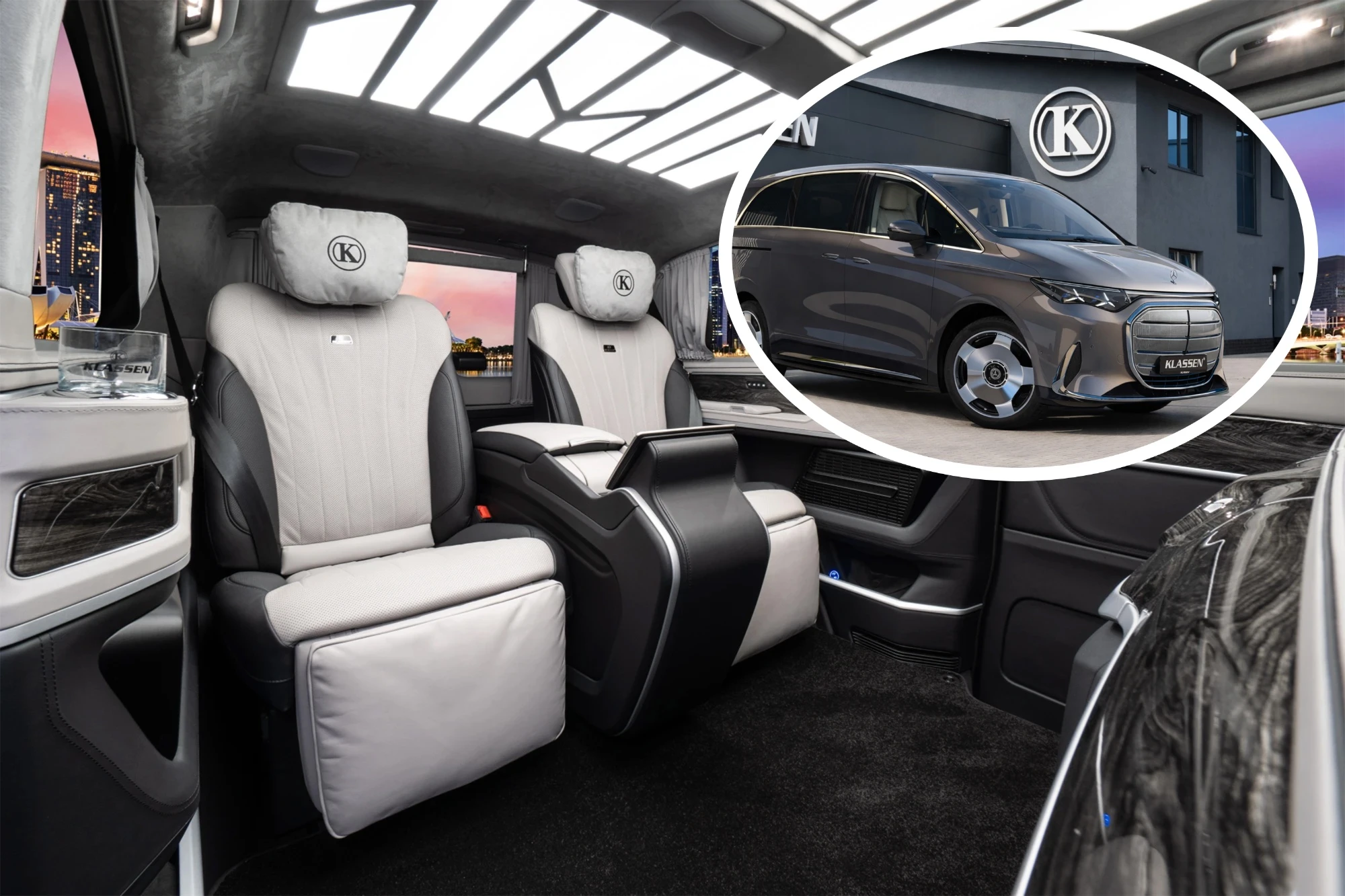
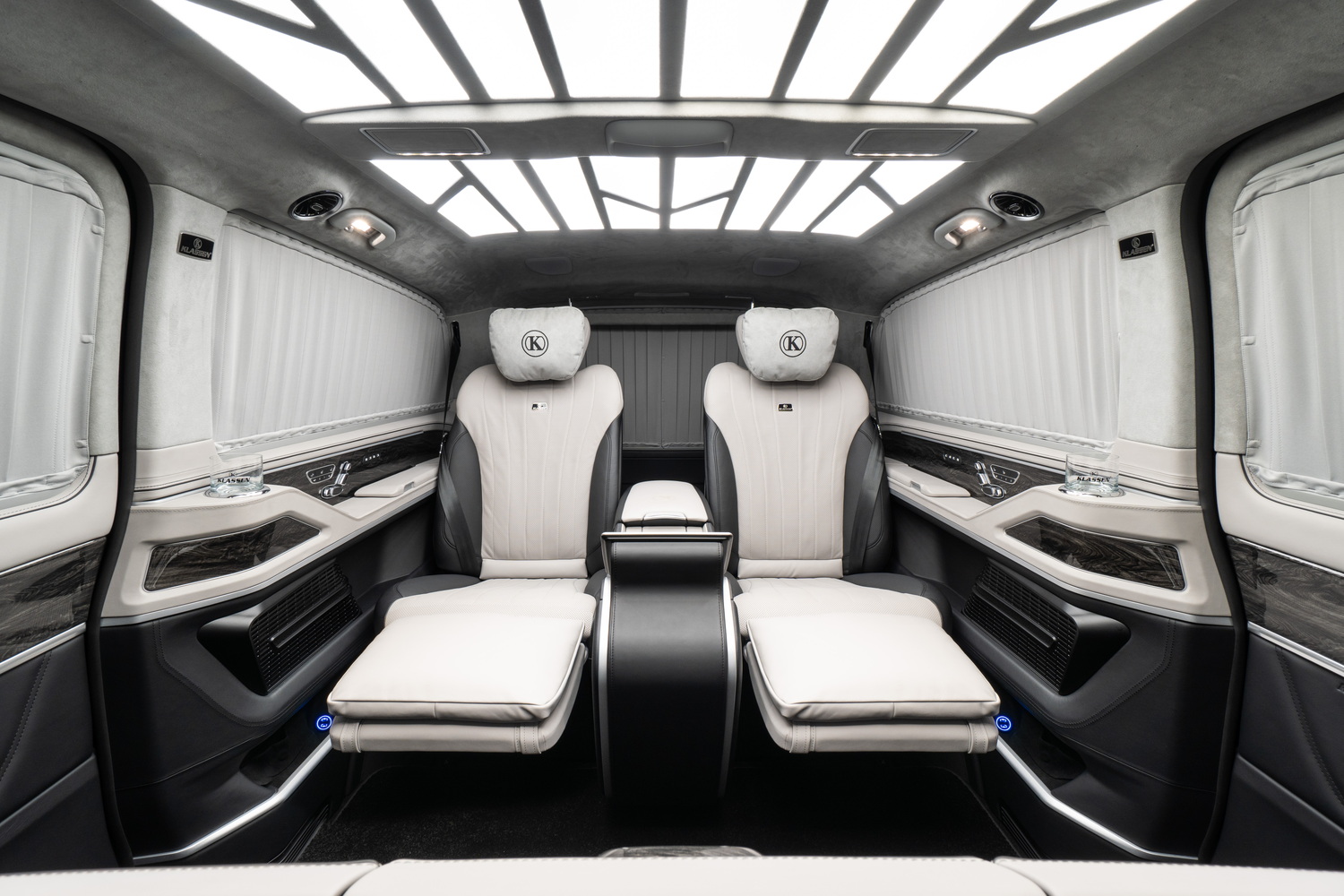
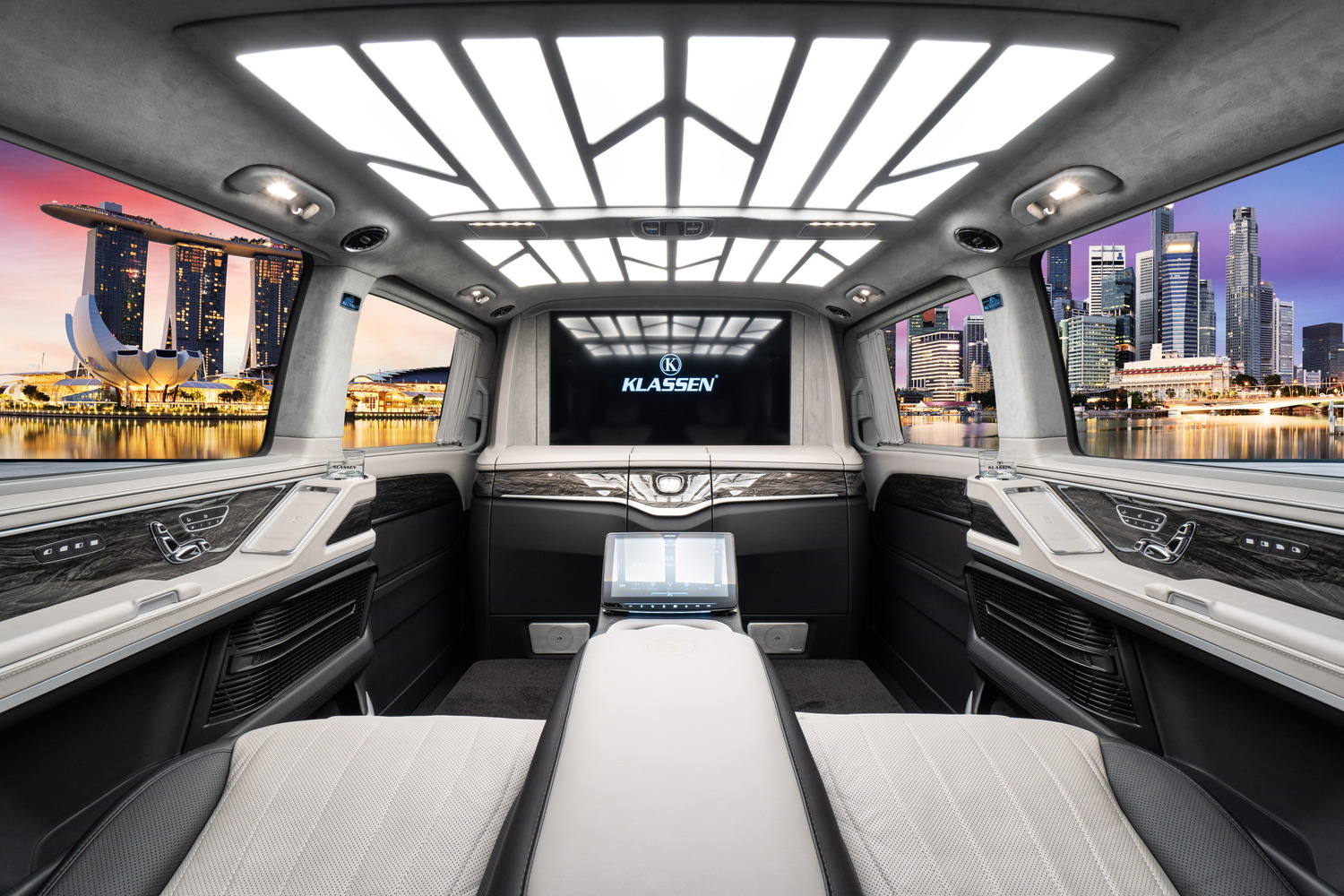
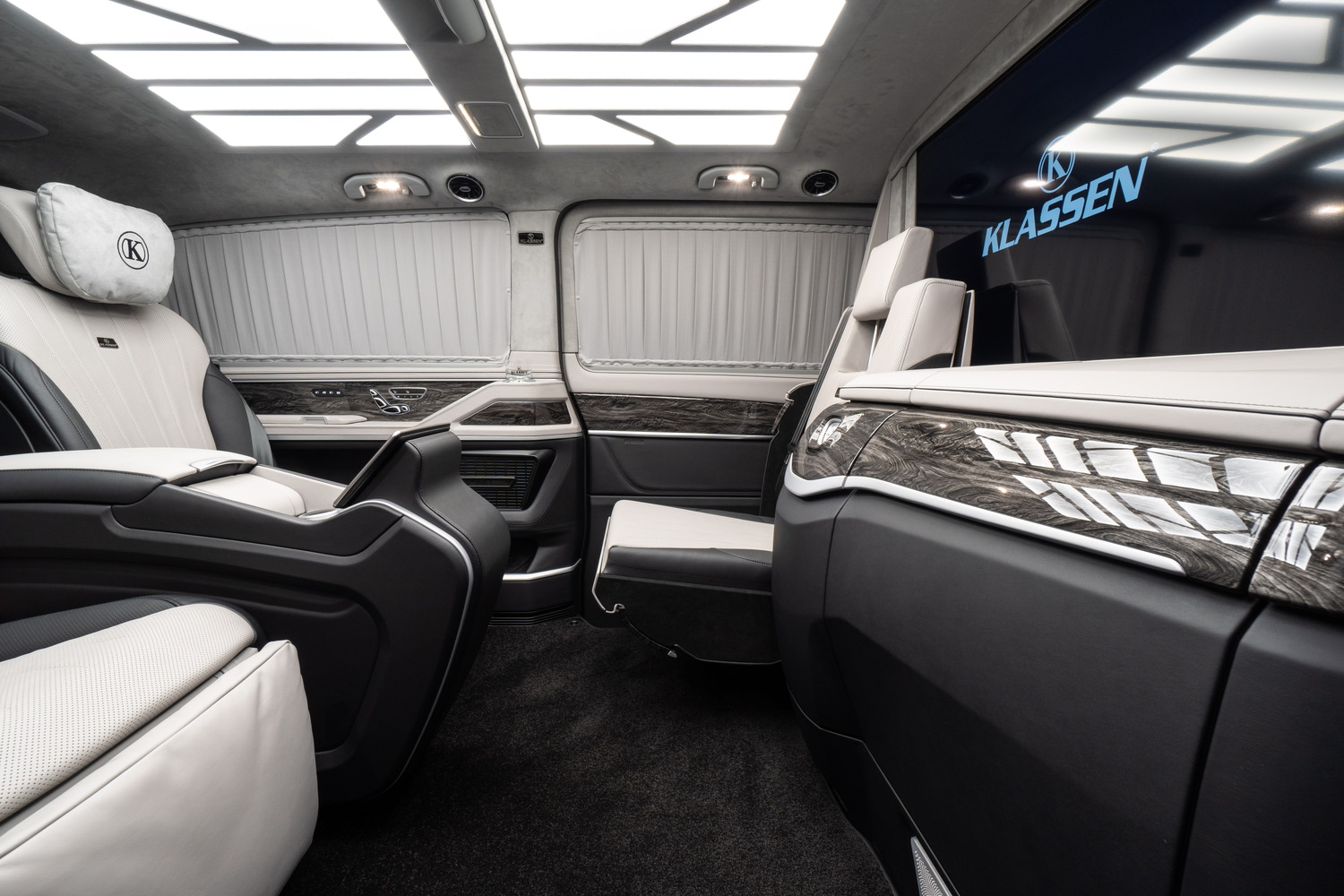
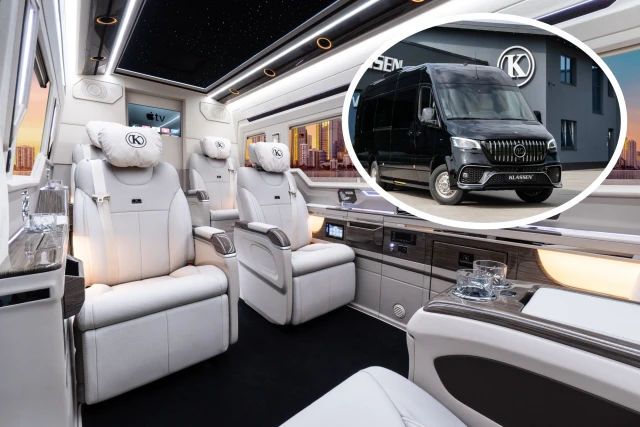
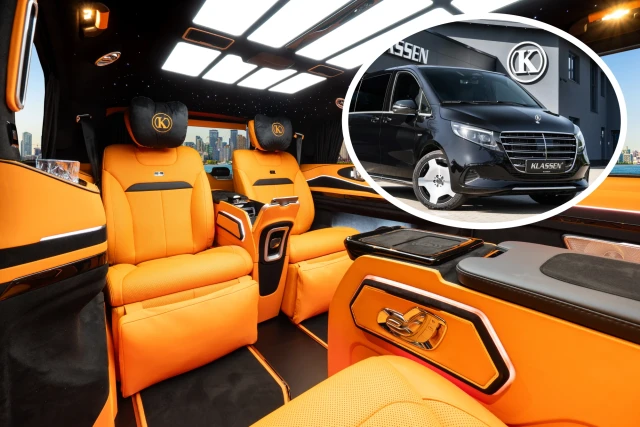
The new project will feature an interior based on one of the most comprehensively equipped configurations of the KLASSEN Mercedes-Benz V-Class MVV_2_1696. Its architecture combines two individual MAYBACH seats, a multifunctional center console, an electrically operated partition with a large television, a concealed minibar, an advanced multimedia system, a starlight headliner, natural wood, leather, Alcantara, personalized lighting, and a complete range of equipment required for relaxation, work, and confidential journeys.
The Mercedes-Benz VLE Defines a New Format for Executive Vehicles
The world premiere of the fully electric Mercedes-Benz VLE took place on March 10, 2026, and on June 12, 2026, the Mercedes-Benz plant in Vitoria, Spain, began series production of the new model. The VLE became the first vehicle built on the new modular and scalable Mercedes-Benz Vans architecture, which is intended to shape the next generation of private vehicles, premium shuttles, and spacious Grand Limousines.
The Grand Limousine designation itself emphasizes the transformation of the model’s philosophy. Mercedes-Benz no longer regards a vehicle of this format exclusively as a spacious van, since the VLE is designed to provide sensations associated with an executive sedan while retaining a generous interior, convenient sliding doors, and the ability to create a variety of passenger configurations. The production model may accommodate up to eight occupants, but in the KLASSEN version, priority will be given not to the maximum number of passengers, but to individual comfort, privacy, and the functionality of each area.
It is precisely this combination that makes the VLE a particularly suitable foundation for the new generation of KLASSEN vehicles. The electric architecture helps reduce background noise and vibrations, while the generous interior space makes it possible to integrate complex equipment in such a way that it does not disturb the visual purity of the cabin or restrict the passengers’ freedom of movement.
The New Appearance of the VLE: Dynamism Without Demonstrative Aggression
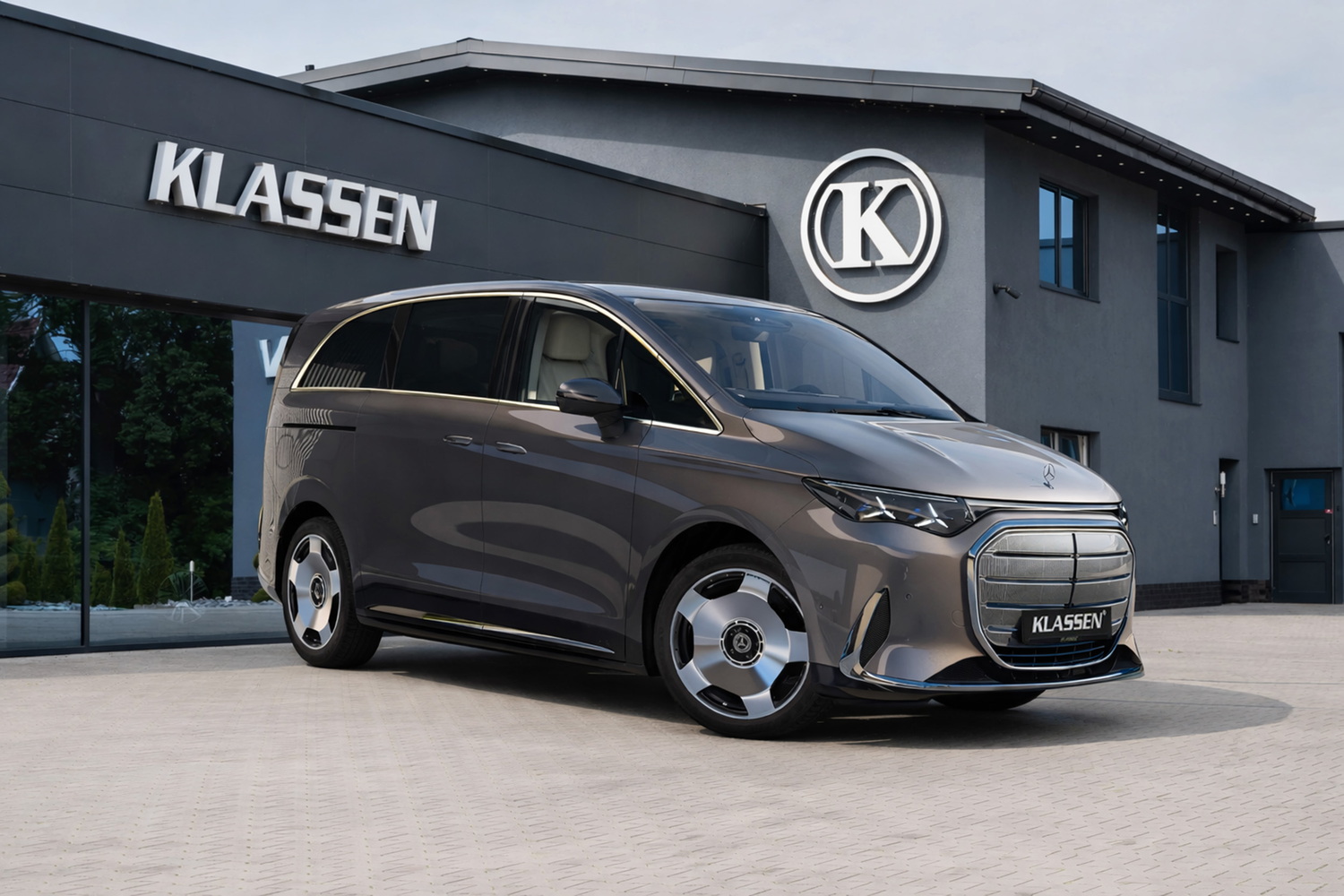
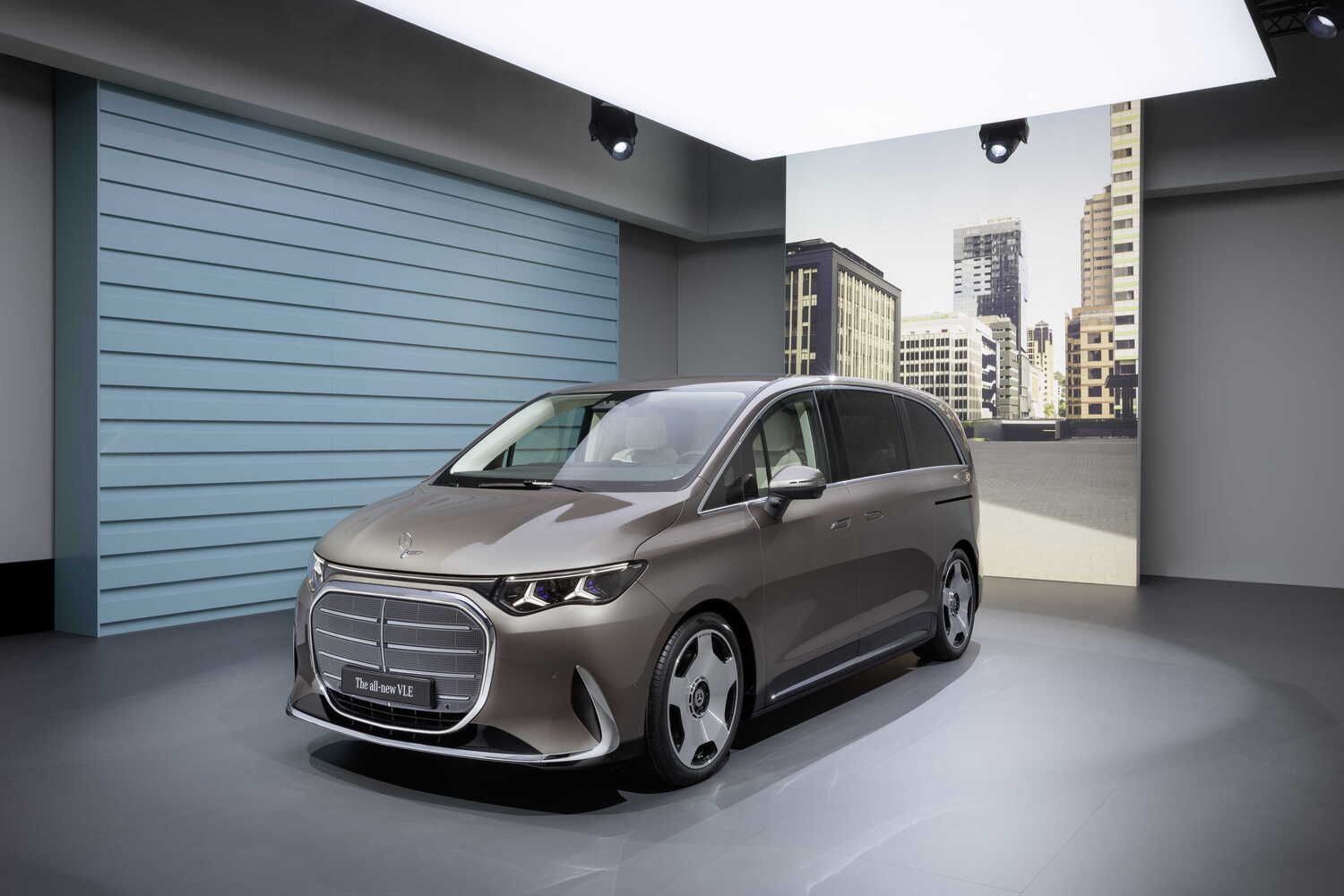
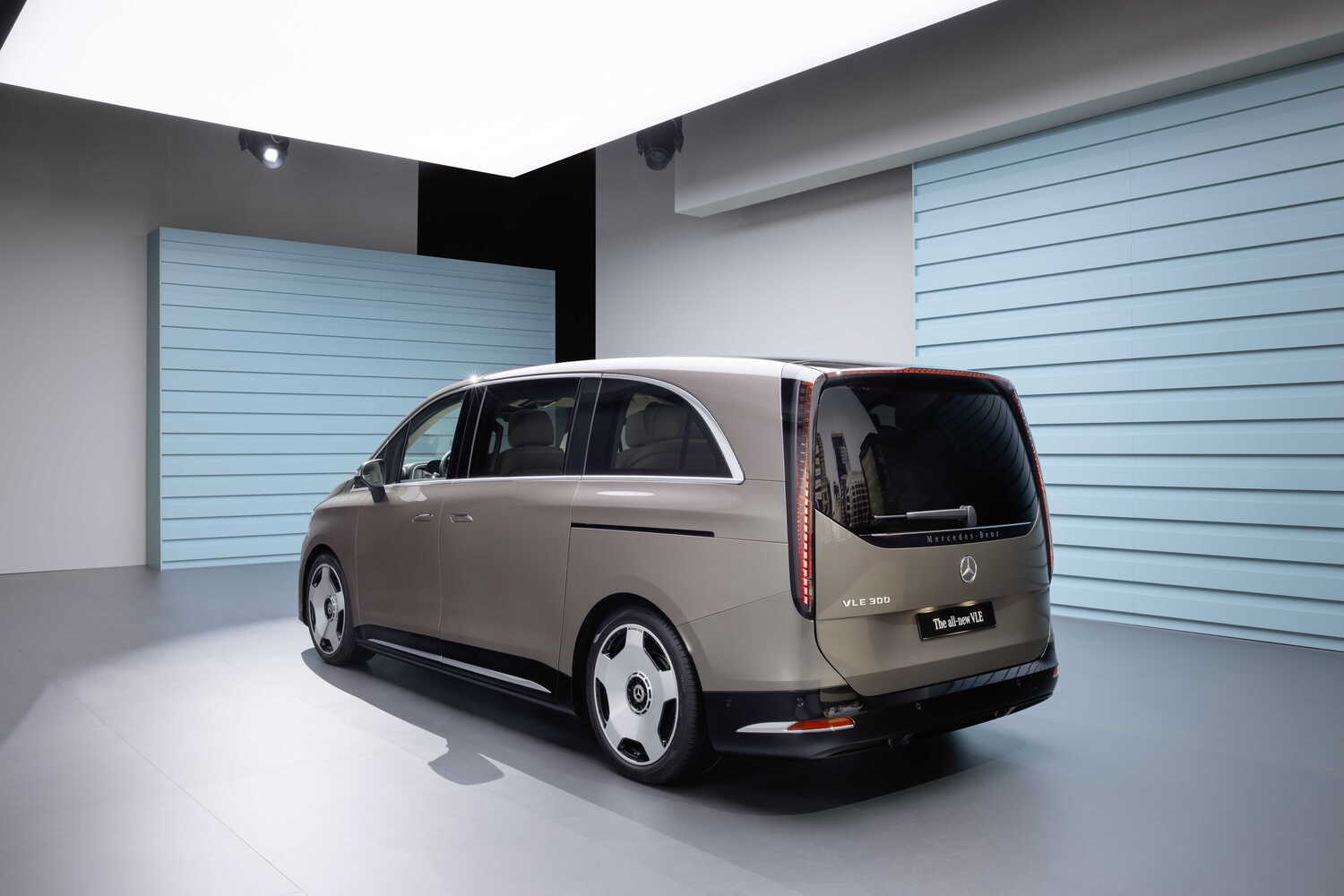
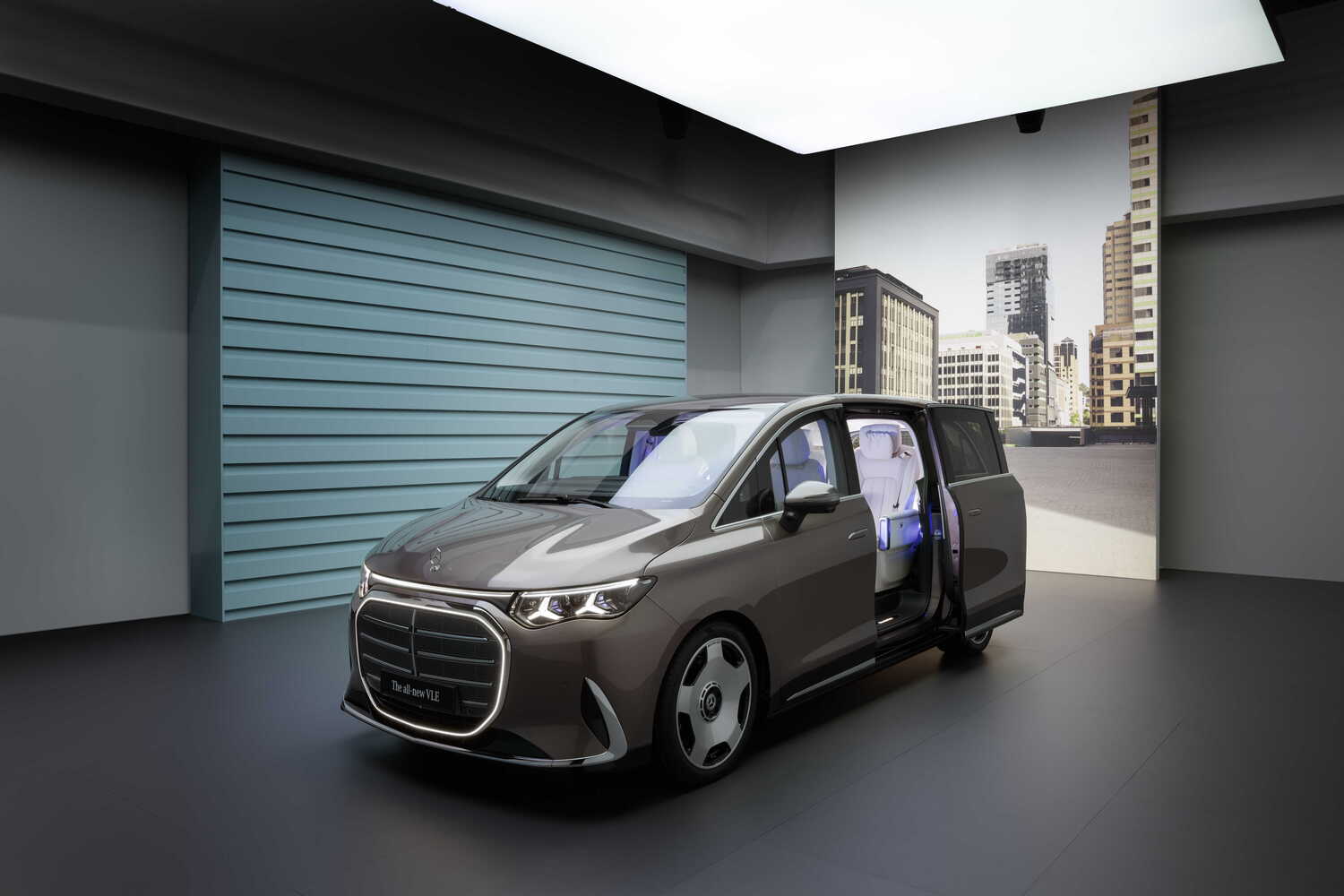
The exterior of the Mercedes-Benz VLE differs noticeably from the traditional perception of a large passenger vehicle. Its body appears more cohesive, sculptural, and aerodynamic, while its proportions create the image not of a commercial vehicle, but of a modern electric Grand Limousine. The taut roofline flows smoothly into the rounded rear section, allowing even such a large vehicle to appear dynamic, composed, and visually balanced.
The smooth body surfaces are not overloaded with decorative elements, while the transitions between the front section, side panels, and rear create the impression of a single unified volume. The exterior design emphasizes the length of the vehicle without making it appear heavy, because the elongated silhouette, gently contoured roof, and rounded rear section simultaneously contribute to visual lightness and aerodynamic efficiency. This form demonstrated excellent results during VLE testing in the Mercedes-Benz wind tunnel in Stuttgart.
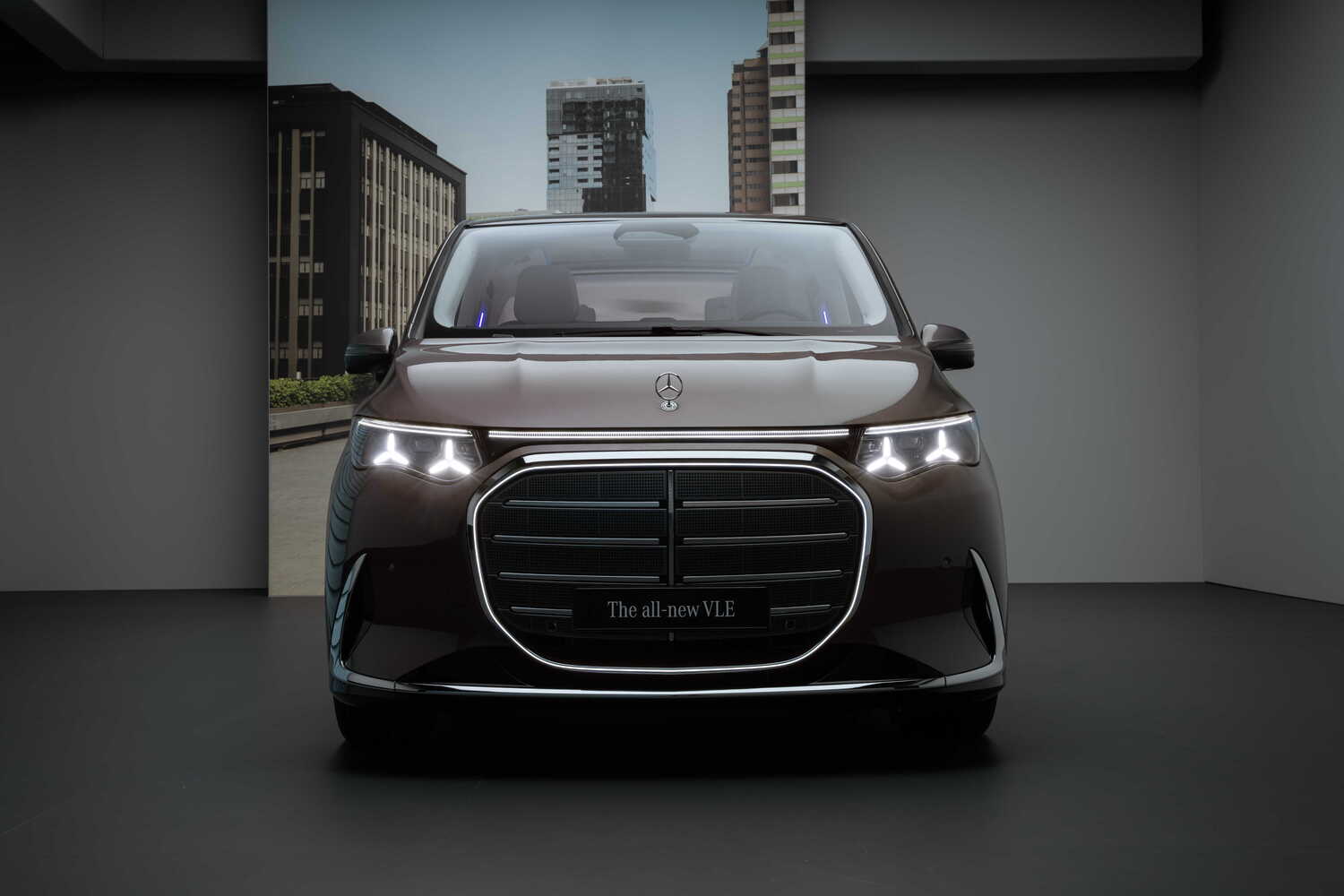
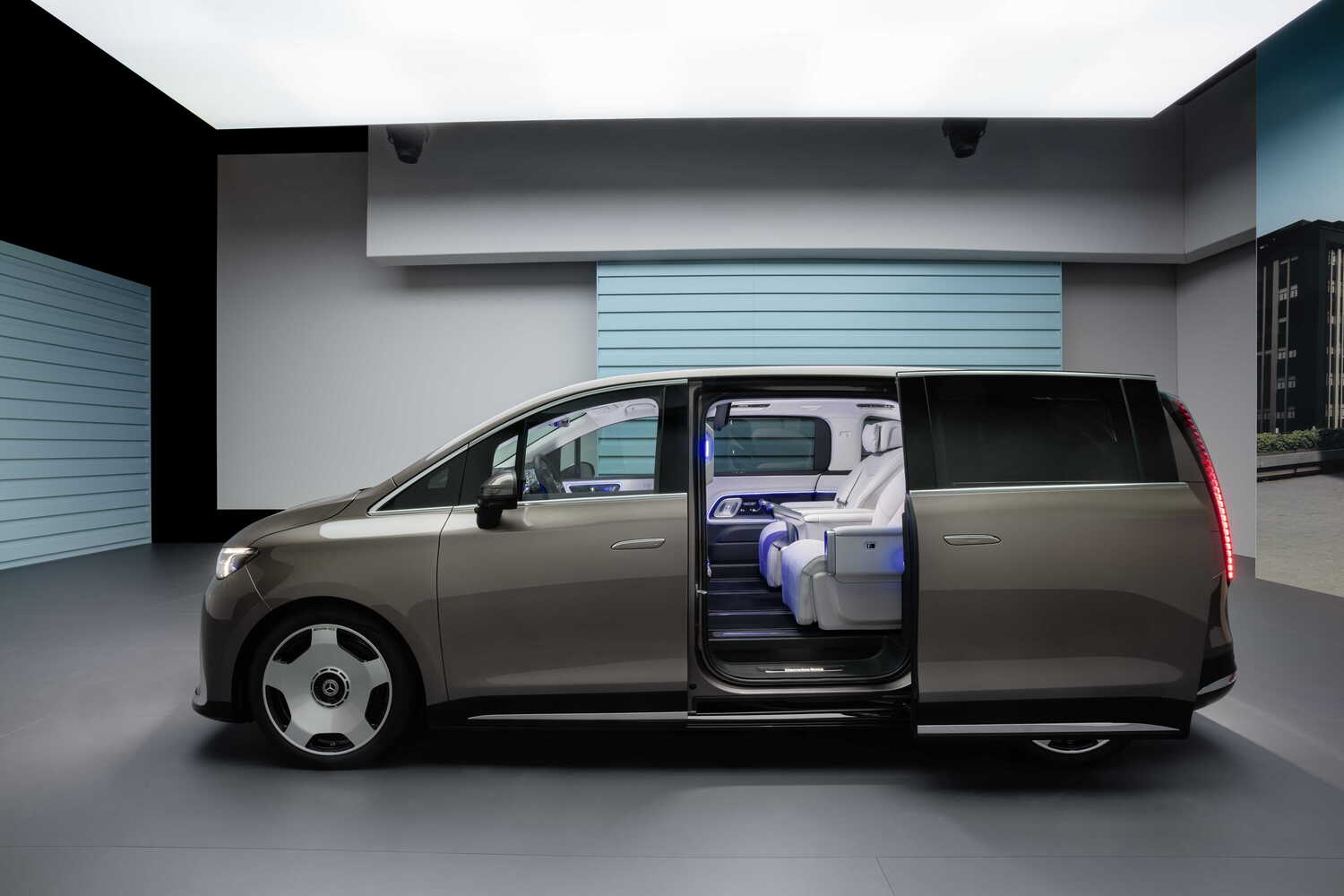
For KLASSEN, this type of exterior is an ideal starting point. A restrained vehicle does not require excessively aggressive bumpers, contrasting decorative elements, or other solutions that might distract attention from its intended purpose. Its status is revealed gradually: first through confident proportions and modern lighting architecture, and then, once the sliding door opens, through the completely reimagined passenger compartment.
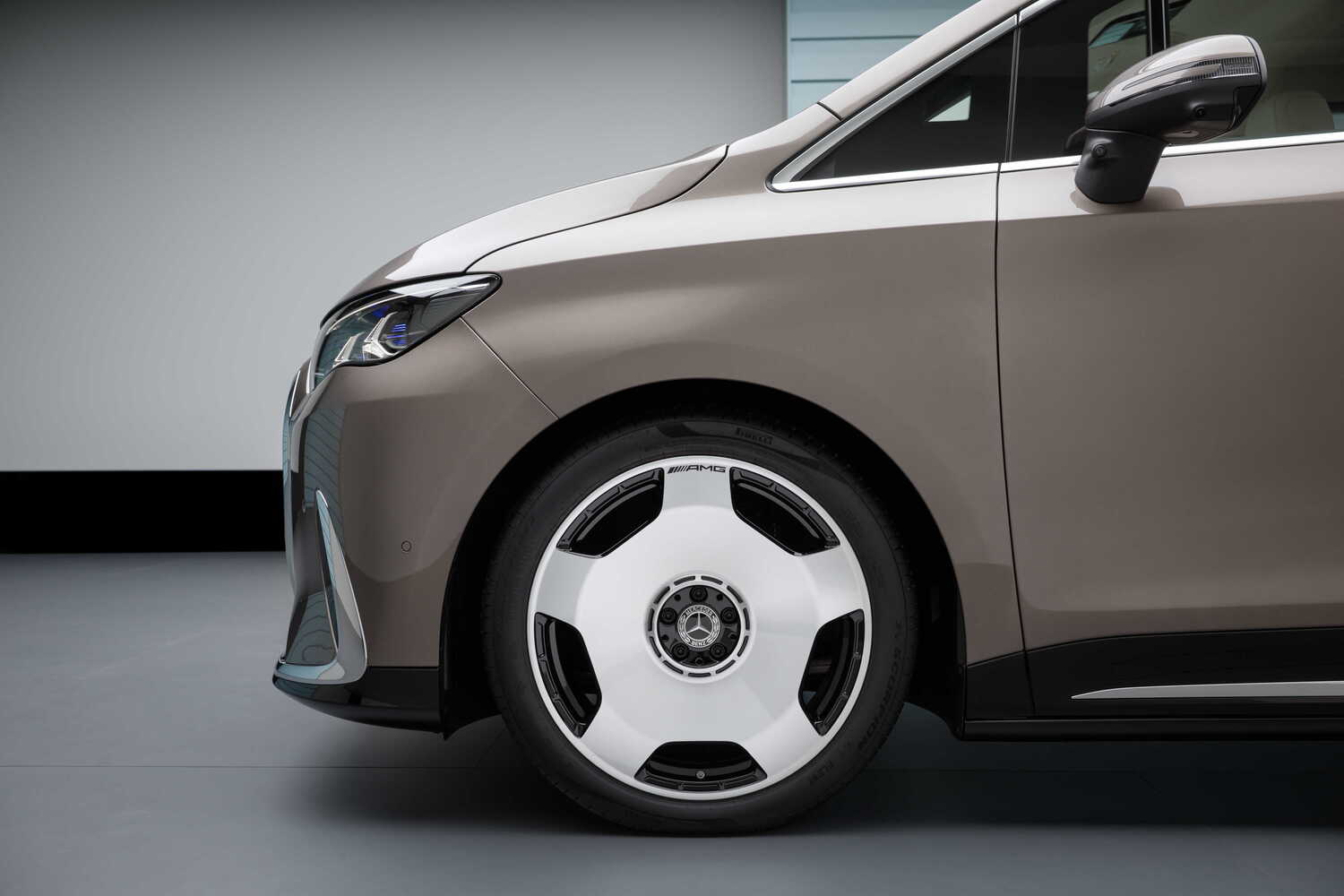
Depending on the individual project, the exterior may receive additional KLASSEN elements, special finishes, exclusive wheels, a personalized color combination, and other modifications. At the same time, the main principle will remain unchanged: the vehicle must look prestigious and modern without turning luxury into a demonstrative visual effect.
The Electric Platform as a Natural Foundation for a VIP Interior
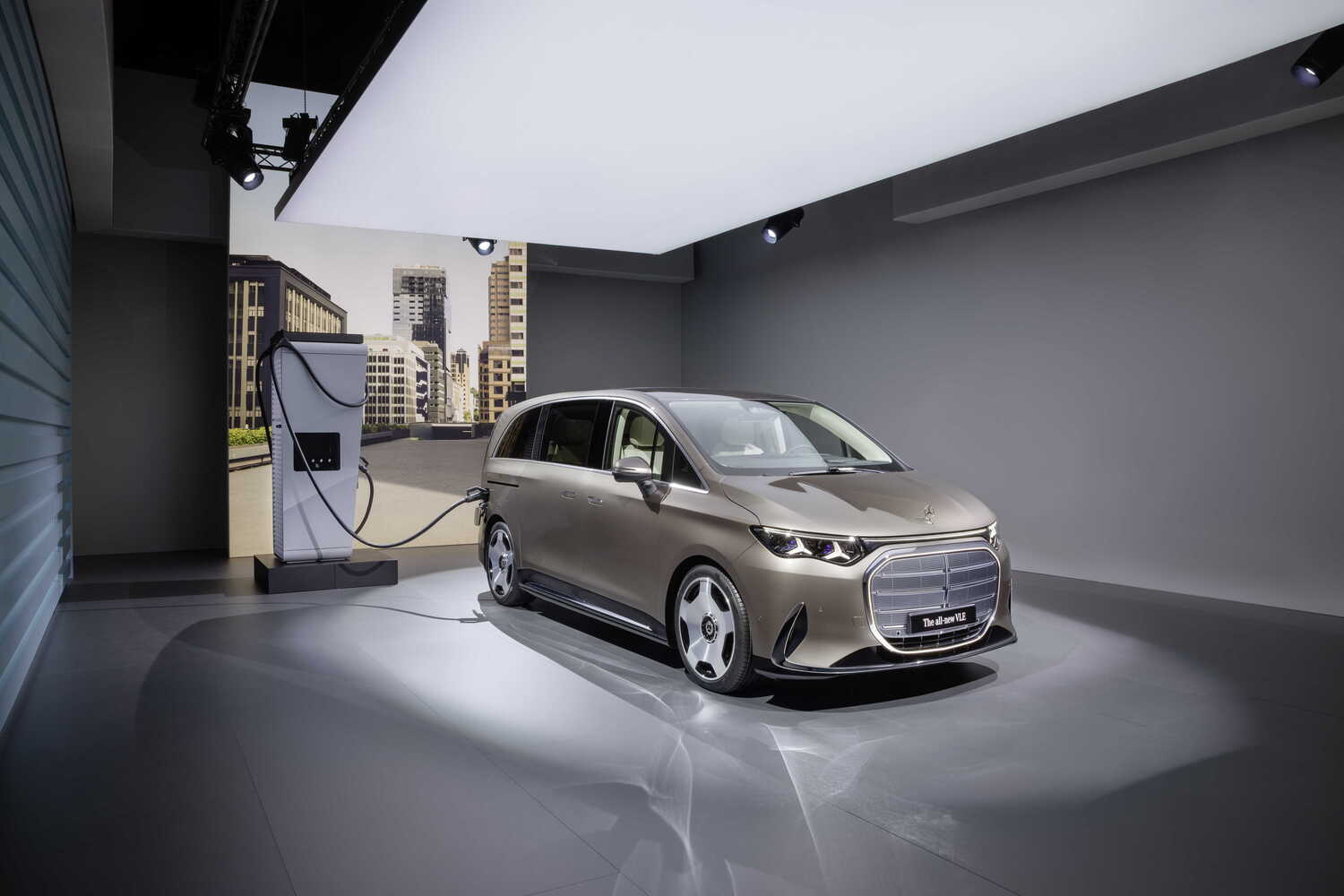
The Mercedes-Benz VLE is equipped with a modern 800-volt electrical system, a 115 kWh traction battery, and support for charging power exceeding 300 kW at compatible rapid-charging stations. The stated driving range exceeds 700 kilometers according to the WLTP cycle, making the model suitable not only for urban travel and transfers between airports, hotels, and business centers, but also for long-distance intercity journeys.
For KLASSEN passengers, the advantages of the electric powertrain are expressed primarily through acoustic comfort. The absence of a conventional internal combustion engine reduces the constant low-frequency background noise, makes acceleration smoother, and helps create the sensation of an isolated interior space in which it is easier to work, hold conversations, conduct video conferences, or rest.
The optional AIRMATIC air suspension with intelligent control is designed to provide an especially smooth ride and can adjust the ground clearance within a range of 40 millimeters, making entry easier or increasing the vehicle height when necessary. The rear-axle steering system reduces the turning circle to 10.9 meters, allowing the large vehicle to retain maneuverability comparable to that of significantly more compact models.
Electric sliding doors provide convenient access to the passenger compartment, while fully retractable windows in the doors create the open and familiar feeling associated with a passenger car. These features are particularly important for the future VLE KLASSEN, as they help combine the spaciousness of a large body with the comfort and natural ease of everyday use.
The KLASSEN Interior as an Independent Space
The passenger compartment will be based on the architecture implemented in the KLASSEN Mercedes-Benz V-Class MVV_2_1696. Its principal characteristic lies not in the number of individual options, but in the way all the equipment is integrated into a unified composition and perceived as part of the vehicle rather than as a collection of components installed after production.
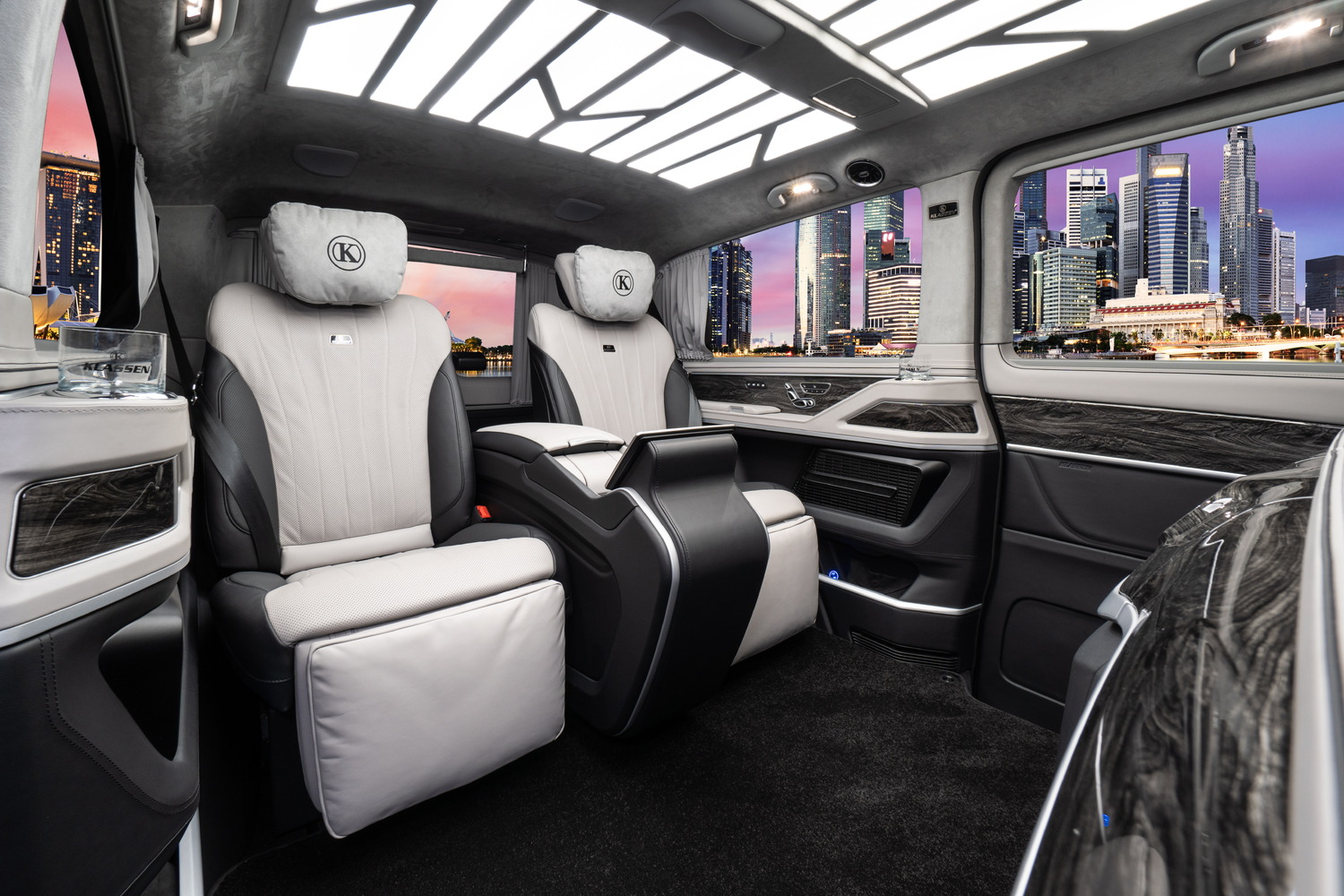
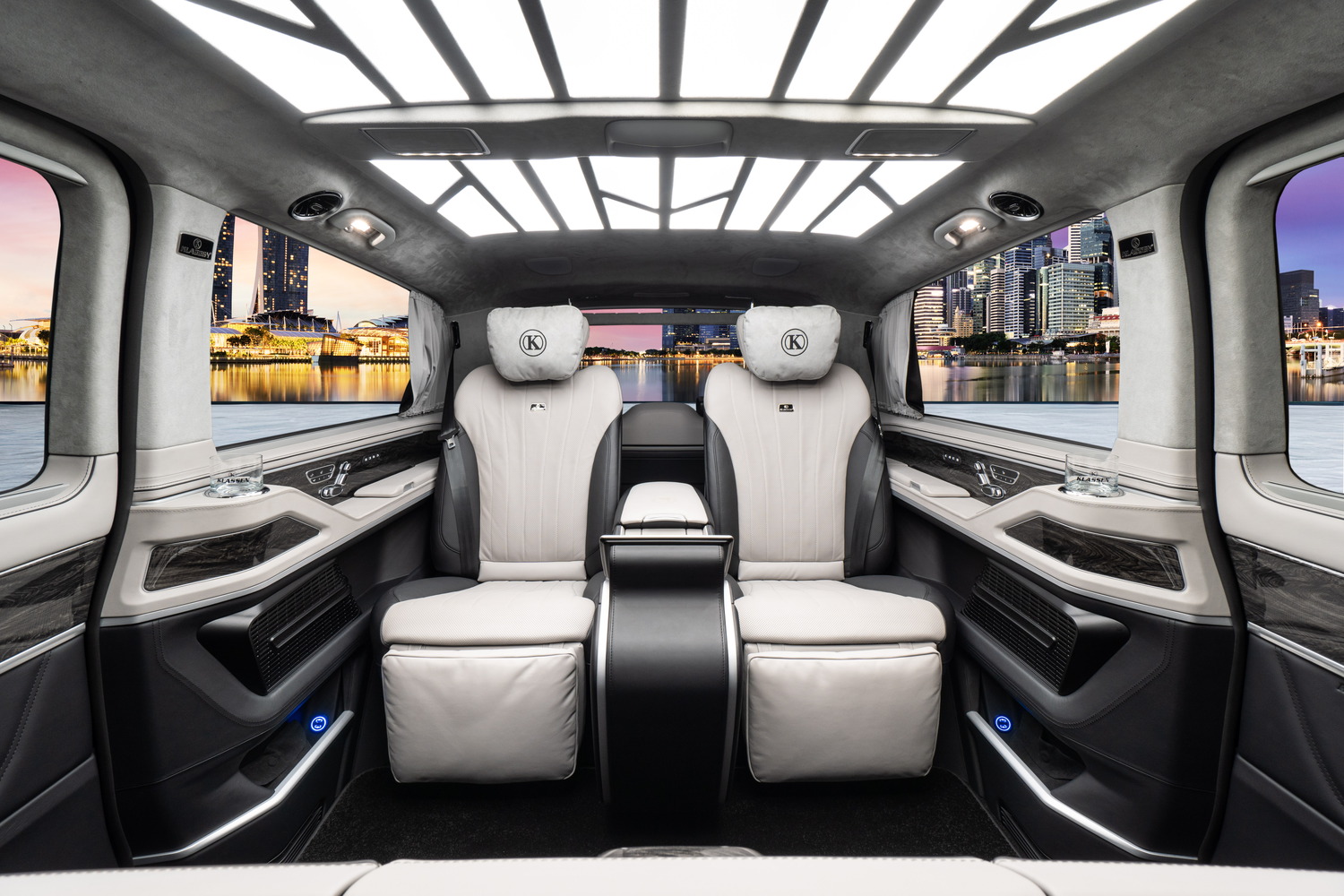
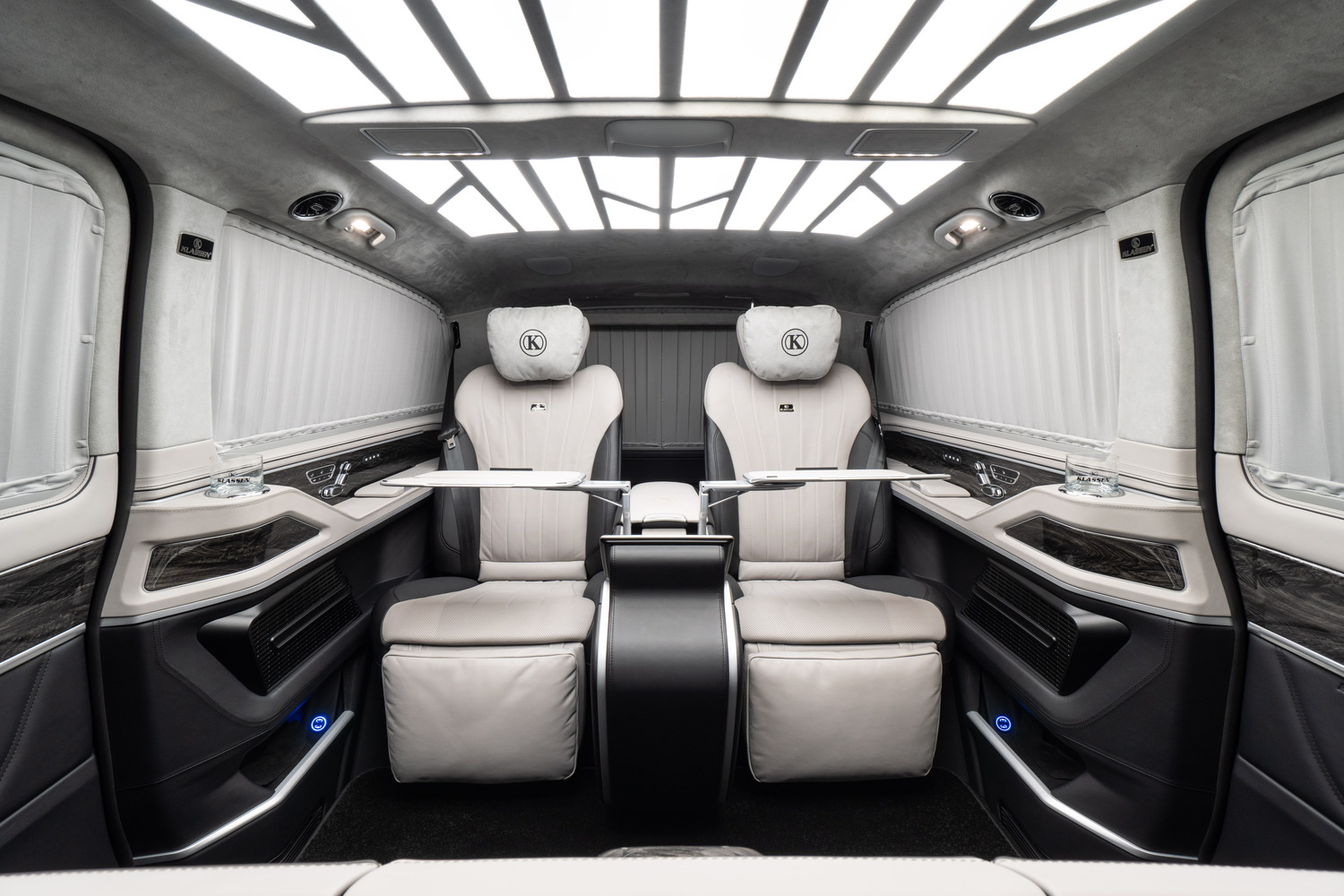
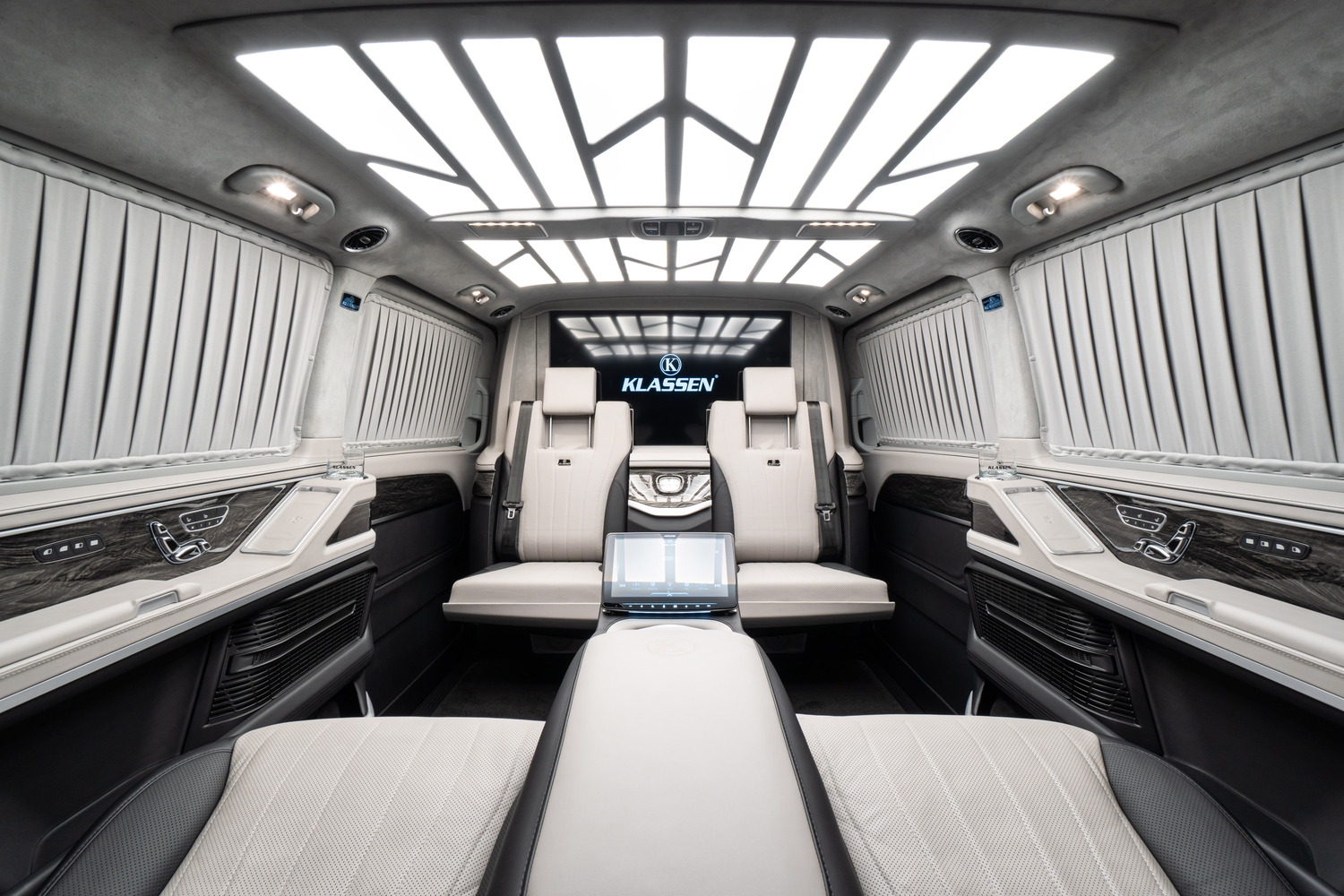
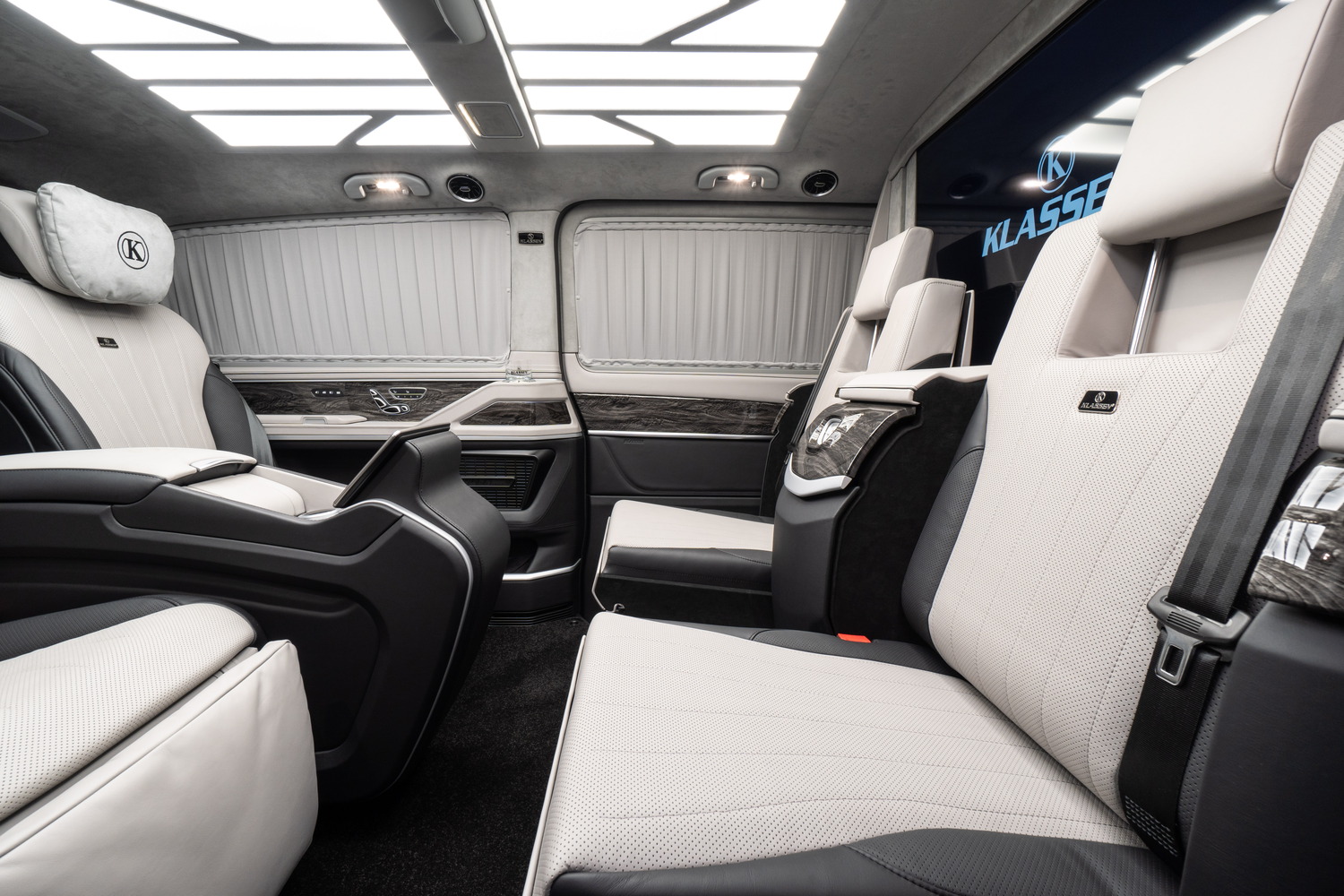
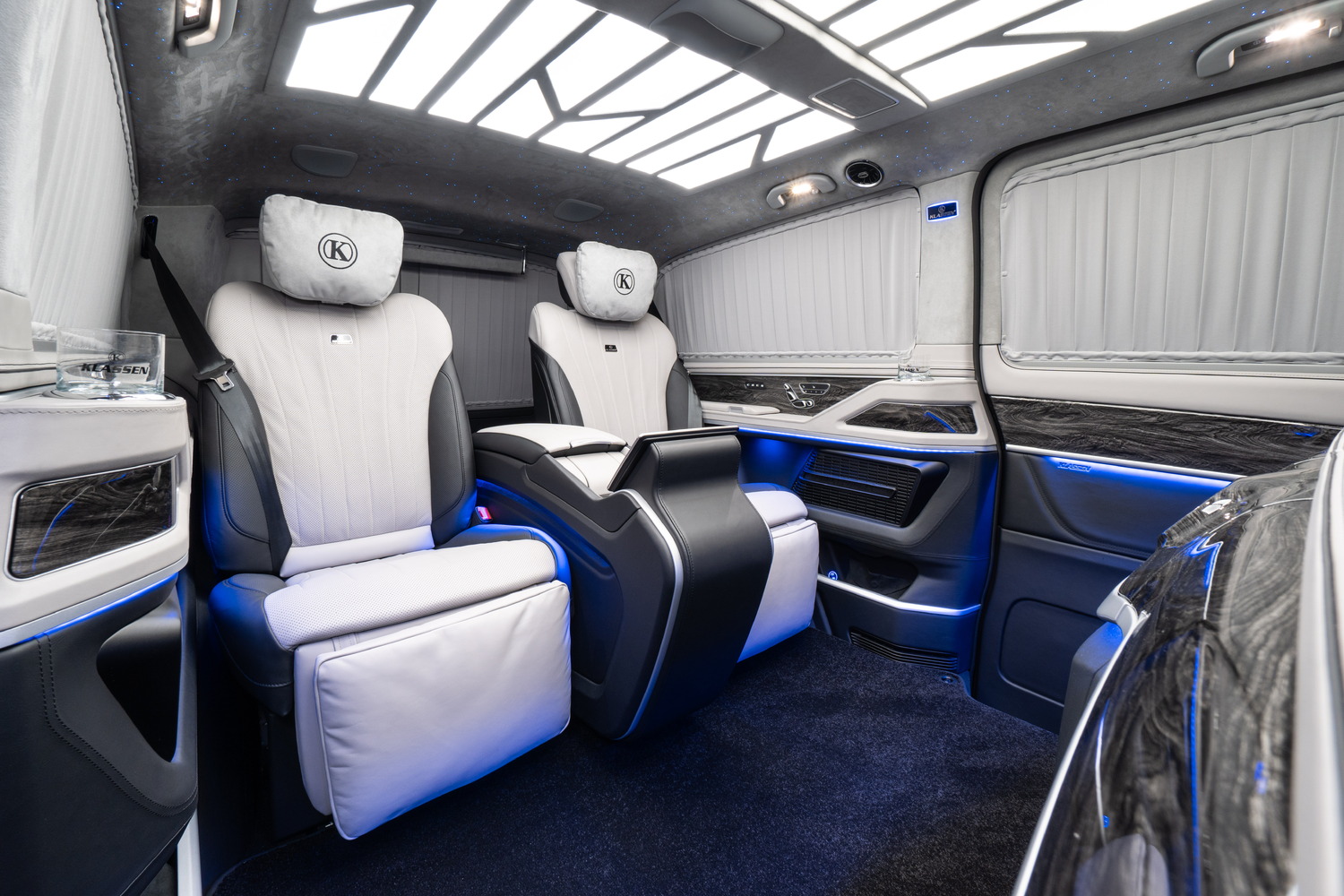
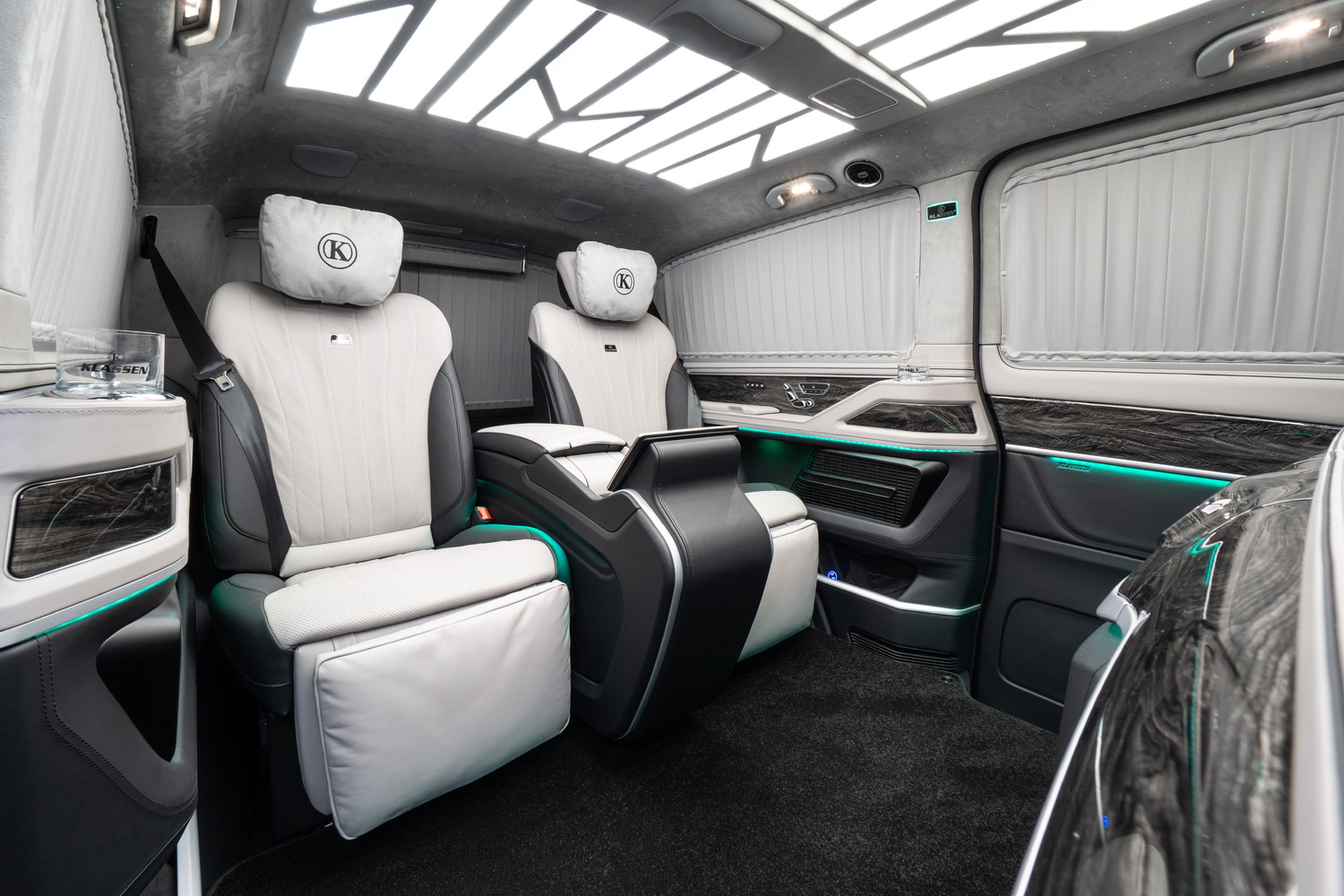
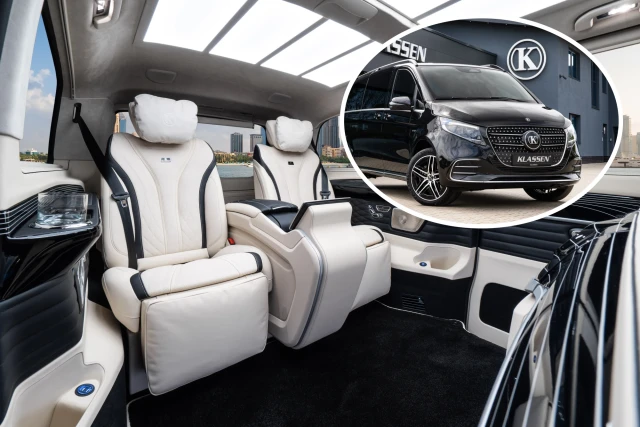
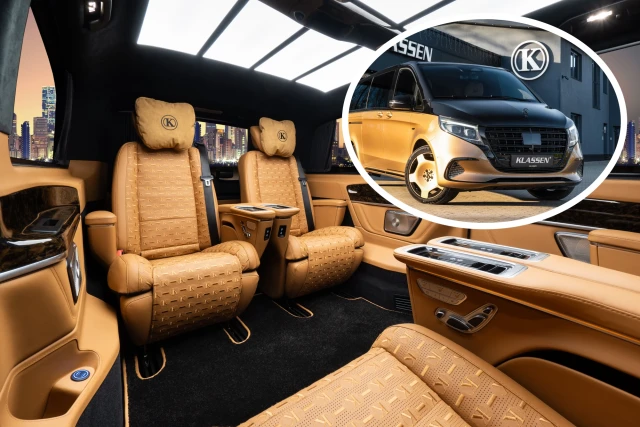
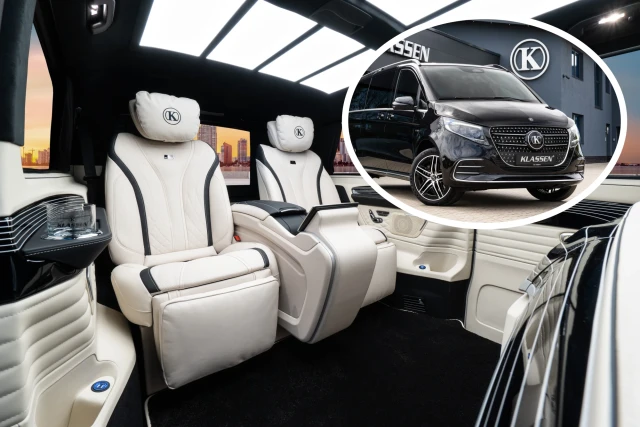
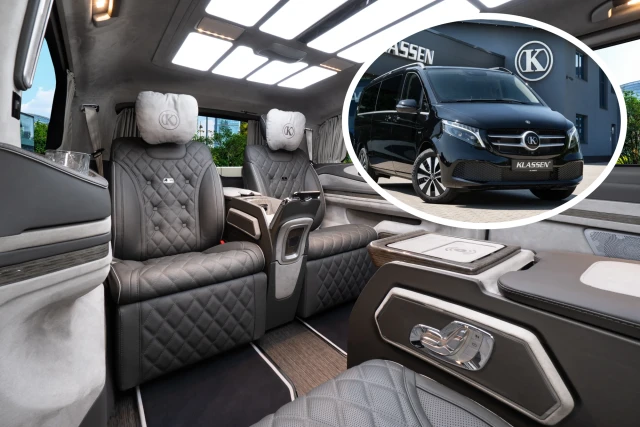
The central position is occupied by two individual MAYBACH seats designed for long journeys and a maximally relaxed seating position. Special mounting structures are created for their installation, engineered according to the geometry of the vehicle and applicable safety requirements. Each seat is equipped with a three-point safety belt, while the mounting structures are tested in accordance with the relevant regulatory requirements and European standards.
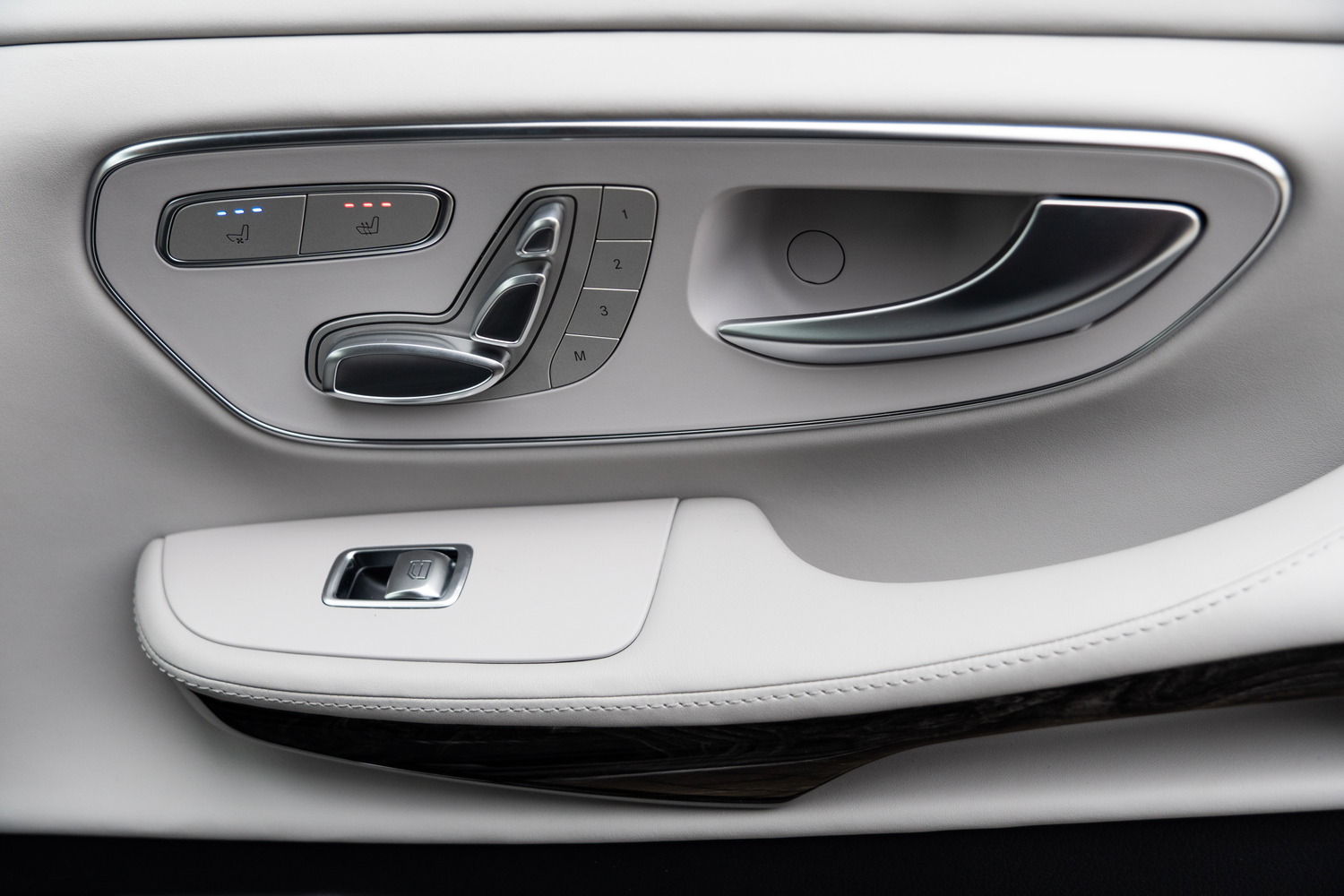
Full electronic seat adjustment is provided by separate control units and an individually programmed system. The passenger can change the seat position, adjust the backrest angle, select a comfortable seating position, and save preferred settings using the memory function. As a result, the interior can quickly adapt to a specific owner or passenger, who does not have to search for a comfortable position again before every journey.
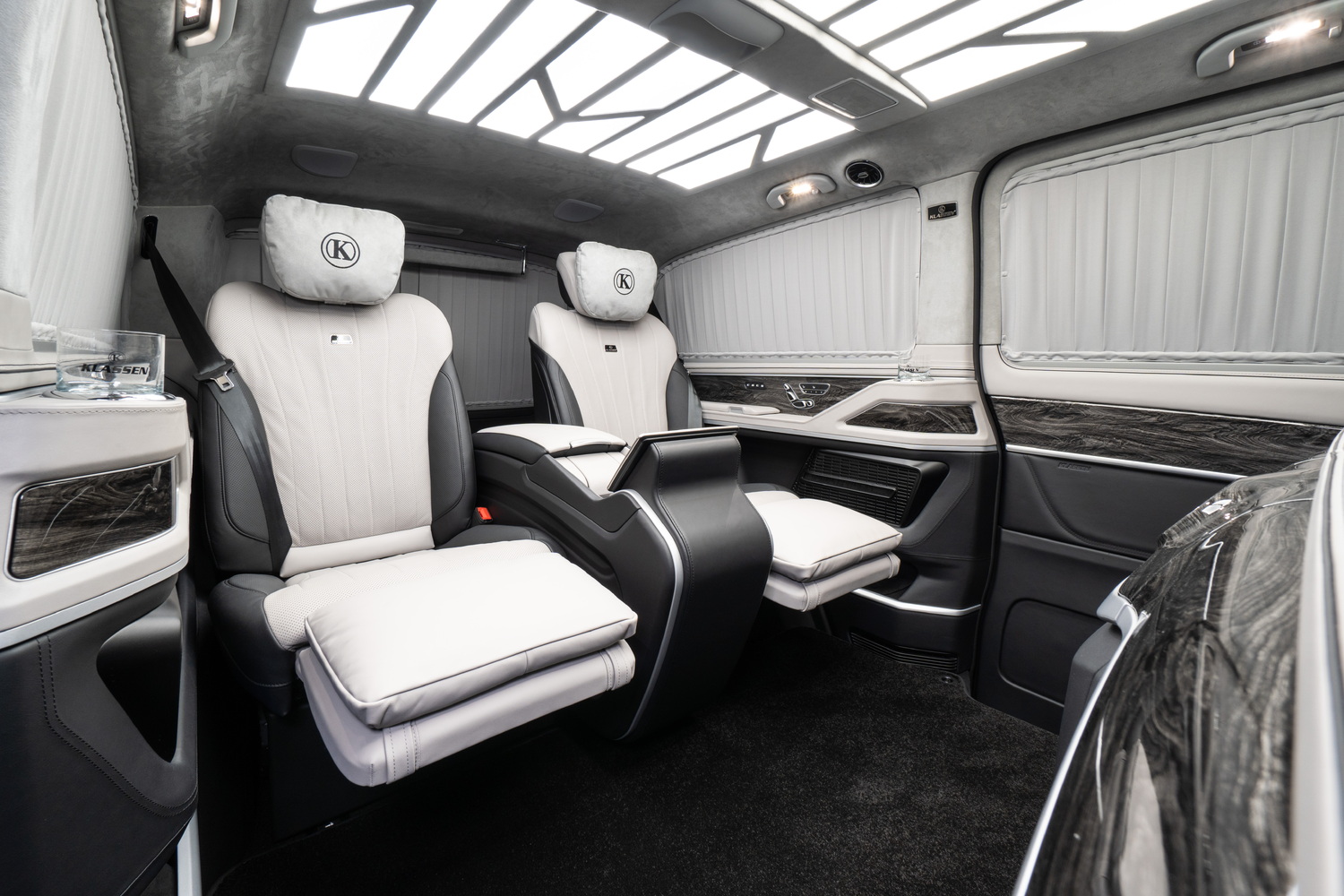
The seats are equipped with heating, ventilation, and massage functions. The ventilation system works in combination with perforated leather, ensuring comfort in hot weather and during extended journeys, while the heating system creates an even sensation of warmth during the colder months. The massage system further expands the capabilities of the seats and helps reduce fatigue when the vehicle is used for long transfers or extended travel.
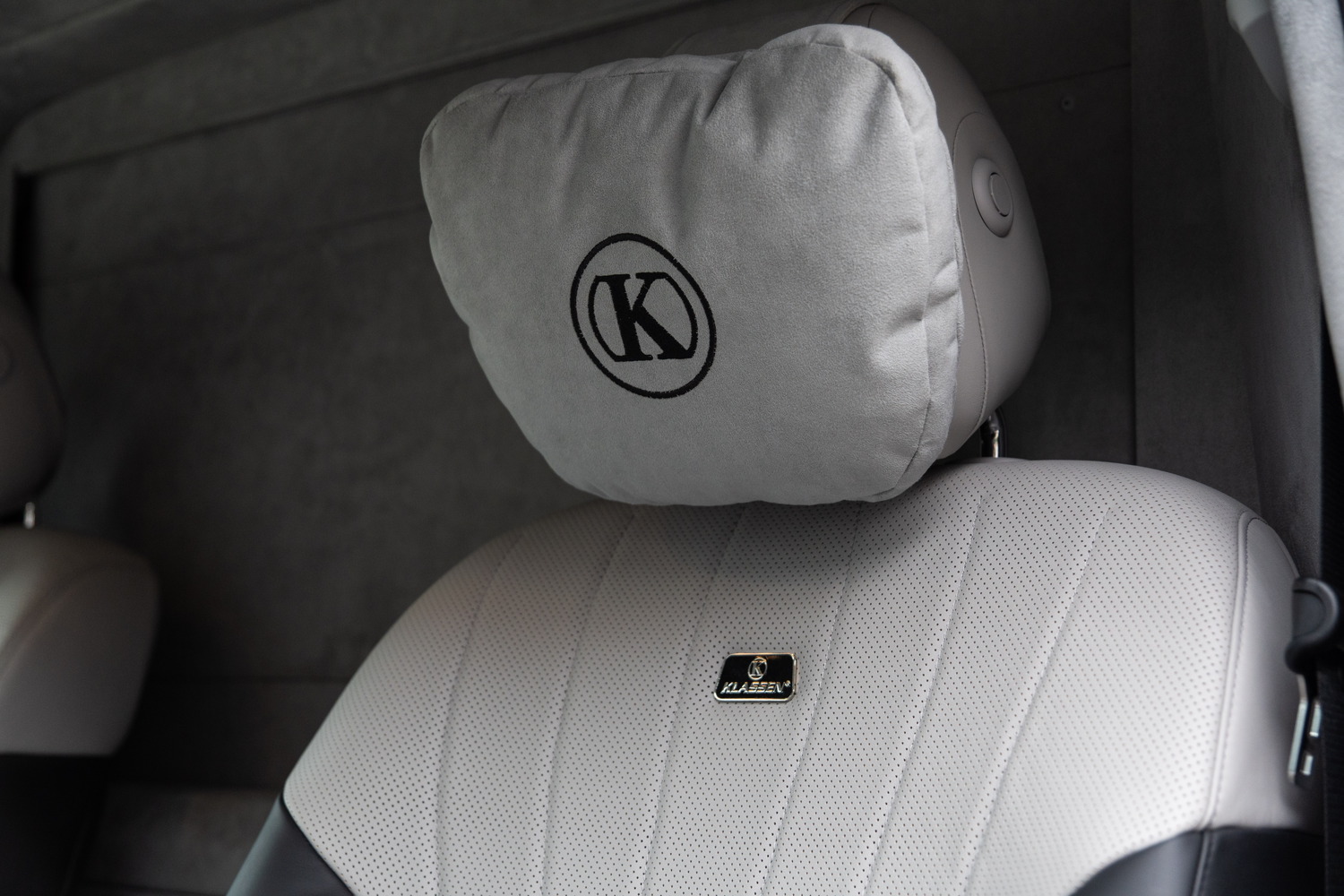
Electrically adjustable footrests allow the passenger to create an almost horizontal resting position. They are complemented by soft cushions, while separate comfort pillows are installed on the headrests to support the neck and head. The position of the entire rear seating structure can be individually determined during vehicle production so that the distance to the partition, center console, and other elements corresponds to the owner’s height and the intended use of the vehicle.
The seats and adjacent elements receive leather upholstery selected in accordance with the overall interior color concept. Leather is used not only on the main seats, but also on the central armrest, allowing the space to appear cohesive and providing the same high-quality tactile experience throughout every area.
A Center Console Created Specifically for the MAYBACH Seats
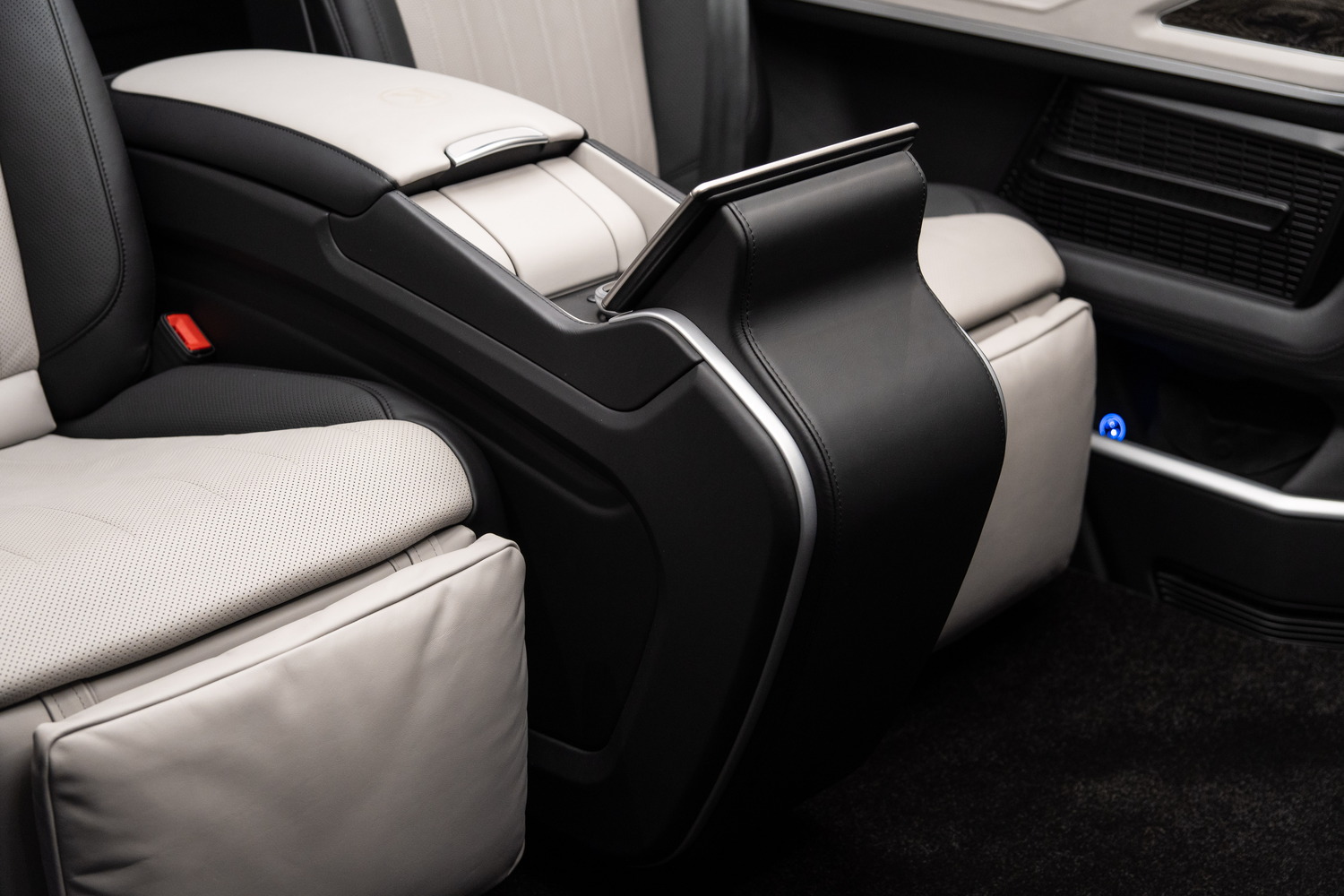
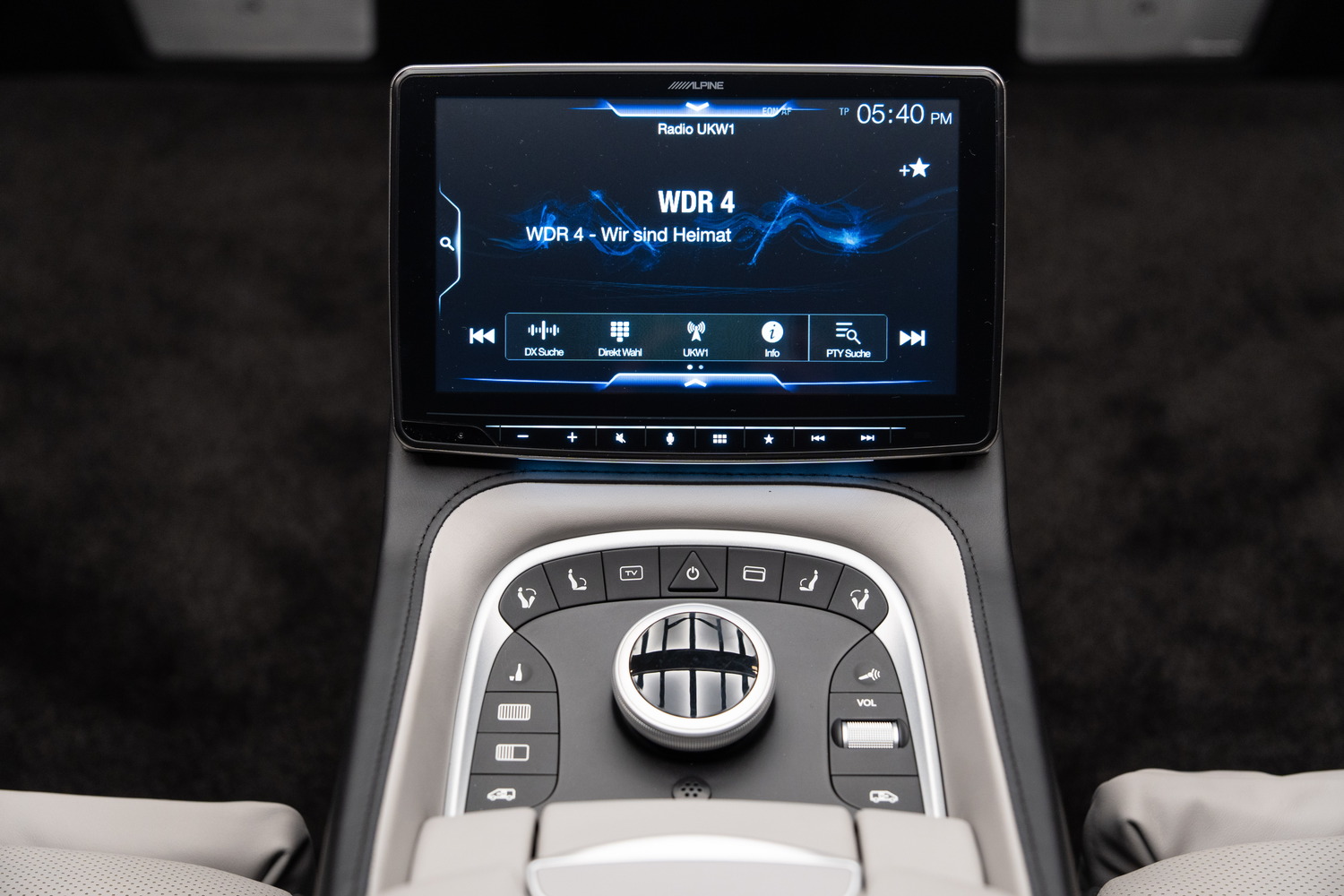
Between the two seats is an individually manufactured central armrest, the shape and dimensions of which are adapted to the structure of the MAYBACH seats. It functions as a complete control console while also providing space for equipment, connection ports, and a folding table.
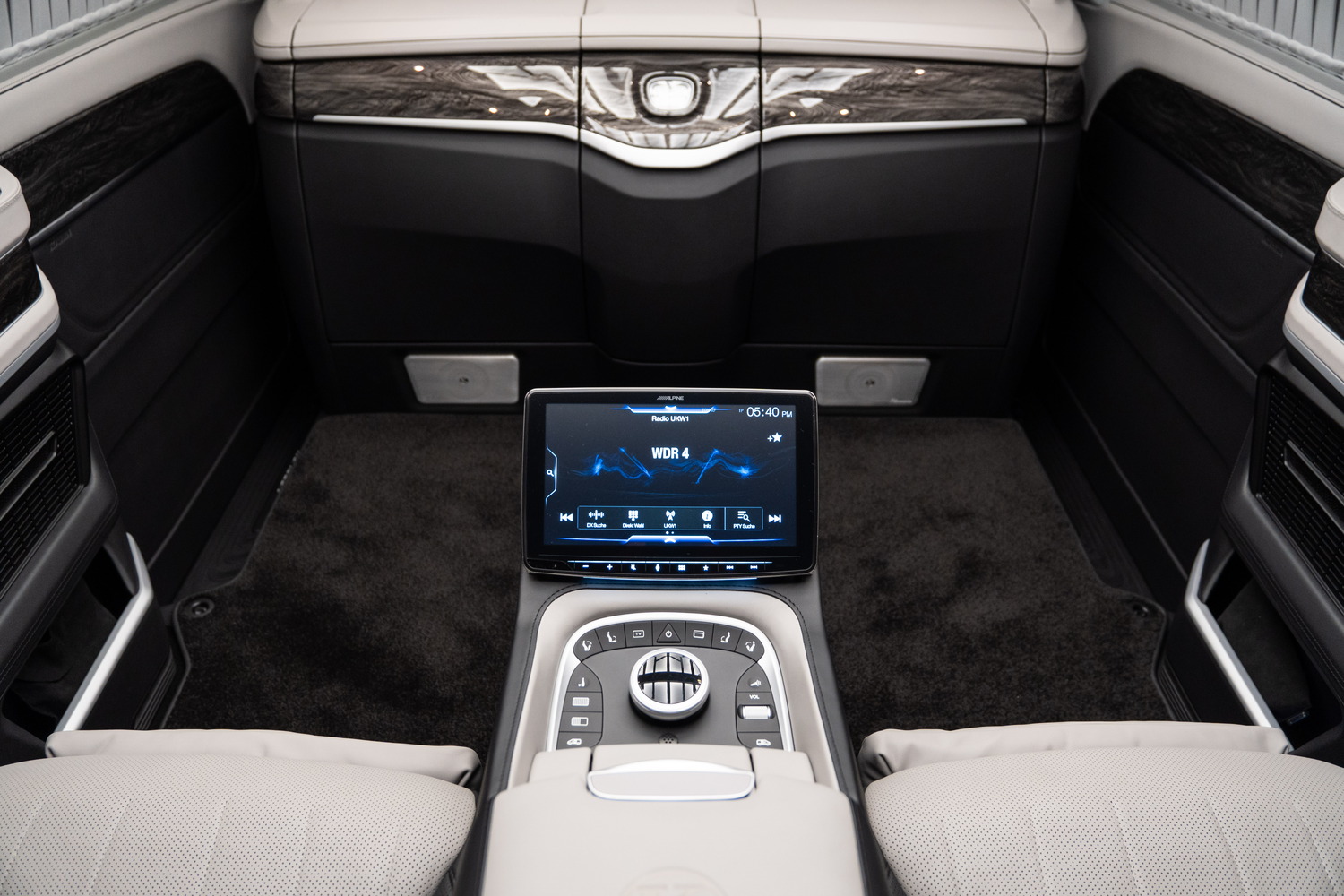
An original Mercedes-Benz Command controller is integrated into the console, allowing the passenger to operate available functions without constantly using a touchscreen. The combination of physical controls and digital operation is particularly convenient while the vehicle is moving, as the passenger can perform familiar actions without being significantly distracted from a conversation, work, or viewing content.
For connecting equipment, the console includes a 220-volt power outlet, a separate USB port for data transfer, a USB charging port for mobile devices, an HDMI input, and a main switch for the onboard equipment. This allows passengers to use a laptop, connect external video sources, charge smartphones and other devices, and quickly switch off additional electronics when they are not required.
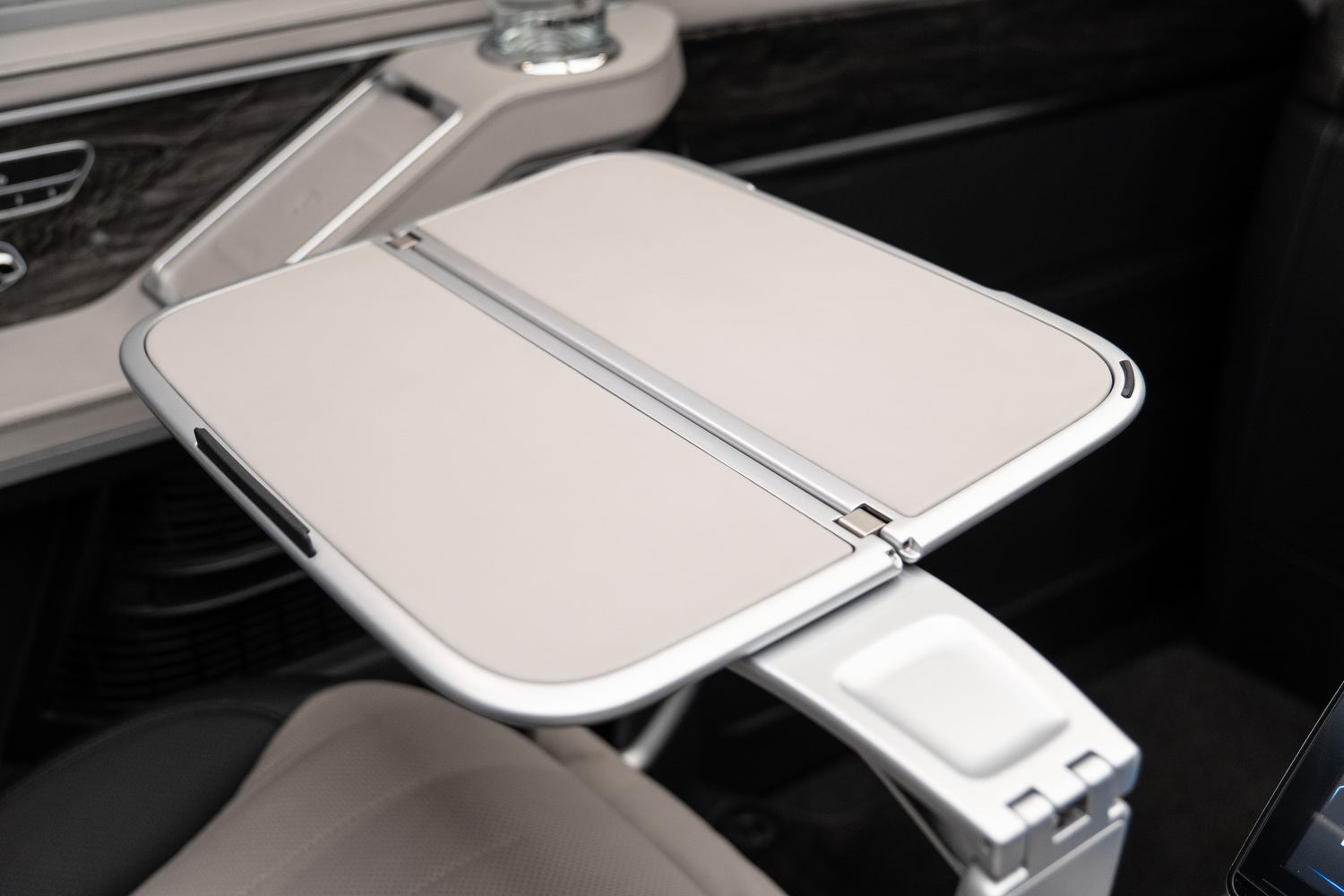
A MAYBACH table is integrated into the armrest and remains hidden when folded, appearing only when needed. It can be used as a work surface for a laptop and documents, as a table for drinks, or as an additional surface during a long journey. This solution preserves free space between the seats and prevents the interior from being overloaded by permanently exposed structures.
Electric Partition and Complete Privacy
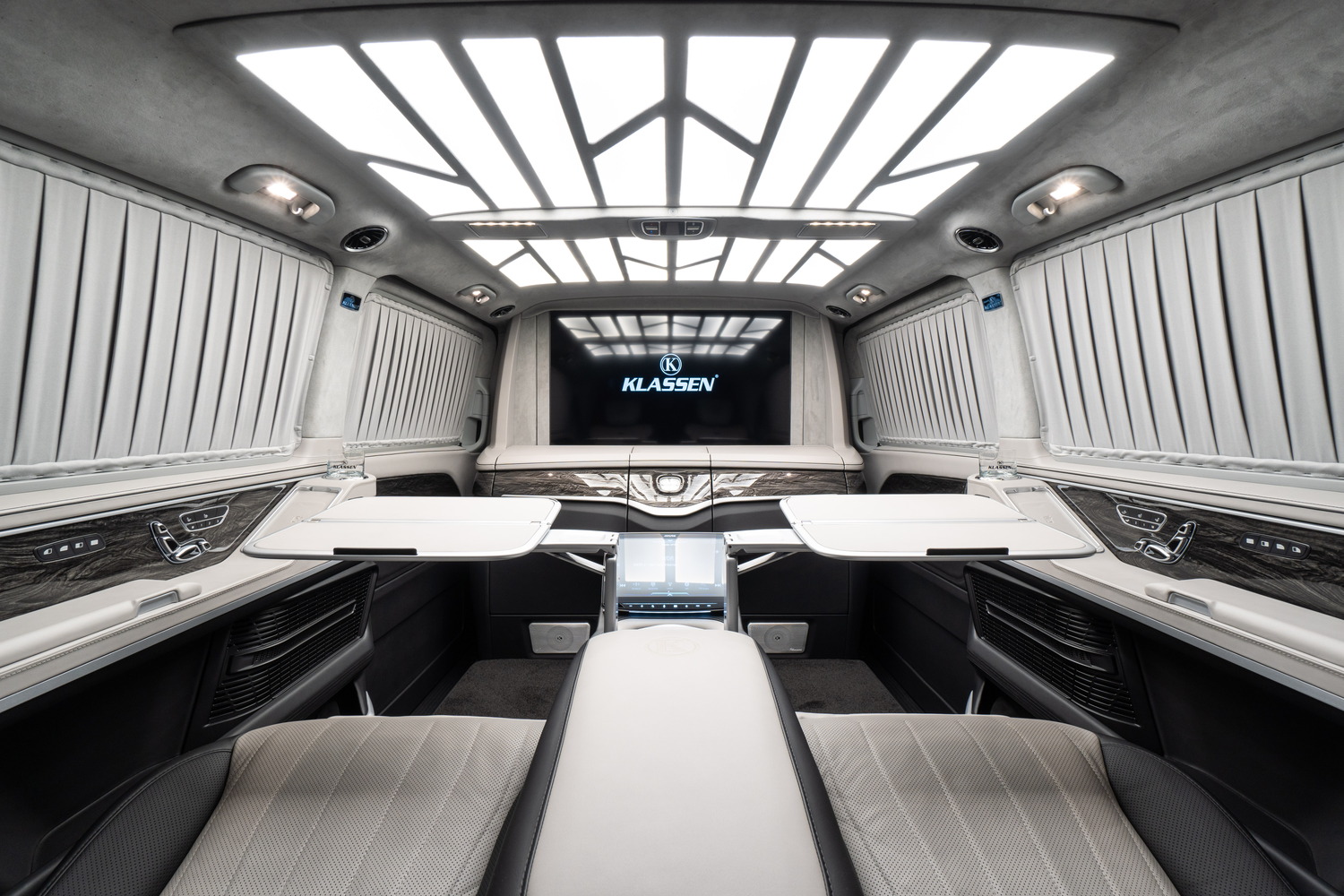
The passenger area is separated from the driver’s compartment by a signature KLASSEN partition. Inside it is a mechanism that controls the position of the glass panel and the large television, allowing the level of isolation in the interior to be adjusted depending on the situation.
When the passenger wishes to maintain visual contact with the driver or experience a more open environment, the glass section of the partition can remain open. For confidential conversations, relaxation, or business meetings, the partition can be closed, after which the passenger compartment is perceived as an independent office, visually disconnected from the front of the vehicle.
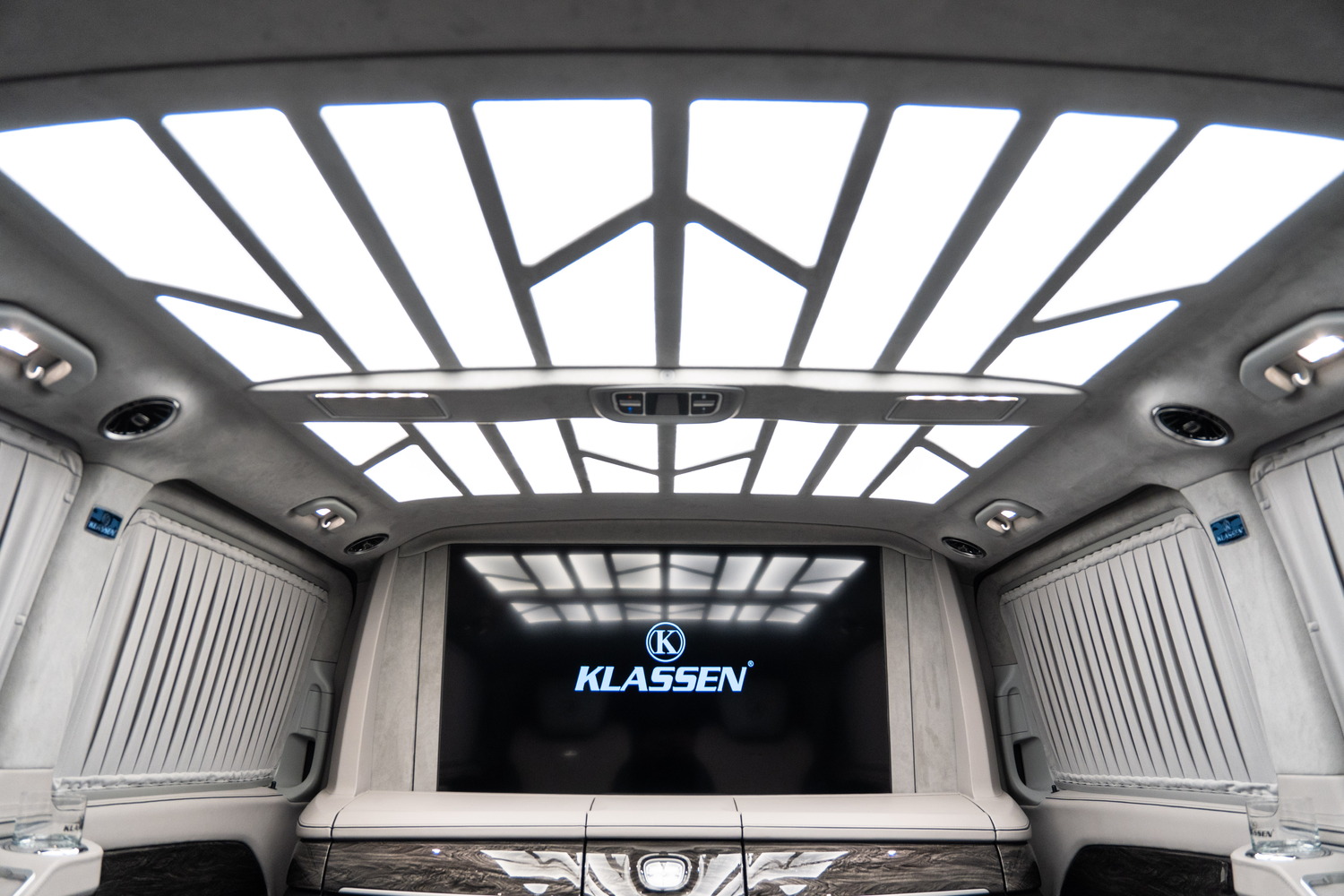
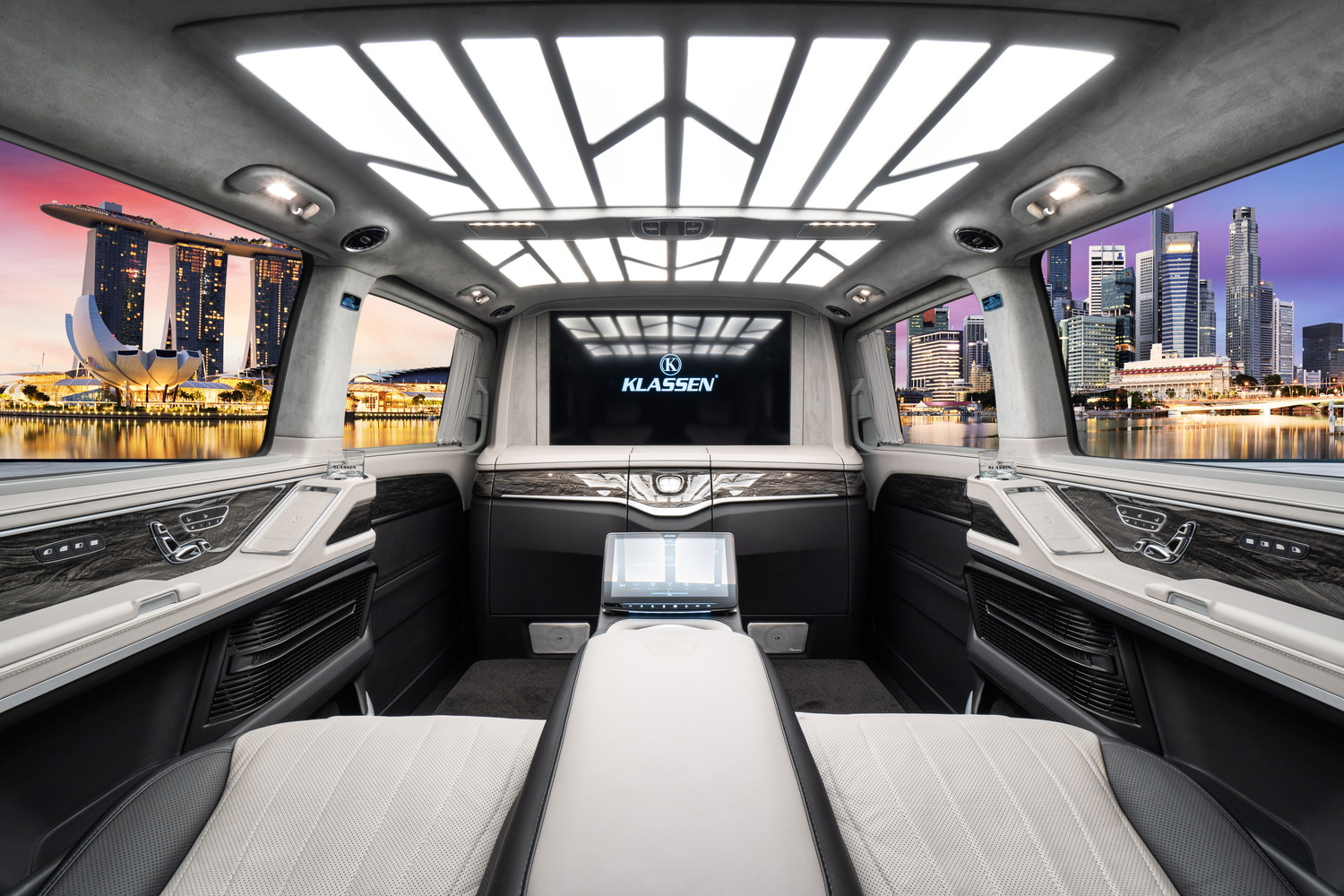
A 43-inch LED television is integrated into the partition and raised or lowered by an electric mechanism. In its concealed position, the screen does not occupy useful space or dominate the interior, while after activation it becomes the central element of the multimedia system, suitable for watching films, presentations, and news or conducting video conferences.
The partition structure also incorporates an additional folding seat with a headrest and three-point safety belt. The seat cushion can be unfolded separately, allowing the additional seating position to be used only when necessary without restricting space in the main two-seat VIP configuration.
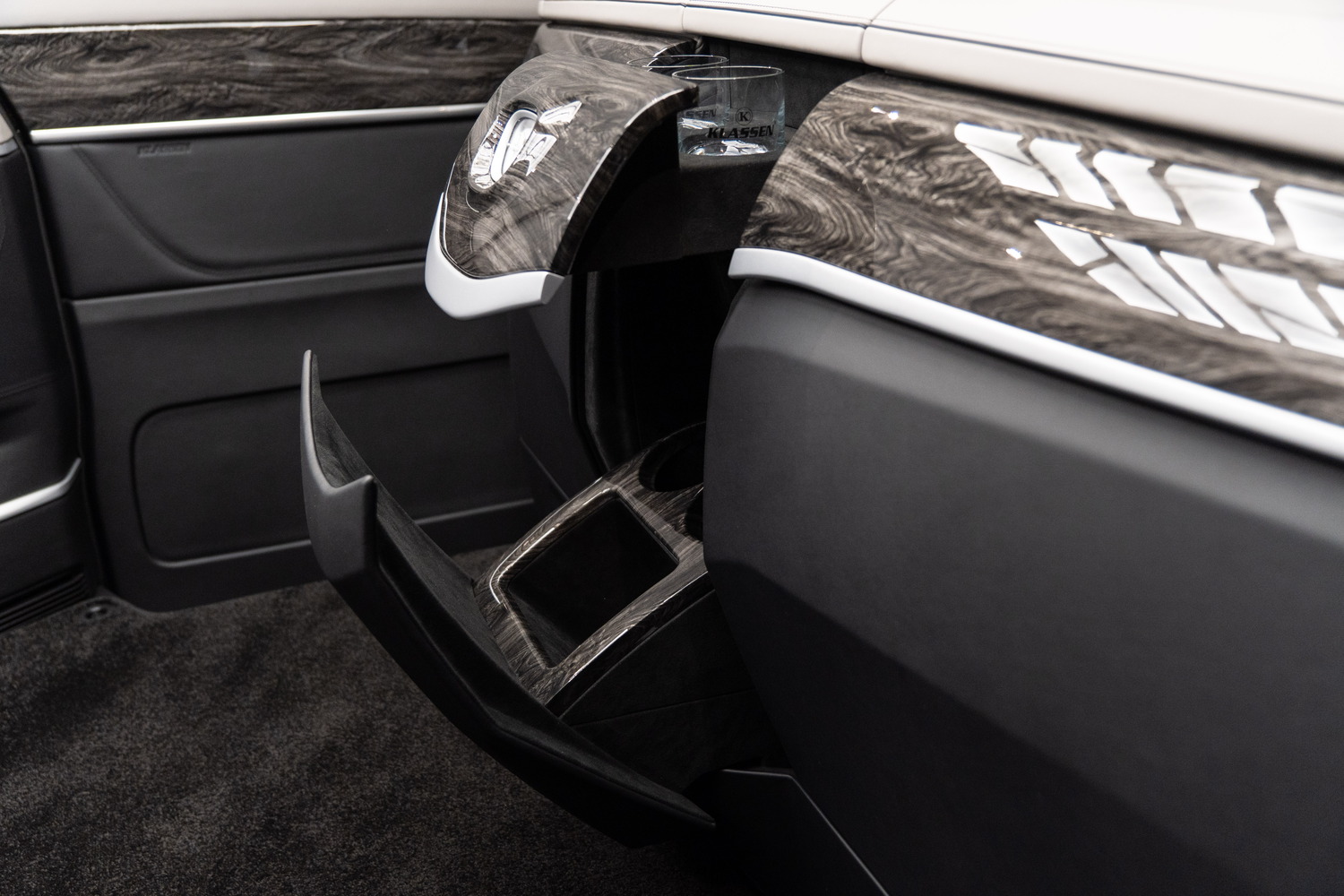
A minibar is housed in a separate electrically extendable module and designed for storing beverages at room temperature. Inside are holders for glasses and bottles, along with an additional surface for small items. After use, the minibar retracts completely into the partition, preserving the visual purity of the interior.
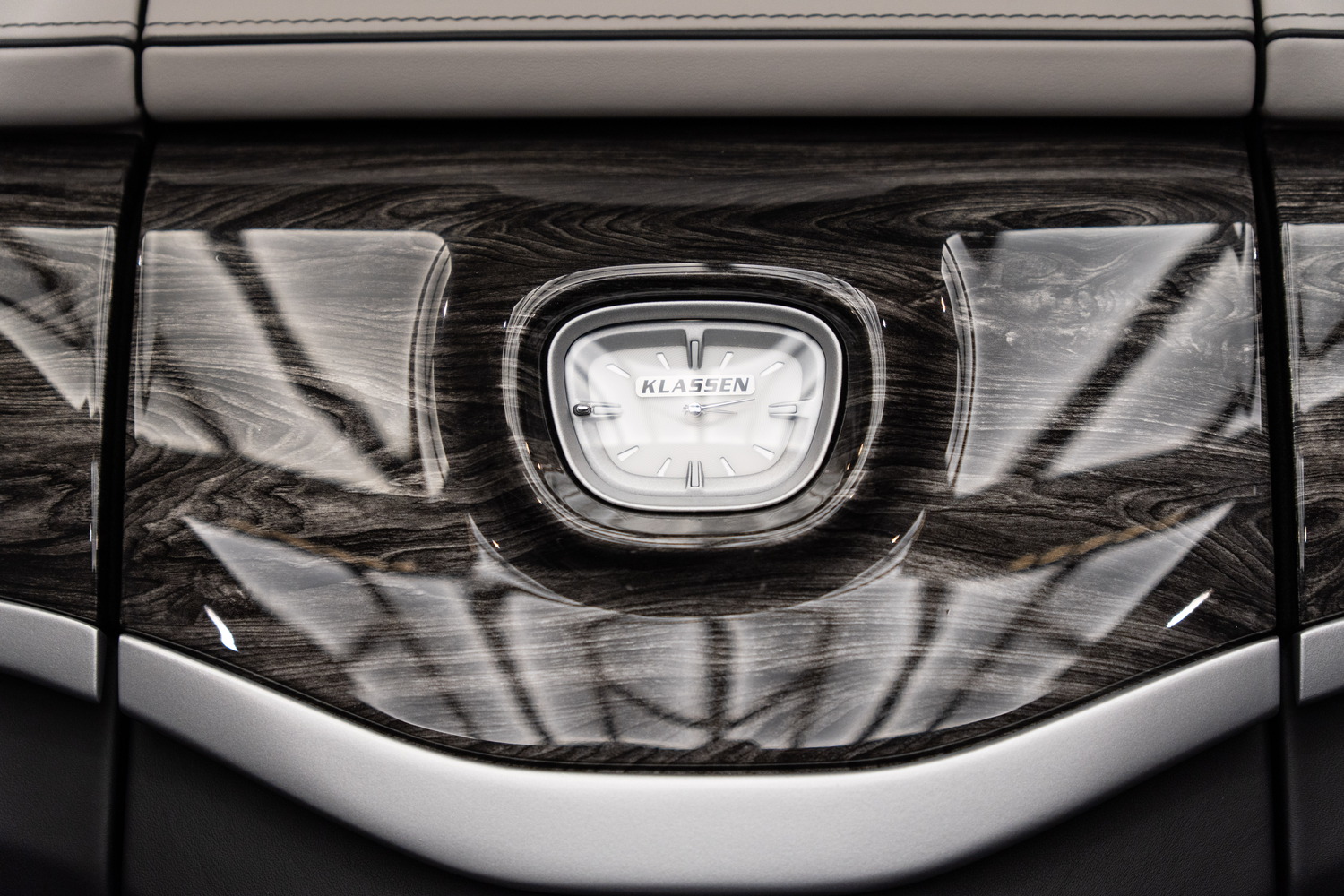
The composition of the partition is completed by a signature analog or decorative KLASSEN clock insert, while all visible surfaces receive an individual finish that coordinates with the leather, wood, metal, and colors of the other interior elements.
Starlight Headliner and Individual Lighting Architecture
A new ceiling structure is created for the interior, allowing lighting, decorative components, and equipment to be integrated in such a way that no technical element appears out of place. The headliner and pillars receive individual upholstery, with colors and textures coordinated with the seat leather, side panels, and floor covering.
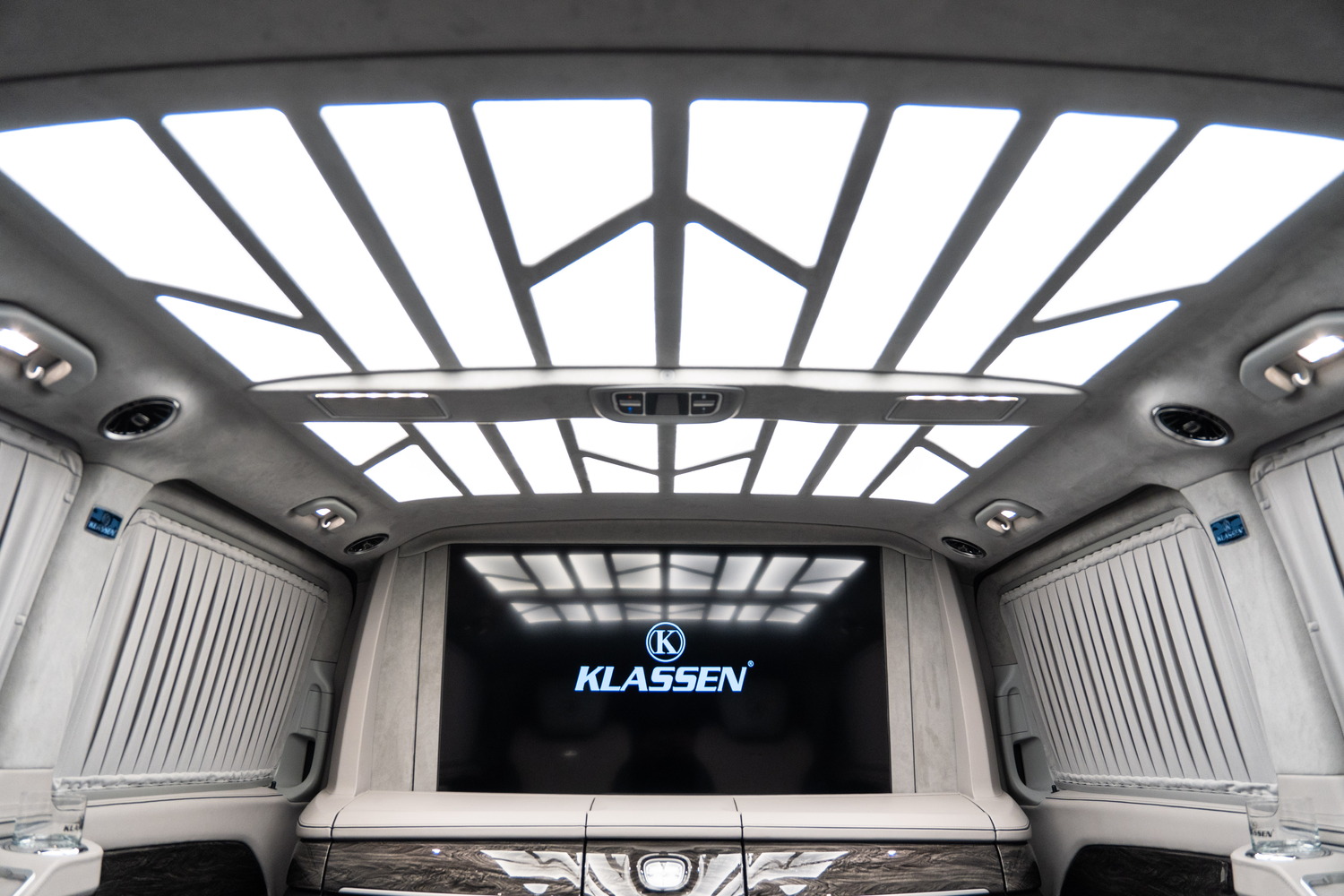
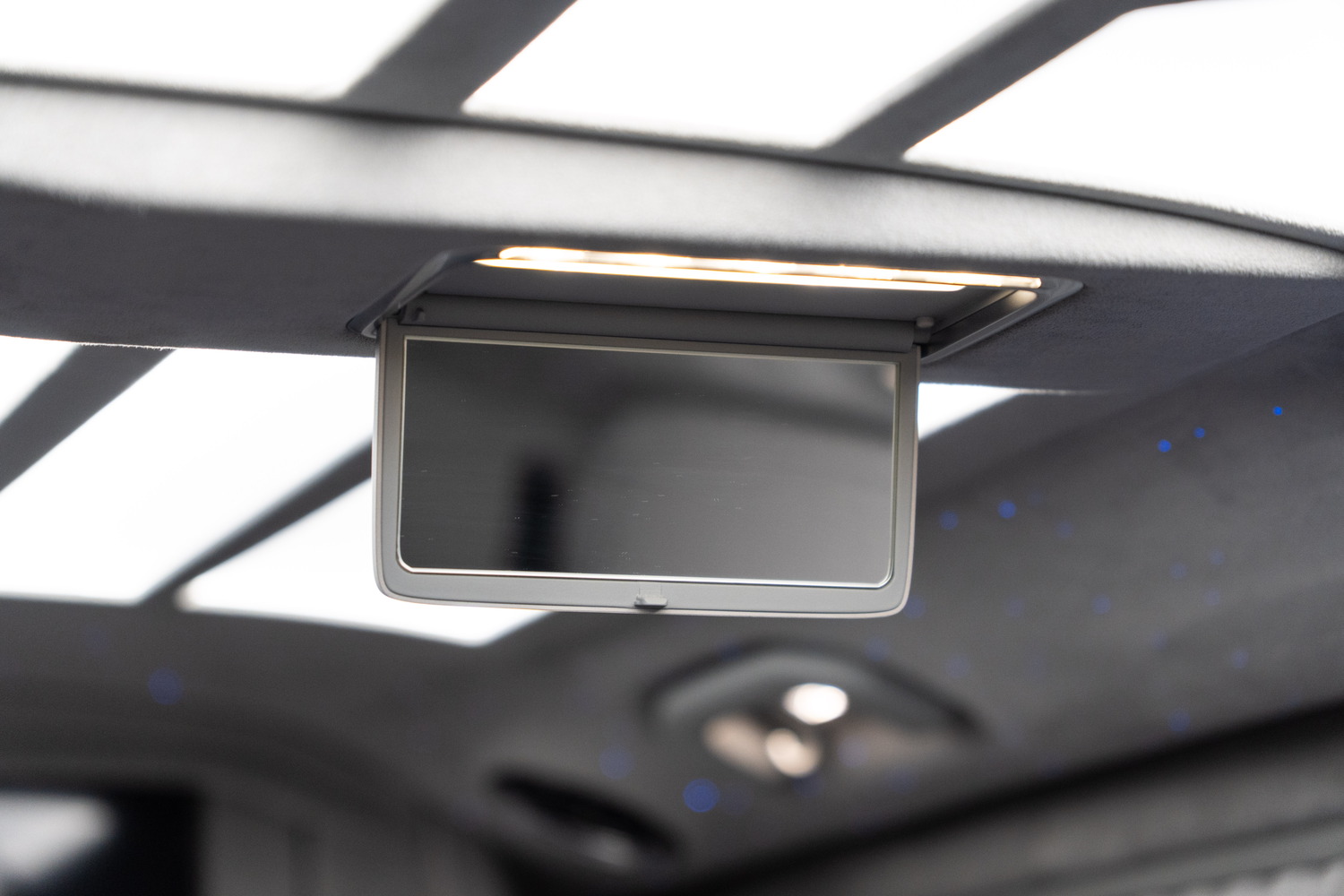
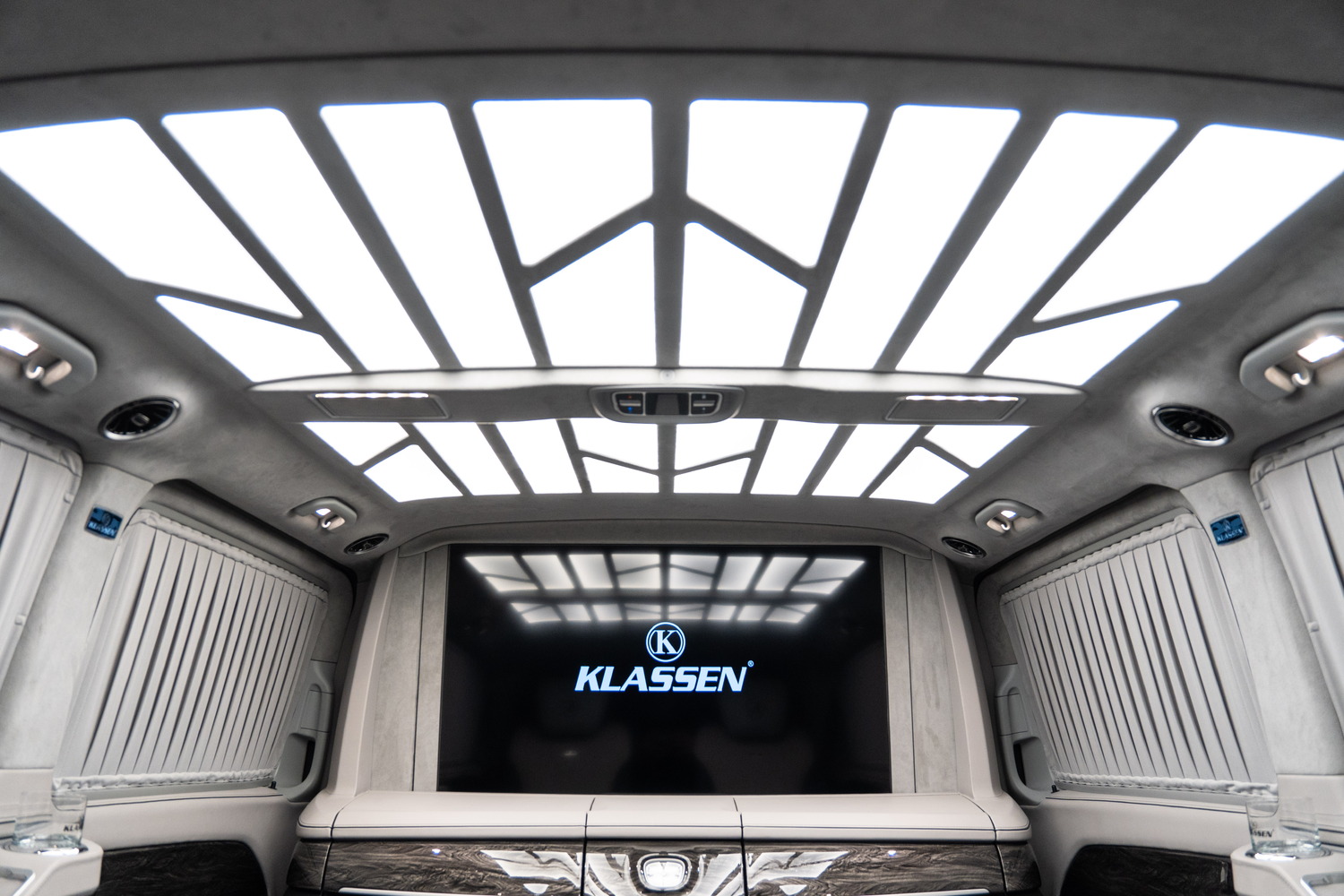
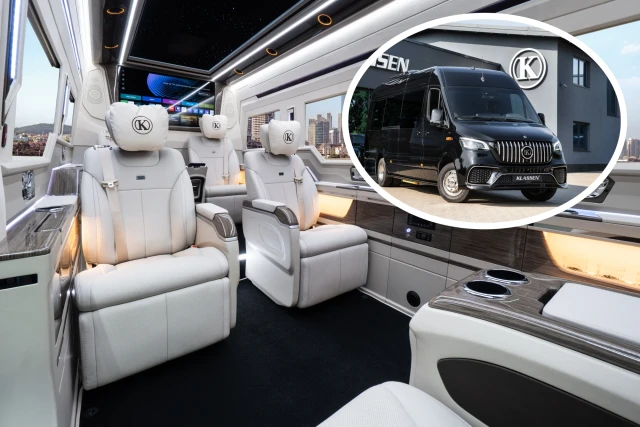
One of the central decorative features is the starlight headliner. It can be combined with the panoramic roof and the primary ceiling lighting, creating several visual layers while preserving a feeling of spaciousness even within a fully enclosed passenger compartment. During the day, the interior remains bright and open, while in the evening, the individual points of light create an intimate atmosphere suitable for relaxation.
The main ceiling lighting is designed in the signature KLASSEN style and complemented by a mirrored surface integrated into the overall structure. Reflections of light visually increase the perceived height of the interior and emphasize the precise geometry of the ceiling.
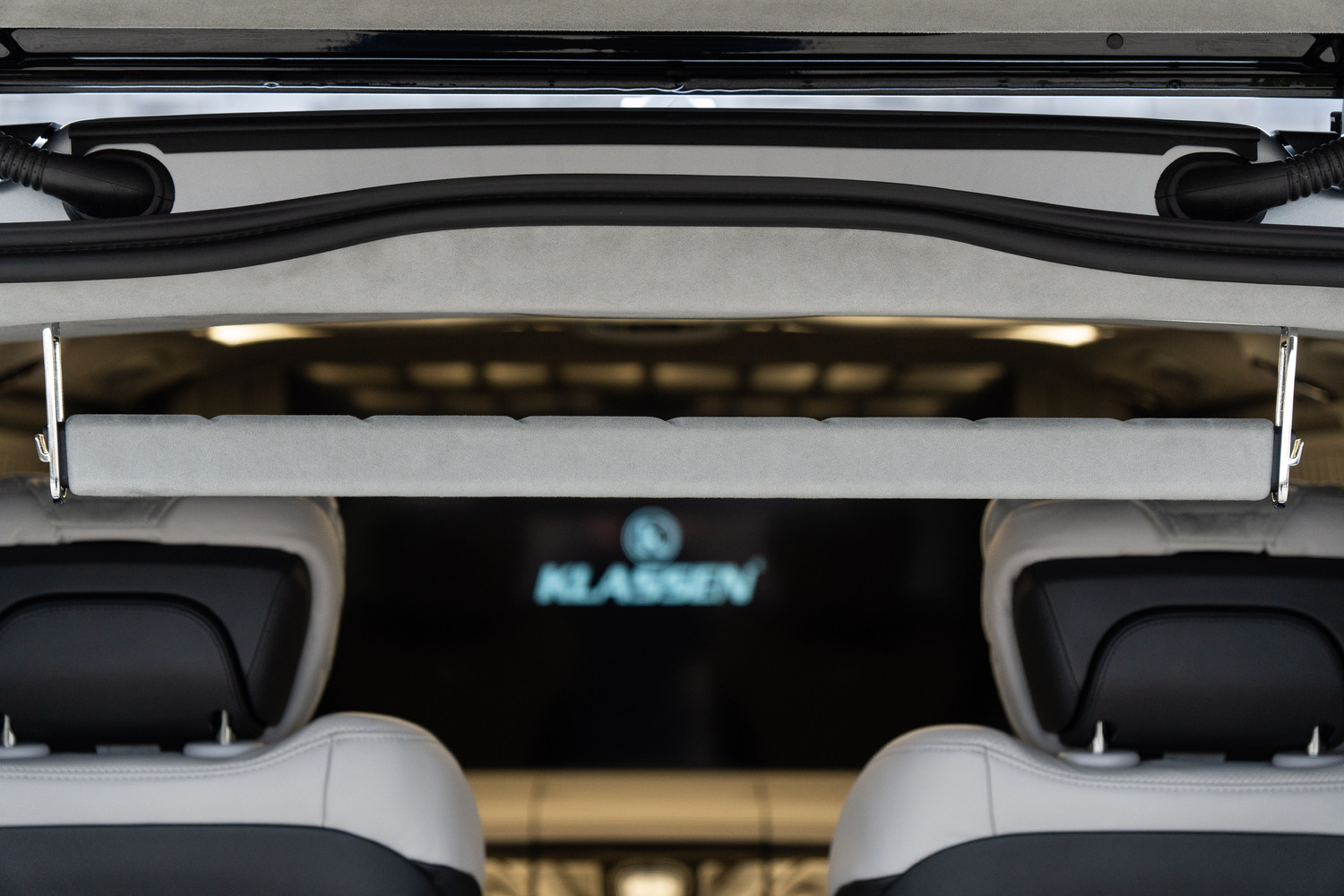
A MAYBACH vanity mirror is provided for passengers, together with practical features for storing clothing. Hooks and a separate clothes rail are installed in the interior, allowing a jacket, coat, or other garments to remain properly suspended without occupying the seats.
A New Floor Structure and Comprehensive Insulation
The floor of the passenger compartment is not limited to replacing the original floor covering, since a separate structure is created to accommodate the seats, equipment, and internal communication lines. It is designed in accordance with applicable regulatory requirements and European standards, after which it becomes the foundation for all elements of the passenger area.
High-quality sound and thermal insulation are installed within the body. This is particularly important for the electric VLE: once powertrain noise is reduced, sounds from the tires, road surface, and airflow become more noticeable, so additional insulation helps realize the acoustic potential of the electric platform and maintain quietness at high speed.
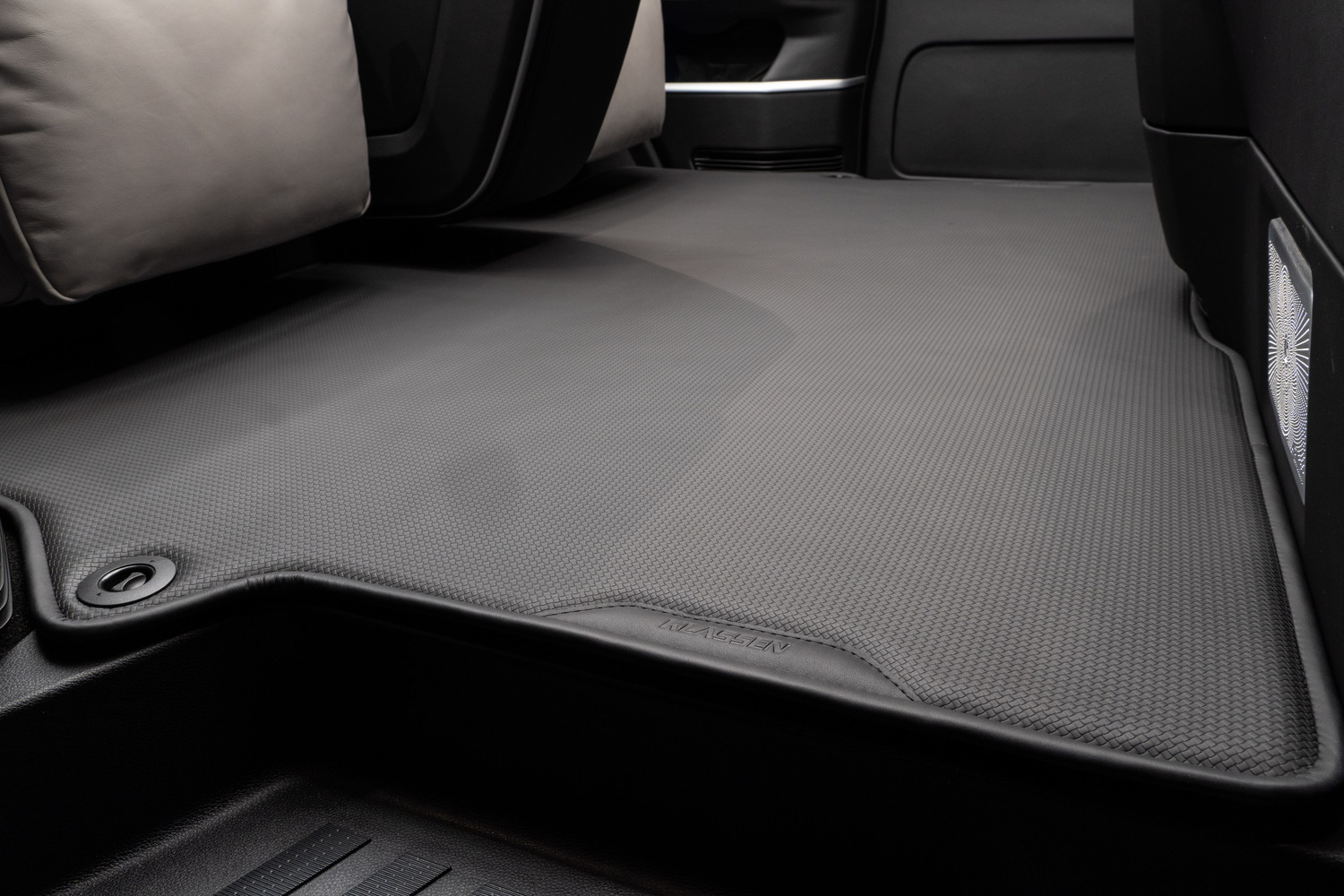
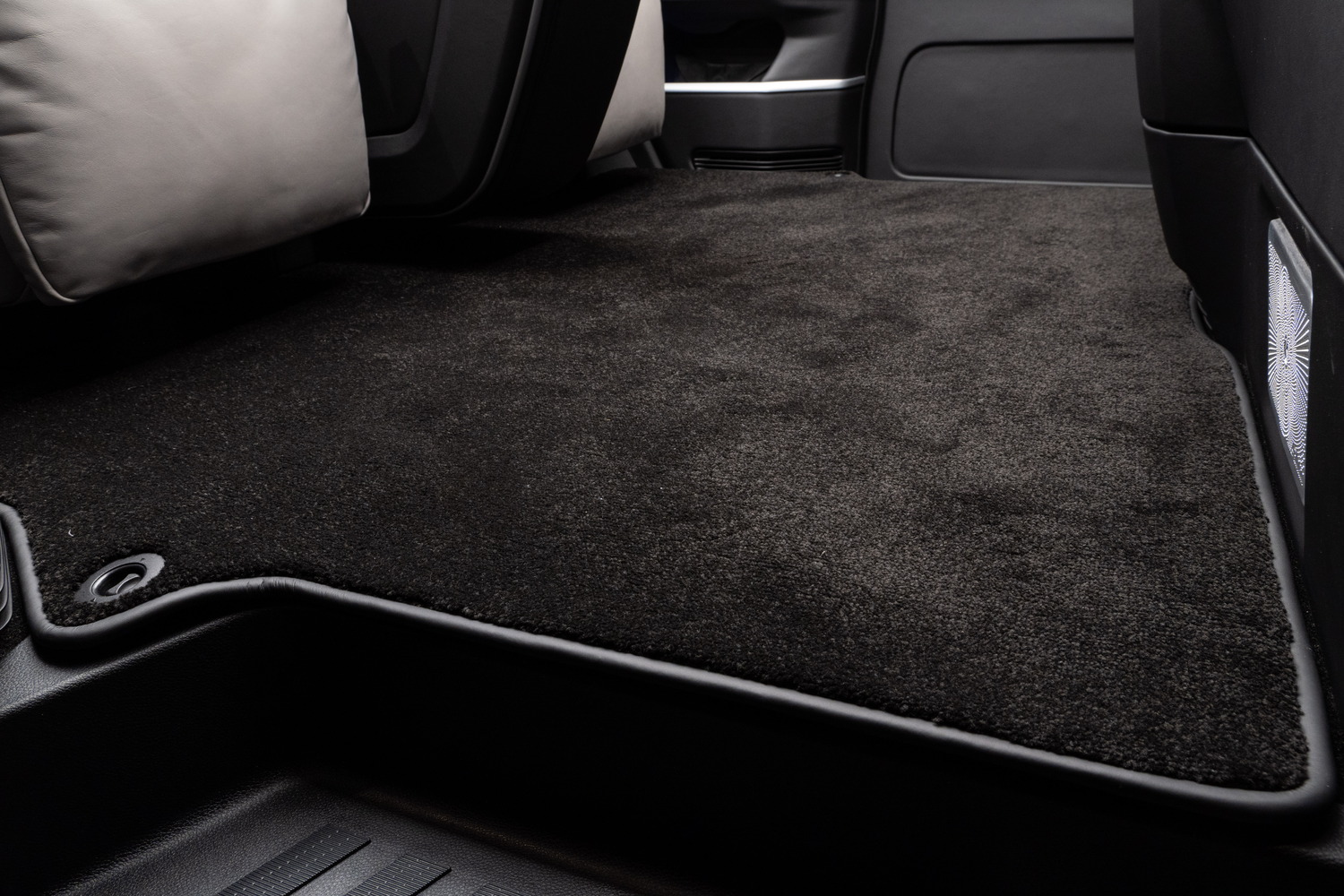
The primary carpeting completely covers the VIP area and is selected according to the interior color concept. A removable decorative floor covering is also provided, while a separate winter set can be manufactured for use in cold and wet conditions to protect the primary interior finish.
Side Panels, Natural Wood, and Concealed Door Controls
The side walls of the interior are completely redesigned and become a full part of the cabin architecture. Their form takes into account the position of the seats, armrests, decorative inserts, lighting, curtains, and internal mechanisms.
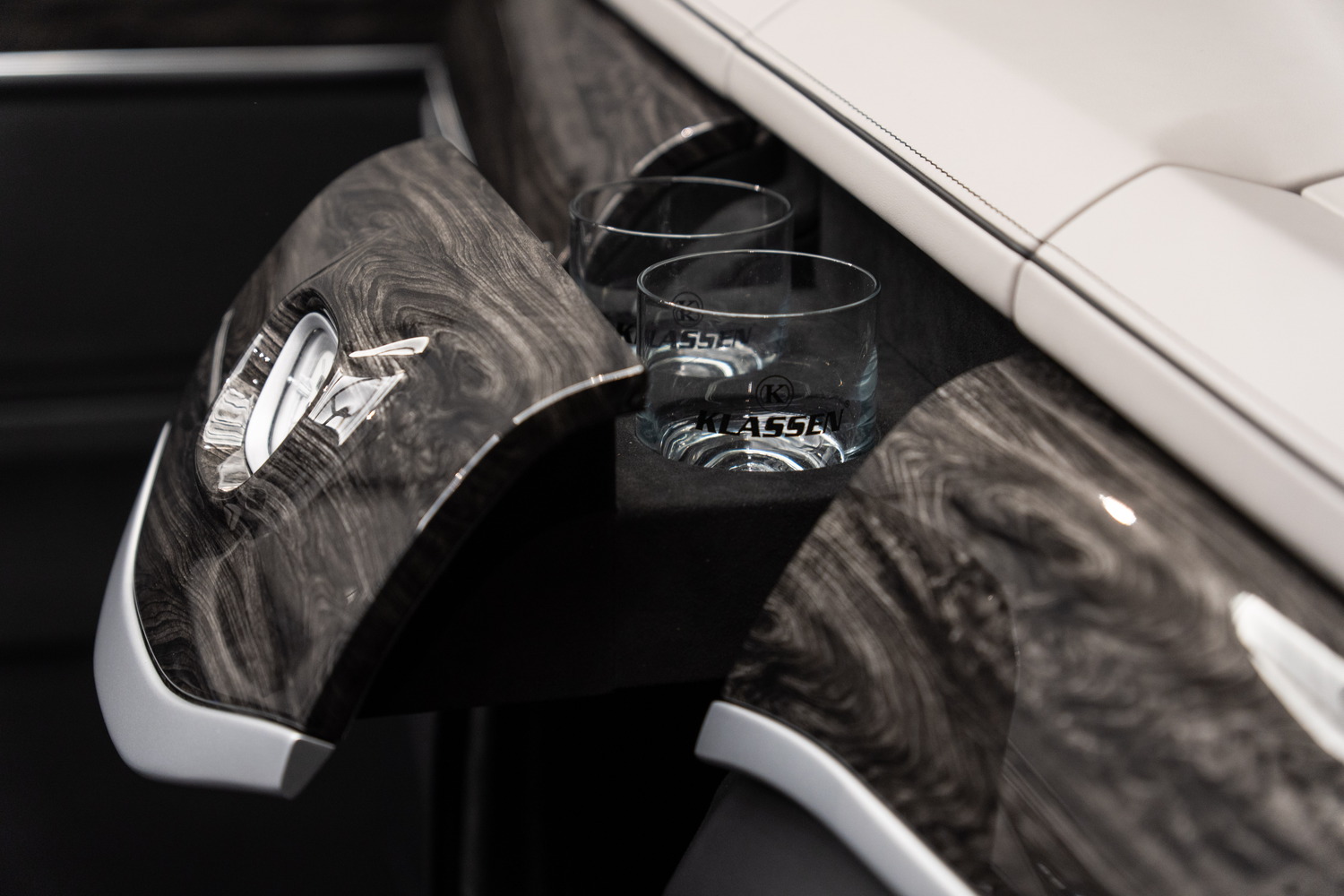
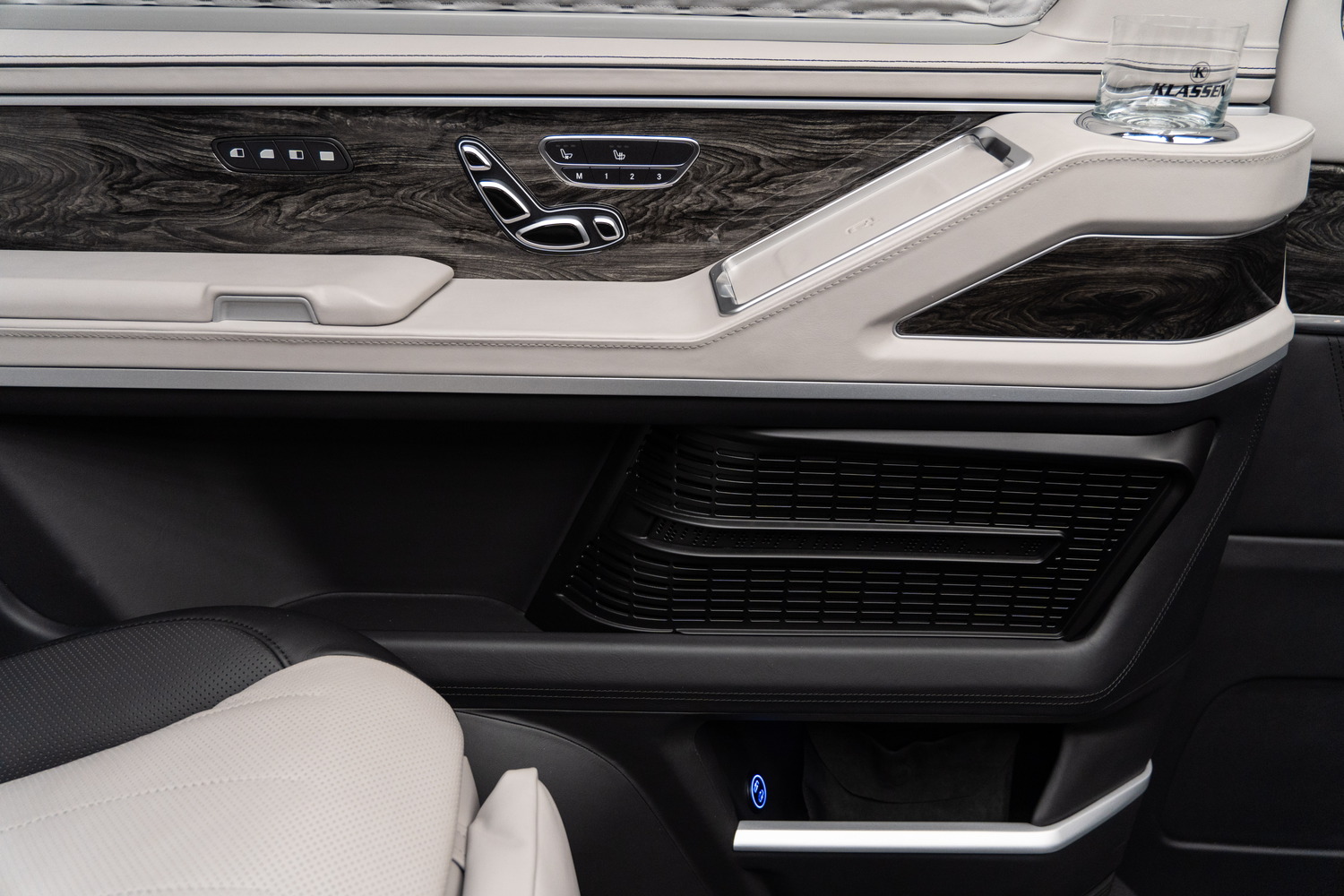
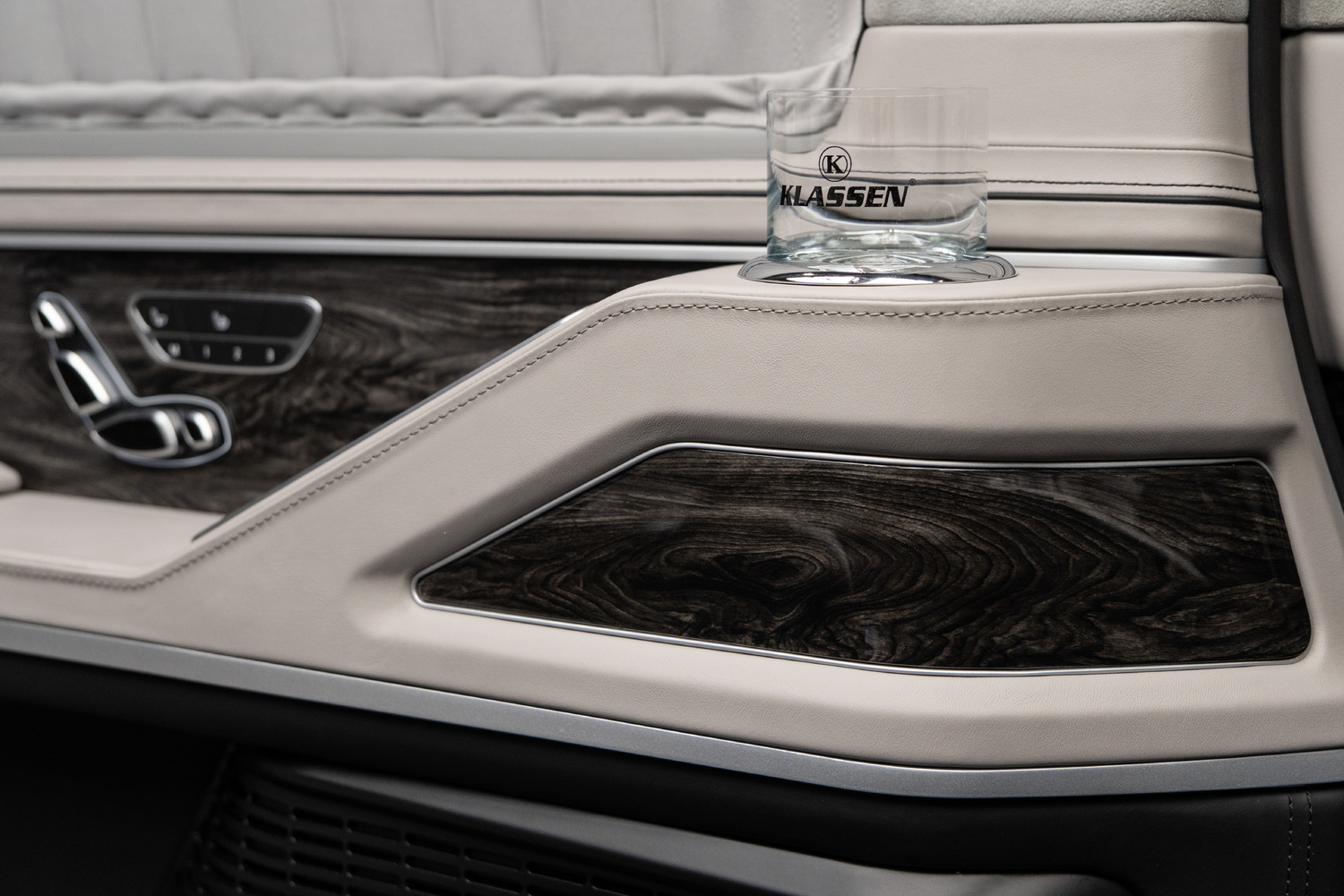
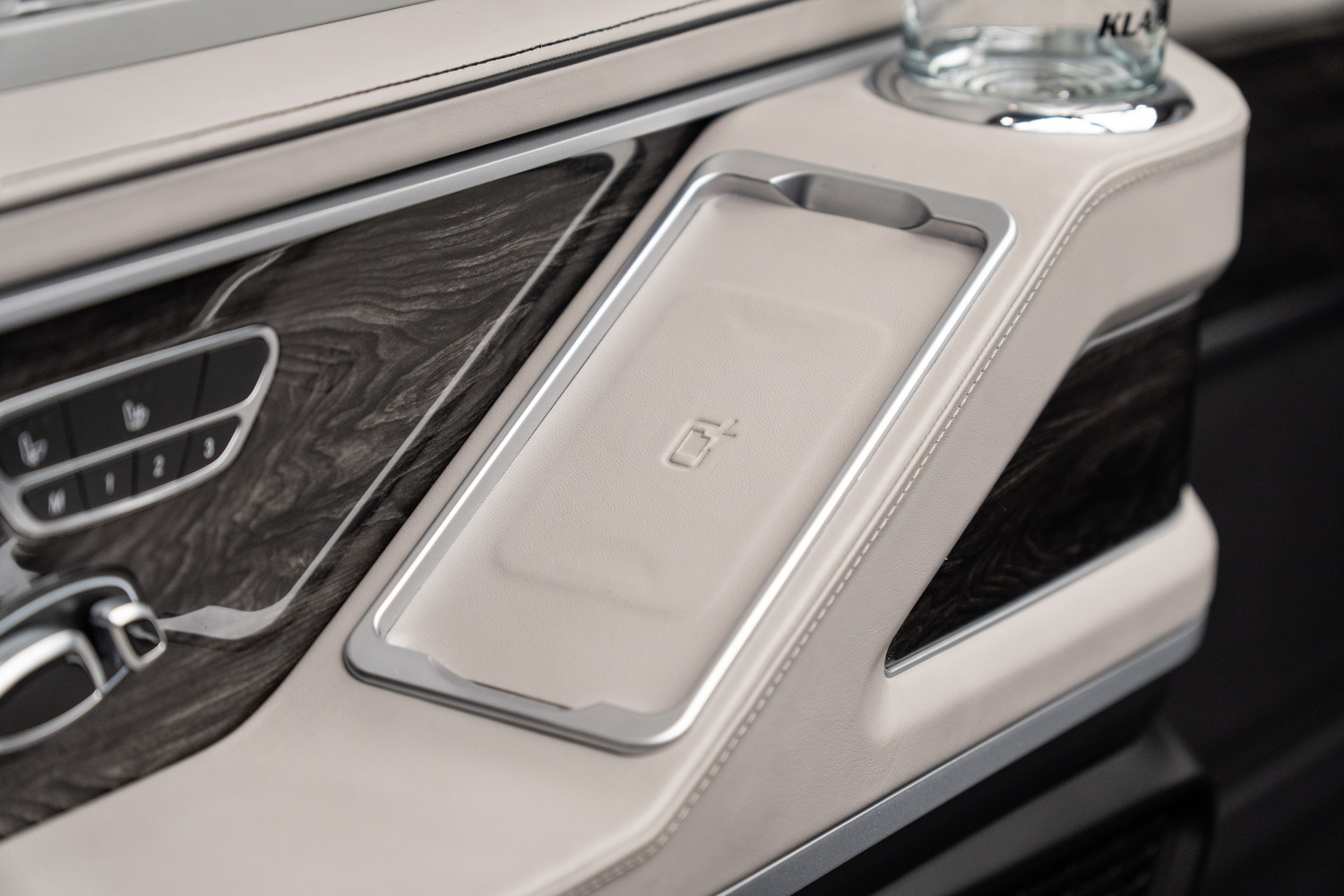
Wireless smartphone charging pads and glass holders are integrated into the side armrests. Thanks to this arrangement, the passenger does not need to reach toward the center console when placing a drink or charging a mobile device.
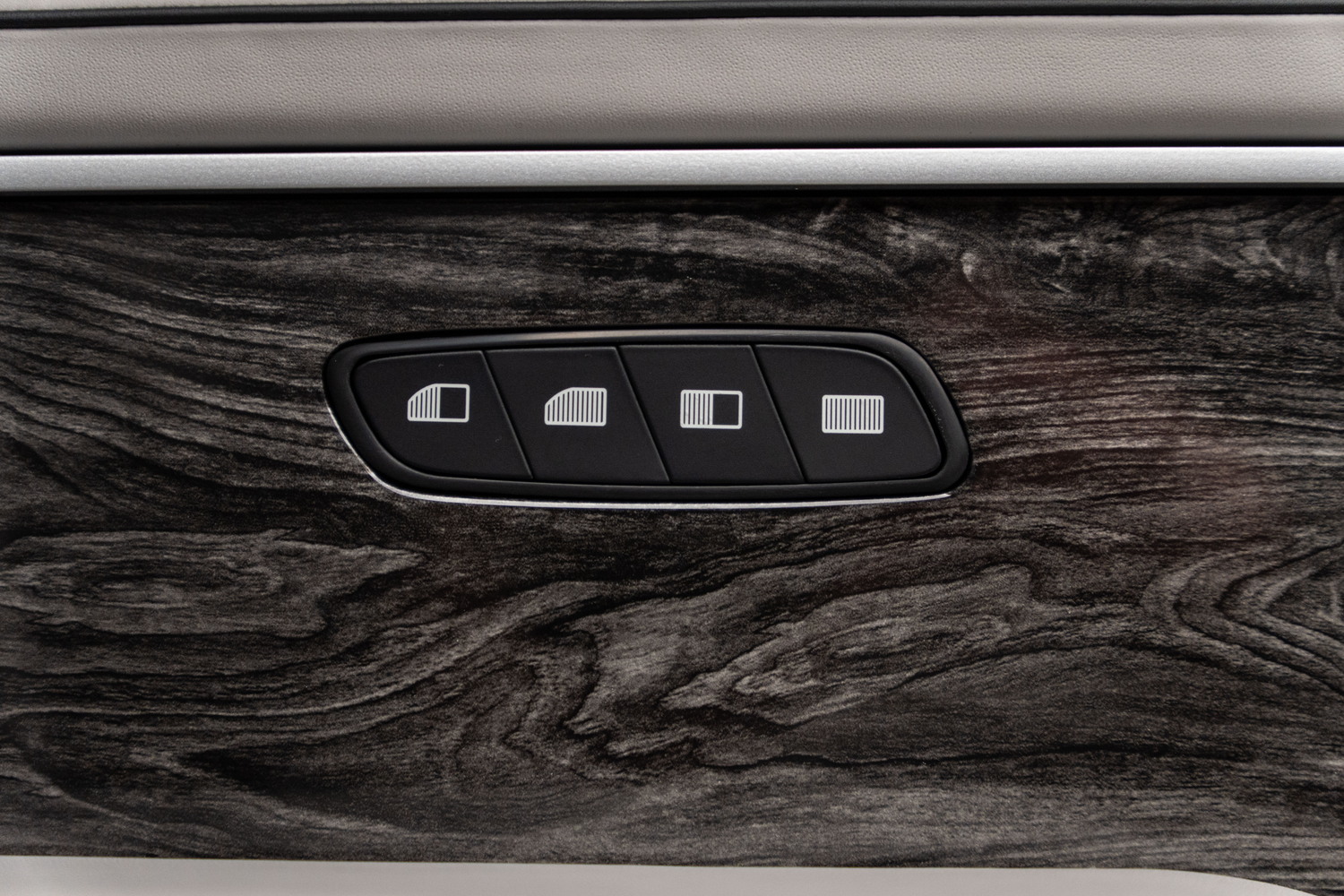
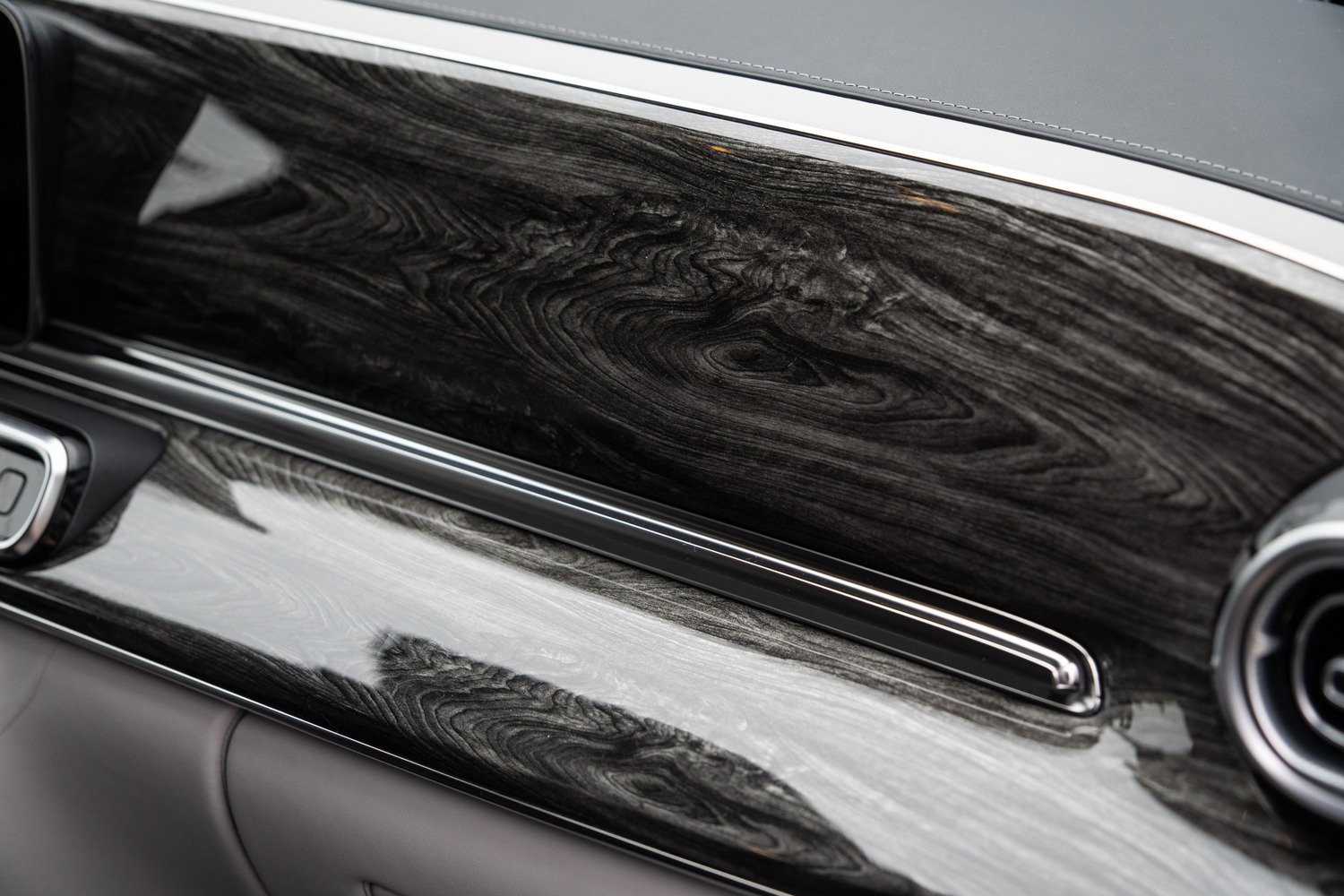
Leather and valuable wood species are used for the finishes, with the wooden elements continuing the overall geometry of the interior and visually connecting the side panels with the partition, center console, and driver’s area. The surfaces must not appear as separate decorative overlays, since the grain pattern, shade, and direction of the wood are coordinated during the design stage.
The sliding-door opening mechanism is integrated directly into the partition, ensuring that the control remains accessible to the passenger without disturbing the clean appearance of the side panel. This position is particularly convenient when entering or leaving the vehicle, as the door can be opened without changing the seat position.
Two-layer curtains with guide rails are provided for the side and rear windows. They make it possible to regulate the amount of incoming light and the level of privacy, while the side curtains can be equipped with electric operation. When closed, they protect passengers from outside attention and bright sunlight, while once opened they completely free the window openings.
RGB ambient lighting runs along the interior elements and allows the atmosphere of the cabin to be adjusted depending on the time of day or personal preferences. It complements the ceiling lighting and starlight headliner without replacing them, giving the passenger the ability to select either neutral working light or a softer evening lighting scenario.
A Multimedia System for Work and Entertainment
The multimedia functions of the passenger compartment are controlled through a mobile media station that combines the primary sources of content and control elements. The passenger gains access to video, audio, and connected devices directly from their seat without having to contact the driver.
The main display is the 43-inch LED television integrated into the partition. A DVB-T2 antenna is provided for receiving digital terrestrial television, although its availability and full functionality depend on the broadcasting standards in the country where the vehicle is operated, so system compatibility is verified for the specific market.
A 12-to-220-volt power inverter supports the operation of additional equipment and ordinary consumer electronics. Together with the power outlets, USB ports, and HDMI input, it transforms the vehicle into a complete working environment in which a laptop, media player, game console, or other compatible equipment can be used.
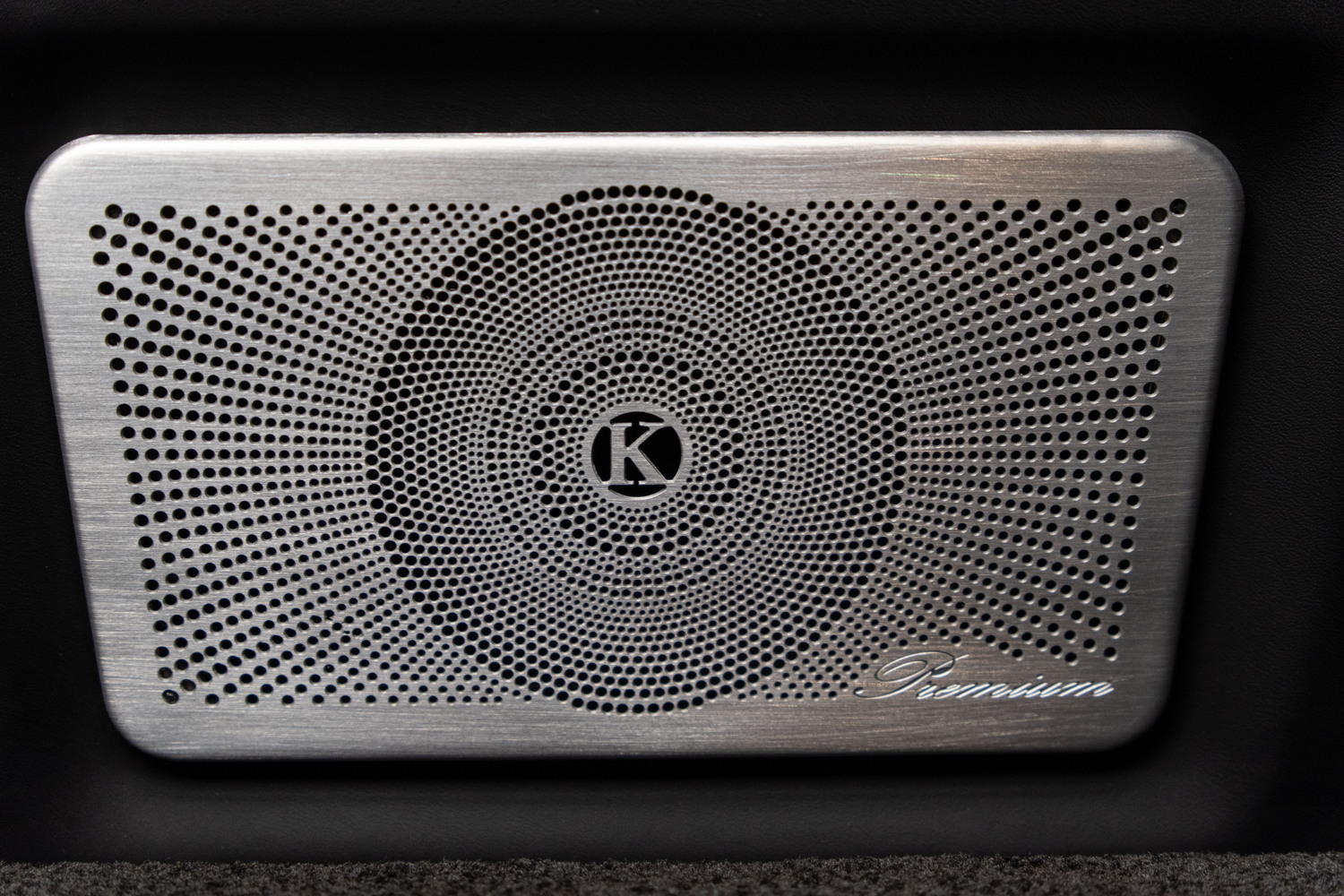
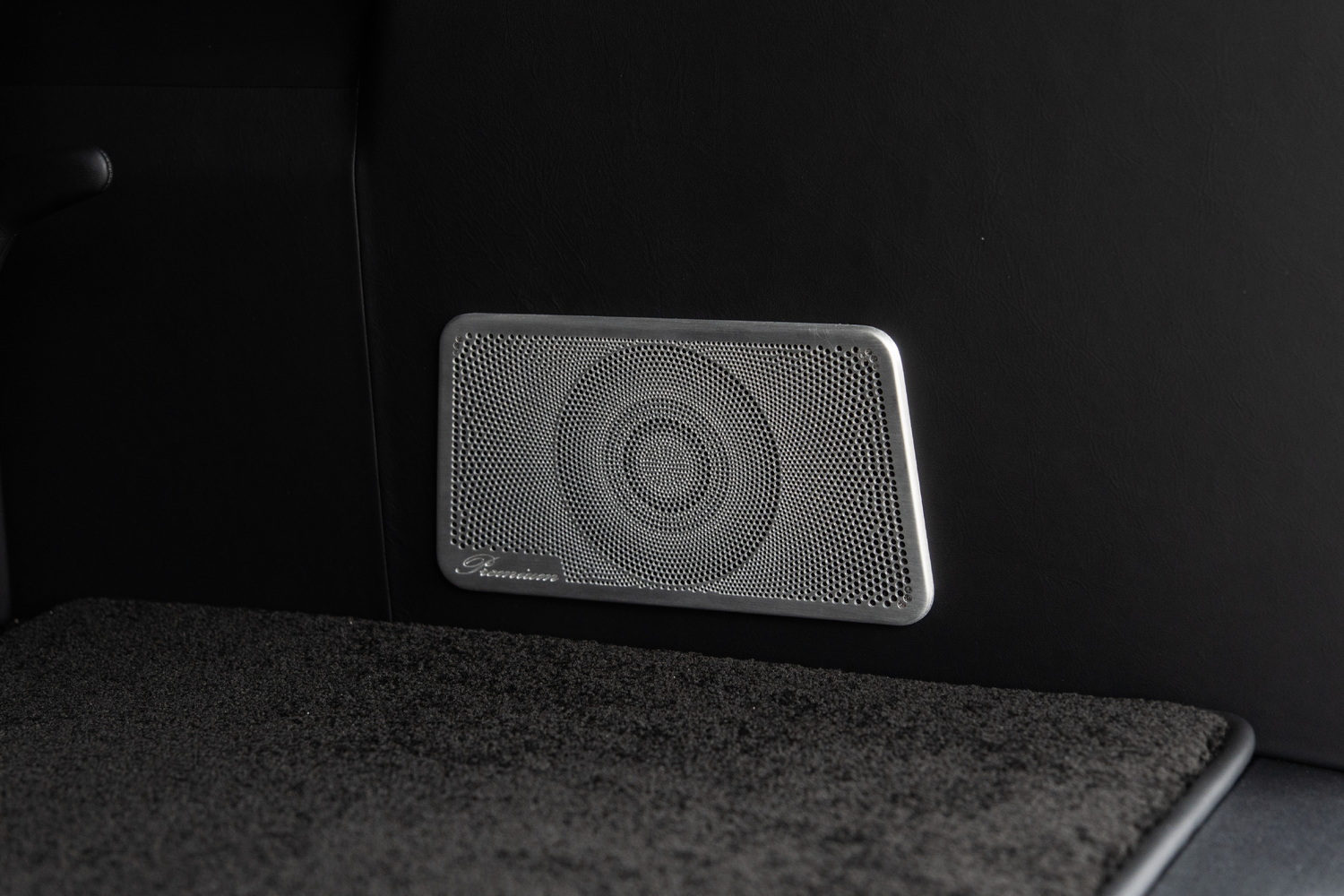
The passenger-compartment audio system includes four two-way speakers and a separate subwoofer. This arrangement provides balanced sound distribution throughout the main VIP area, while the low-frequency speaker adds the necessary depth when watching films or listening to music.
The multimedia package also includes Apple TV, expanding access to streaming services and personal content. The exact set of digital services is determined by the region, the owner’s account, and the availability of the corresponding platforms.
An intercom with a hands-free function is installed for communication with the driver. It allows the partition to remain closed while the vehicle is moving while still enabling necessary instructions to be conveyed to the front compartment. Communication quality may depend on speed and road noise, which is taken into account when configuring the microphones, speakers, and additional sound insulation.
Individual Climate Control for the Passenger Area
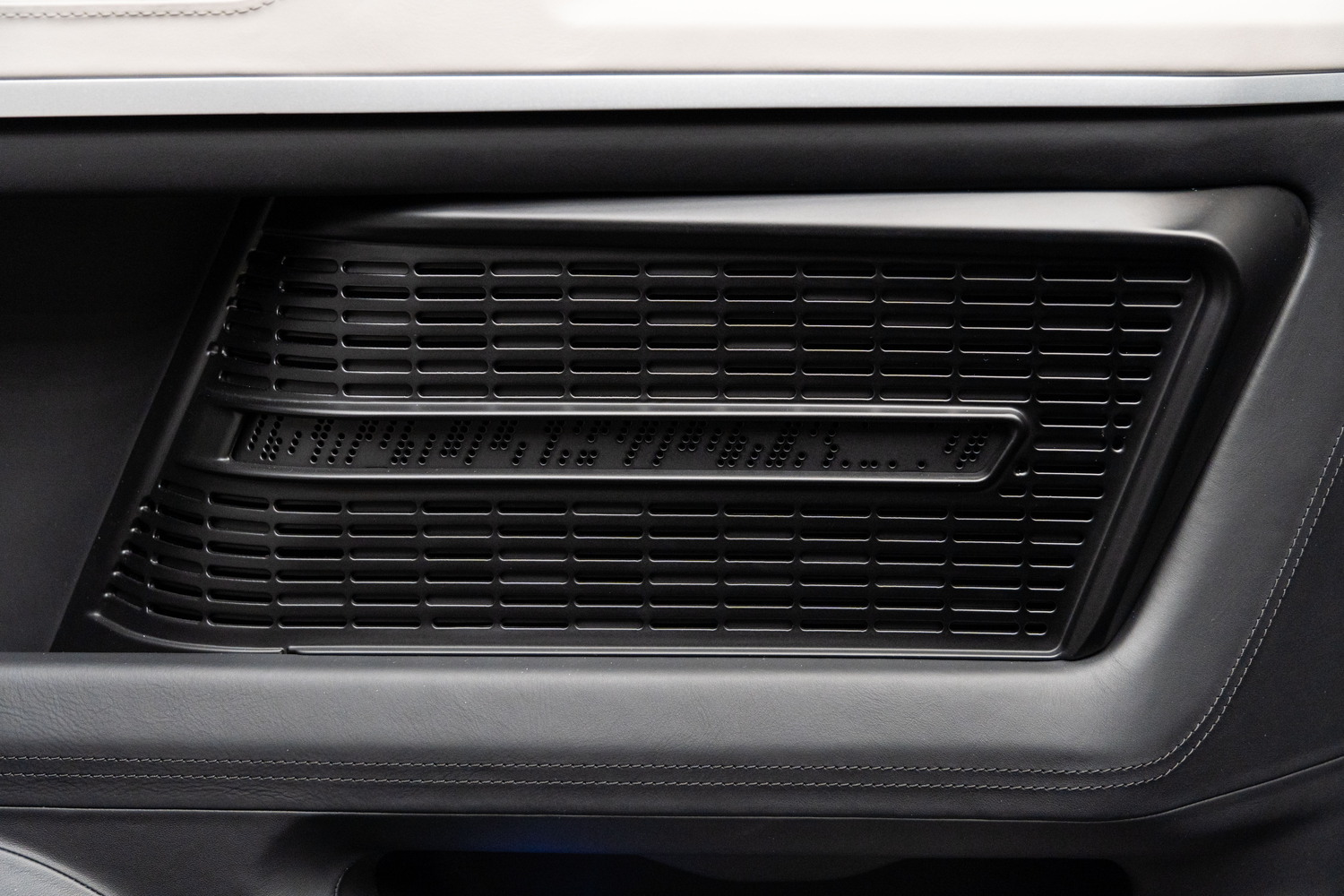
The climate-control system is adapted to the new interior architecture and its decorative design. In one configuration, the original Mercedes-Benz air channels are retained, while the ventilation outlets are selected or painted to match the interior color so that they do not stand out against the ceiling and side panels.
If necessary, the air ducts can be redesigned to account for the position of the partition, ceiling structure, and additional equipment. In this case, adapted air vents are used, although modifying the channel configuration may reduce their output by approximately ten percent, which is taken into account during the design process and when selecting the final arrangement.
The climate-control panel is relocated to an area easily accessible to passengers. This allows the temperature and airflow intensity to be adjusted directly from the VIP compartment without contacting the driver or opening the partition.
The Driver’s Area as a Continuation of the Overall Interior
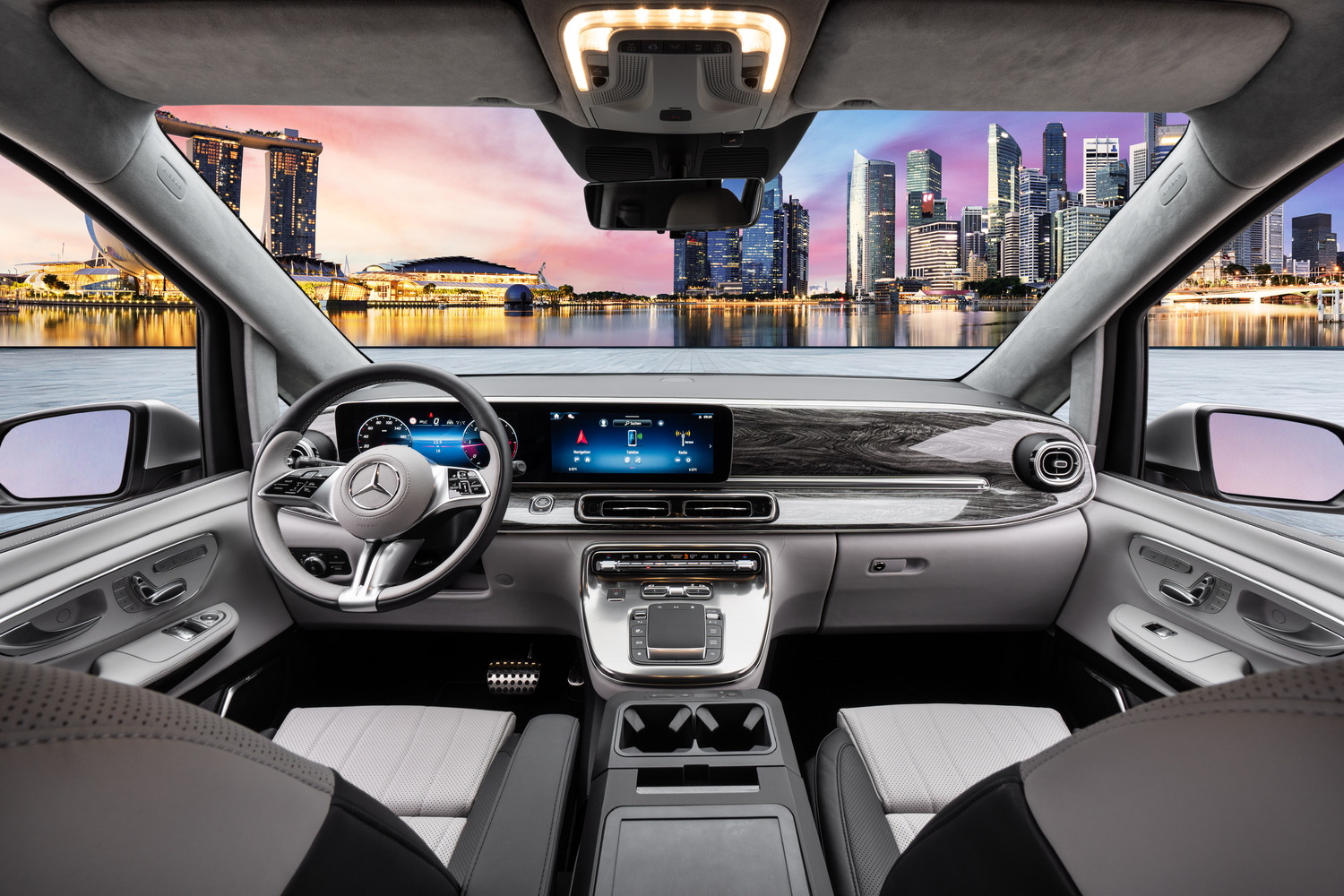
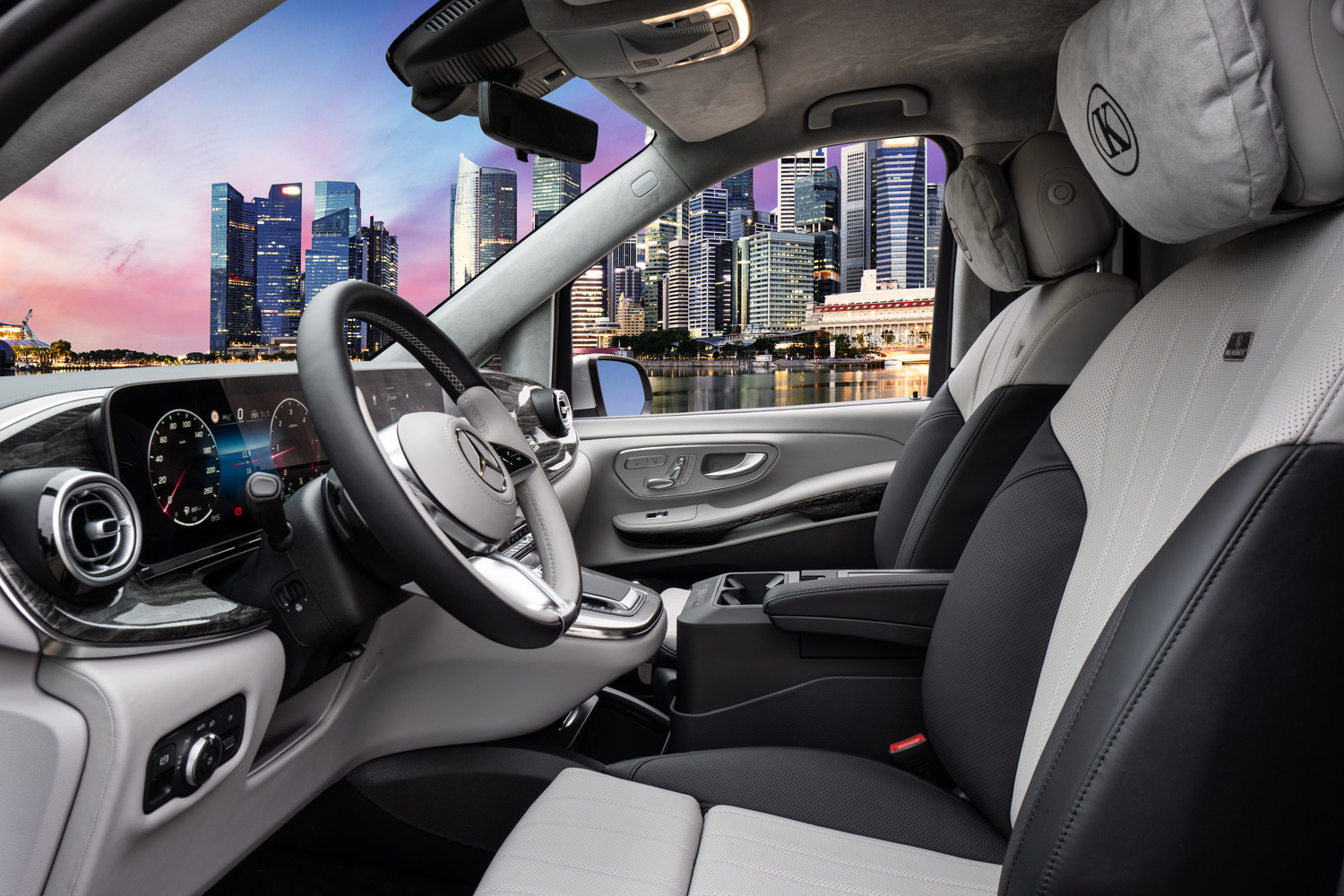
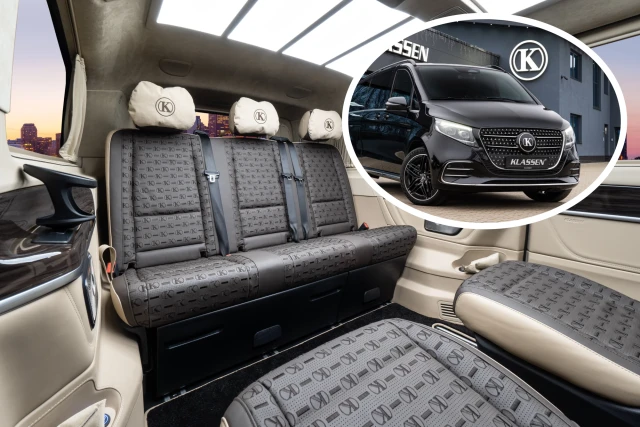
Despite the physical separation of the spaces, the driver’s compartment must not look like the interior of a different vehicle. The front seats may retain the original Mercedes-Benz Nappa 447 upholstery or receive upholstery matching the leather and decorative stitching of the VIP area.
Separate headrest pillows are manufactured for the driver and front passenger. The door handles are redesigned and covered in leather, while the door panels themselves can also be upholstered in leather selected to match the overall color palette of the vehicle.
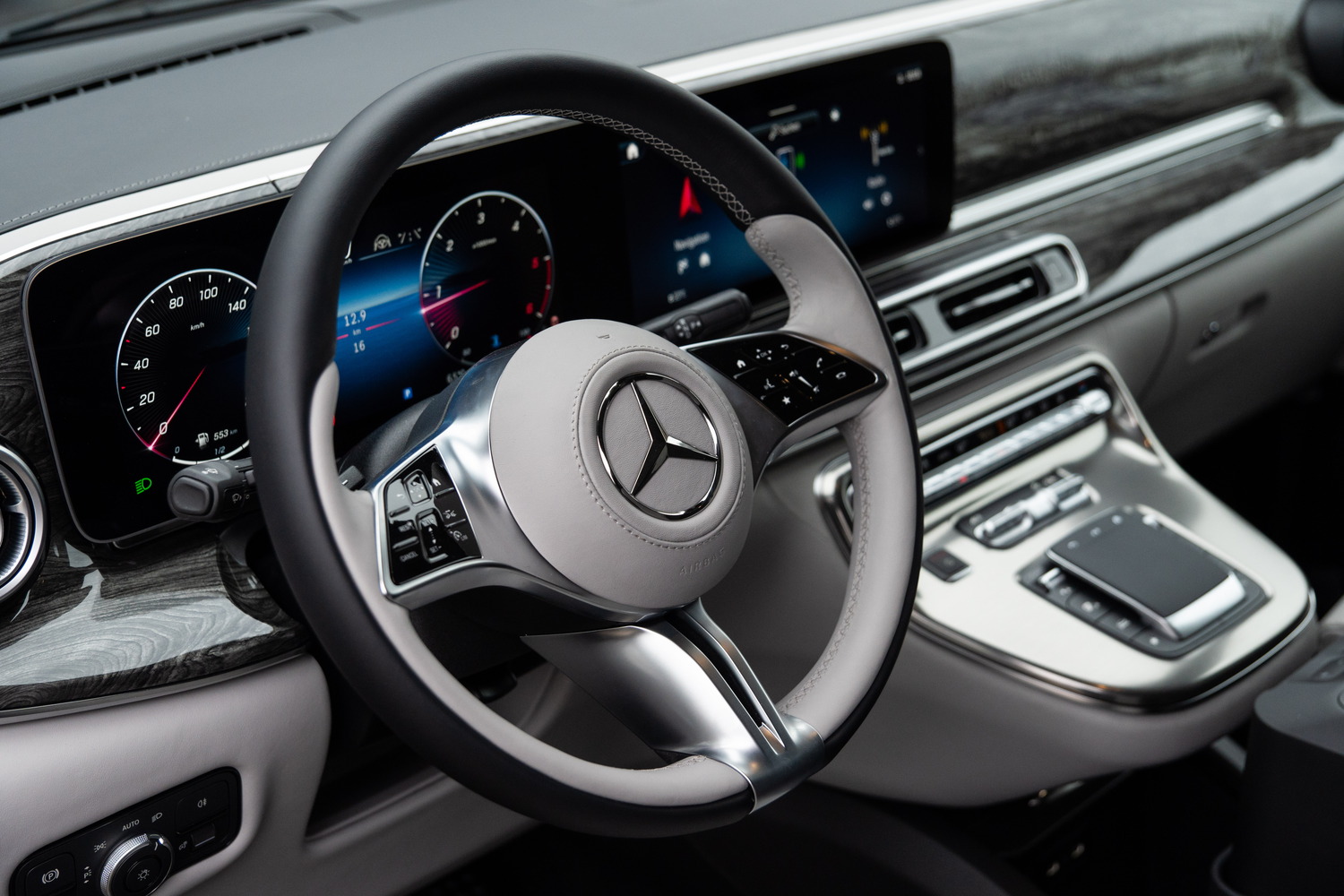
The steering wheel is finished in leather and wood. The dashboard is complemented by elements made from valuable wood species, with the wooden inserts continuing onto the doors. The lower and upper sections of the dashboard can be upholstered in leather, ensuring that even when the partition is open, the passenger sees a cohesive and fully completed interior.
Individual floor mats are manufactured for the driver’s area. A Dometic CoolFreeze CF12 refrigerator is installed between the driver and front passenger seats, with its housing and exterior finish adapted to the surrounding elements. The ceiling and pillars in the front section of the vehicle are upholstered in Alcantara, completing the transition from the standard Mercedes-Benz interior to an individually created KLASSEN environment.
Individual Electronics and Finishing of Every Surface
A Soft-Touch coating is used throughout the passenger compartment, giving technical and decorative elements a pleasant matte texture. It helps eliminate the characteristic shine of standard plastic and visually brings different materials closer together.
A complete range of specialized fastening, insulation, and consumable materials is used during production to ensure reliable equipment integration. Most of these components remain hidden, but the durability of the finished vehicle depends precisely on the quality of the concealed connections, wiring, guides, mountings, and insulation.
The multimedia system and electronics are not limited to a standard configuration. At the owner’s request, KLASSEN can develop individual solutions, including additional video sources, video-conferencing equipment, special control methods, personalized lighting scenarios, communication equipment, and other functions corresponding to the intended purpose of the vehicle.
Mercedes-Benz VLE KLASSEN as the Next Stage in the Development of VIP Vehicles
The new Mercedes-Benz VLE provides KLASSEN with precisely the qualities required to create a next-generation VIP vehicle: a quiet electric powertrain, a long driving range, a modern digital architecture, a comfortable suspension system, a spacious body, and a restrained executive design.
The interior, based on the equipment of the KLASSEN MVV_2_1696, transforms this technologically advanced platform into an independent environment in which every function is designed around the passenger. Electrically adjustable MAYBACH seats, massage, ventilation, and footrests provide physical comfort, the partition and curtains create privacy, while the large display, multimedia system, tables, connection ports, and communication system allow the passenger to work effectively while the vehicle is moving.
Natural wood, leather, Alcantara, soft carpeting, the starlight headliner, and individually configured lighting create an atmosphere that does not depend on the duration of the journey. The vehicle can perform equally confidently as an executive shuttle, a mobile office, transportation for business meetings, or a personal Grand Limousine for long-distance travel.
The exact configuration of every Mercedes-Benz VLE KLASSEN will be determined individually. Colors, materials, equipment placement, the number of seats, multimedia capabilities, and decorative solutions can be adapted to the owner’s requirements so that the finished vehicle does not follow a universal template, but instead corresponds to the customer’s lifestyle and personal vision of contemporary automotive comfort.
If the new Mercedes-Benz VLE has caught your attention as a platform for a future VIP shuttle, it is already possible to consider creating an individual project. At KLASSEN, we are already accepting preliminary requests for exclusive VIP interiors based on the new VLE. Contact our manager to discuss the configuration of your future vehicle, available VIP interior options and the possibility of placing a pre-order even before the start of serial deliveries. Our specialists will help design a fully customized vehicle that meets your expectations in terms of comfort, technology and luxury.