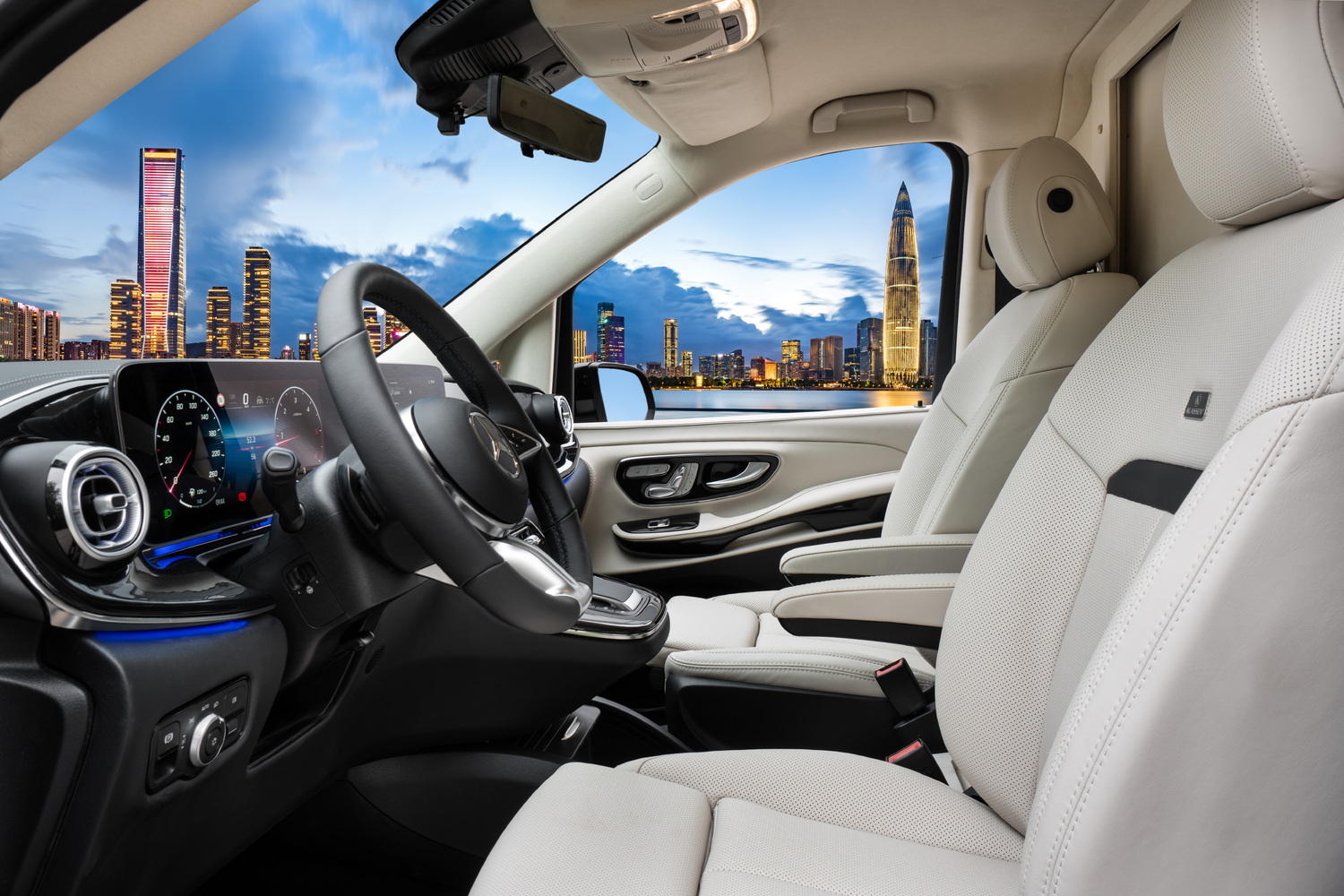
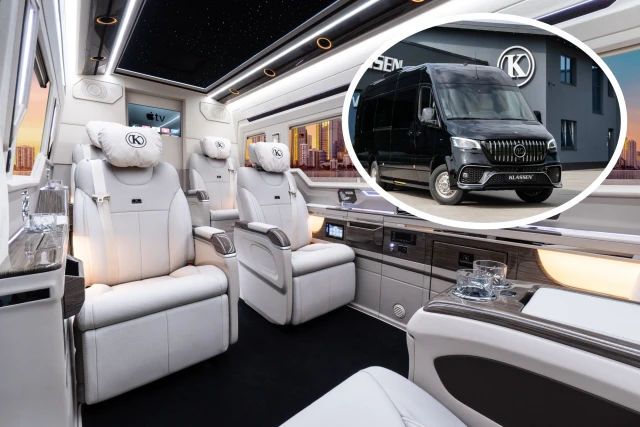
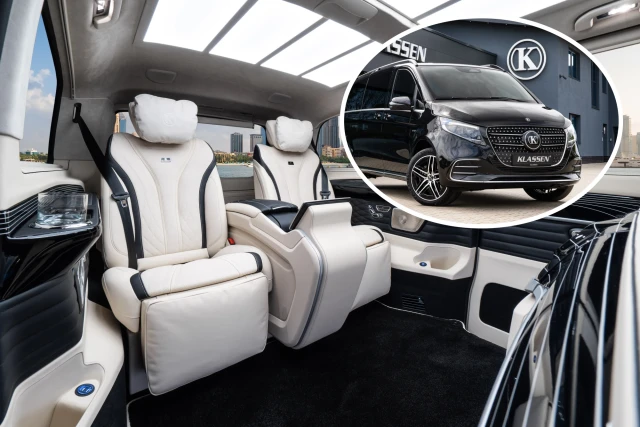
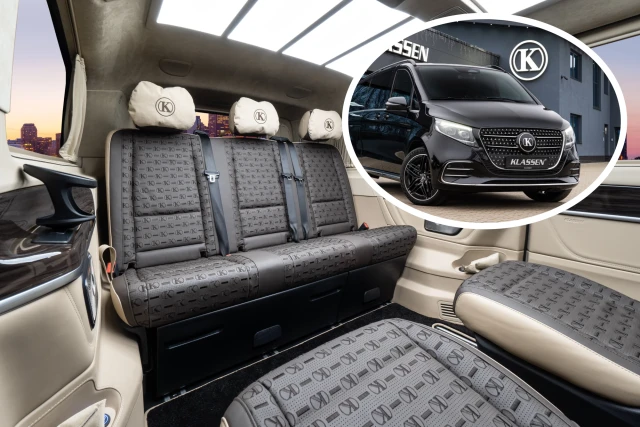
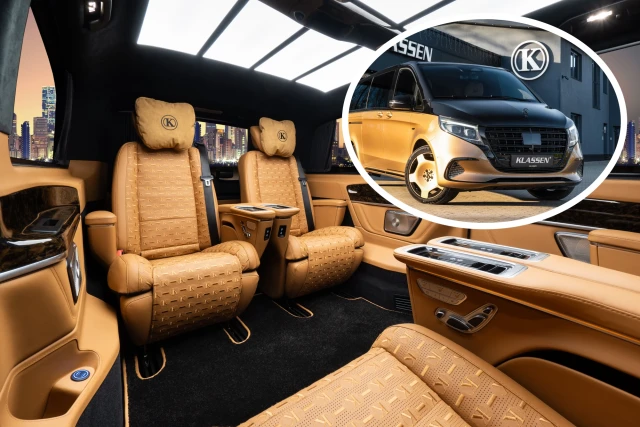
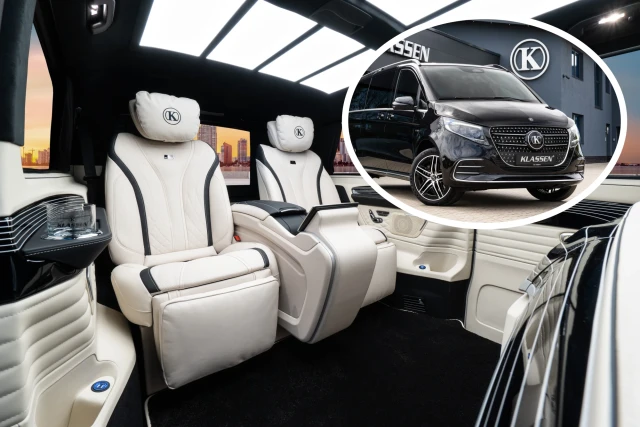
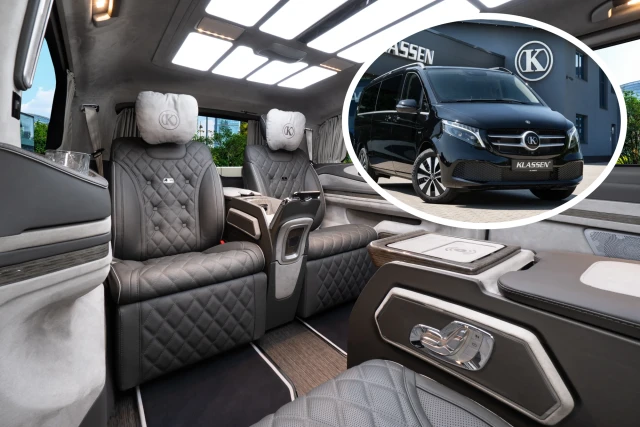
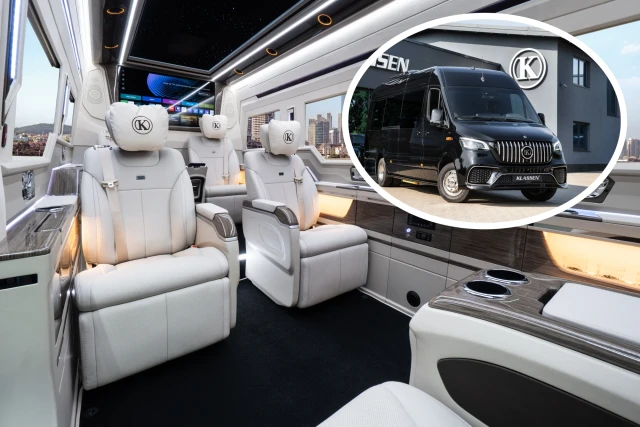
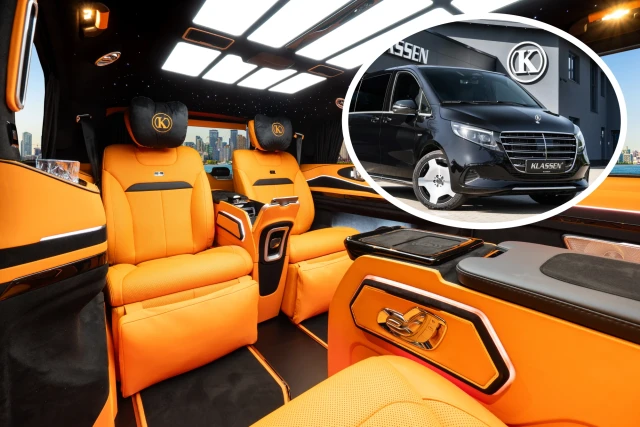
The new Mercedes-Benz VLE gives KLASSEN the opportunity to create a next-generation VIP vehicle in which the spaciousness of a large passenger body is combined with the smoothness of an executive sedan, a modern electric platform and a completely different level of digital integration. From the outset, the model was developed not as another continuation of the familiar minivan format, but as a Grand Limousine, which is why its proportions, driving characteristics, acoustic comfort and passenger-compartment architecture are especially well suited to the philosophy of individually built KLASSEN vehicles.
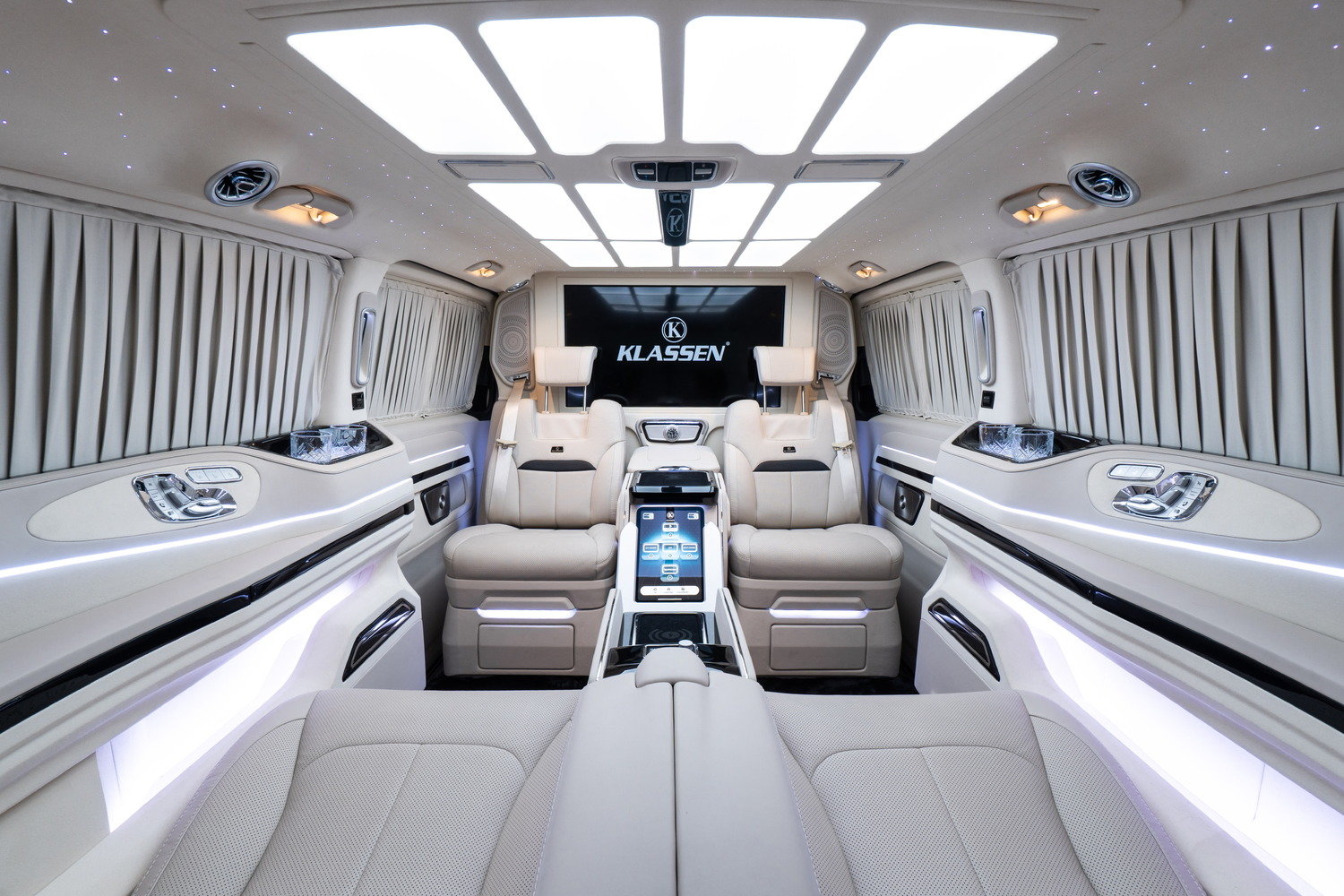
For the future project based on the VLE, we have selected the KLASSEN MVE_1_1721 interior concept previously implemented in the Mercedes-Benz V-Class. Its main feature is a full six-seat layout in which two primary Luxury seats are complemented by two individual vis-à-vis seats integrated into the partition composition. This solution preserves the owner's personal comfort, provides additional seating for accompanying passengers and at the same time transforms the cabin into a convenient space for meetings, work, relaxation and long journeys.
Mercedes-Benz VLE as a new basis for a KLASSEN executive vehicle
The world premiere of the fully electric Mercedes-Benz VLE took place in Stuttgart on March 10, 2026, and on June 12 the Mercedes-Benz plant in Vitoria, Spain, began series production of the model. The VLE became the first vehicle built on the new modular, scalable architecture of Mercedes-Benz Vans, adaptable to different types of drive systems, which is intended to serve as the technological basis for a new generation of private and commercial vehicles from the brand.
Mercedes-Benz itself defines the VLE as a Grand Limousine, thereby separating it from the traditional perception of a large family or executive minivan. The model combines the comfort and driving character of a passenger car with the spaciousness of an MPV, convenient sliding doors and the ability to organize the interior flexibly. In standard production form, the cabin can accommodate up to eight people, but in the KLASSEN version the priority is not maximum capacity, but the quality of every seating position, privacy, ease of communication and a carefully considered arrangement of equipment.
It is especially important for KLASSEN that the VLE was engineered as a complete modern system rather than as an adaptation of an existing platform for electric drive. This makes it possible to rethink passenger positioning, internal routing, multimedia integration and additional insulation while preserving open space and visual cleanliness in the cabin. As a result, the future VLE KLASSEN can be perceived not as a production vehicle fitted with additional options, but as a complete executive environment designed around the needs of its owner.
New VLE design: status without excessive display
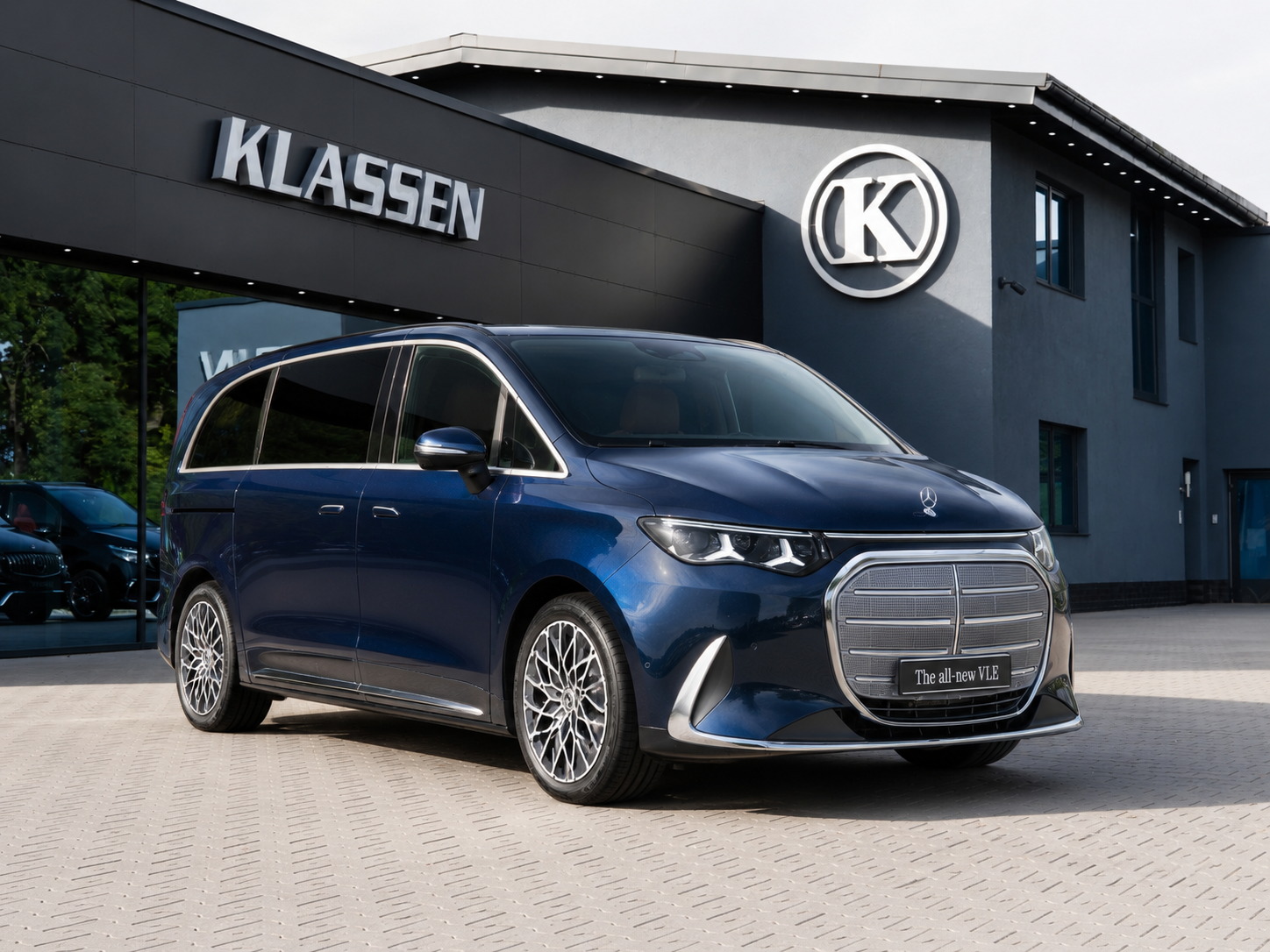
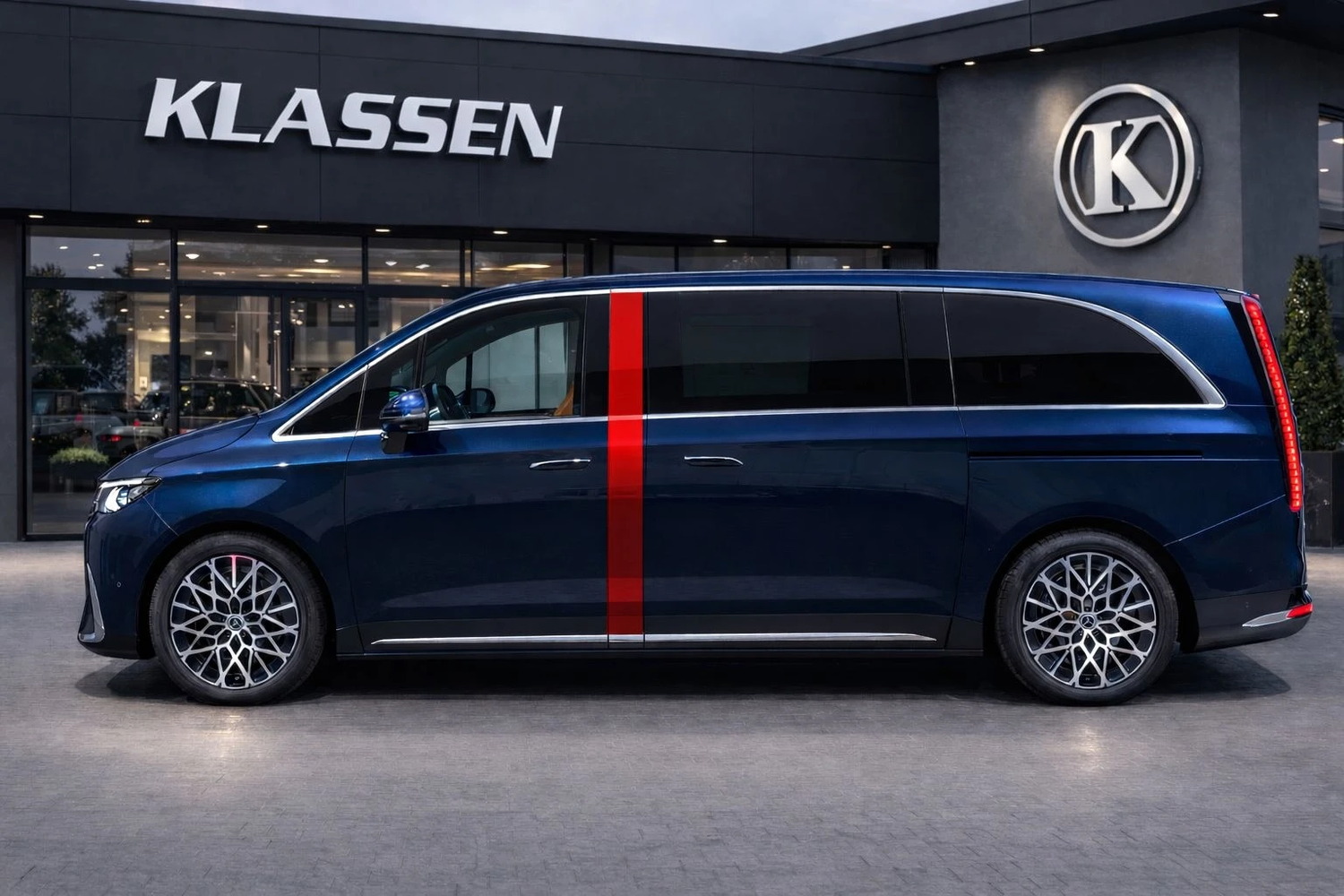
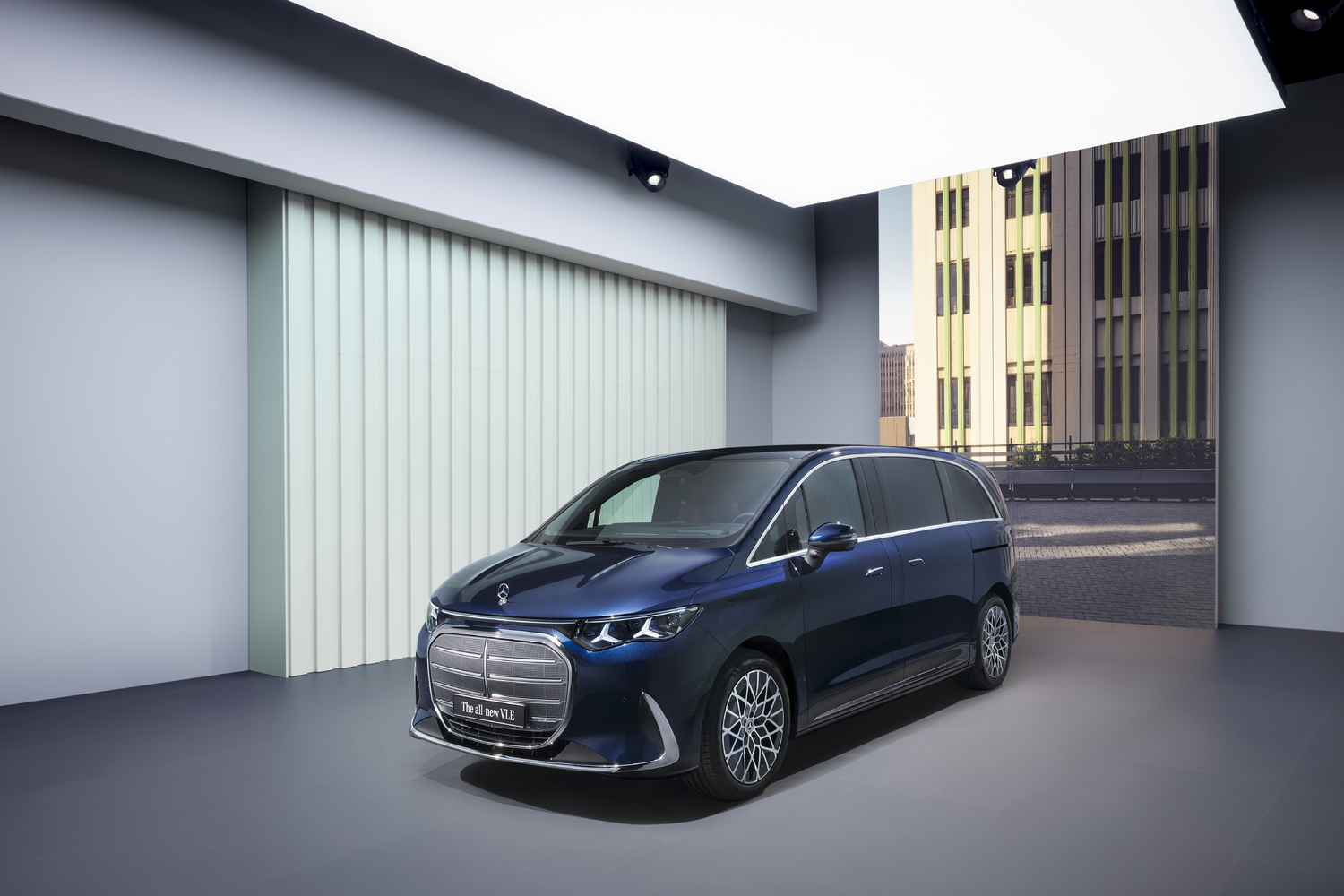
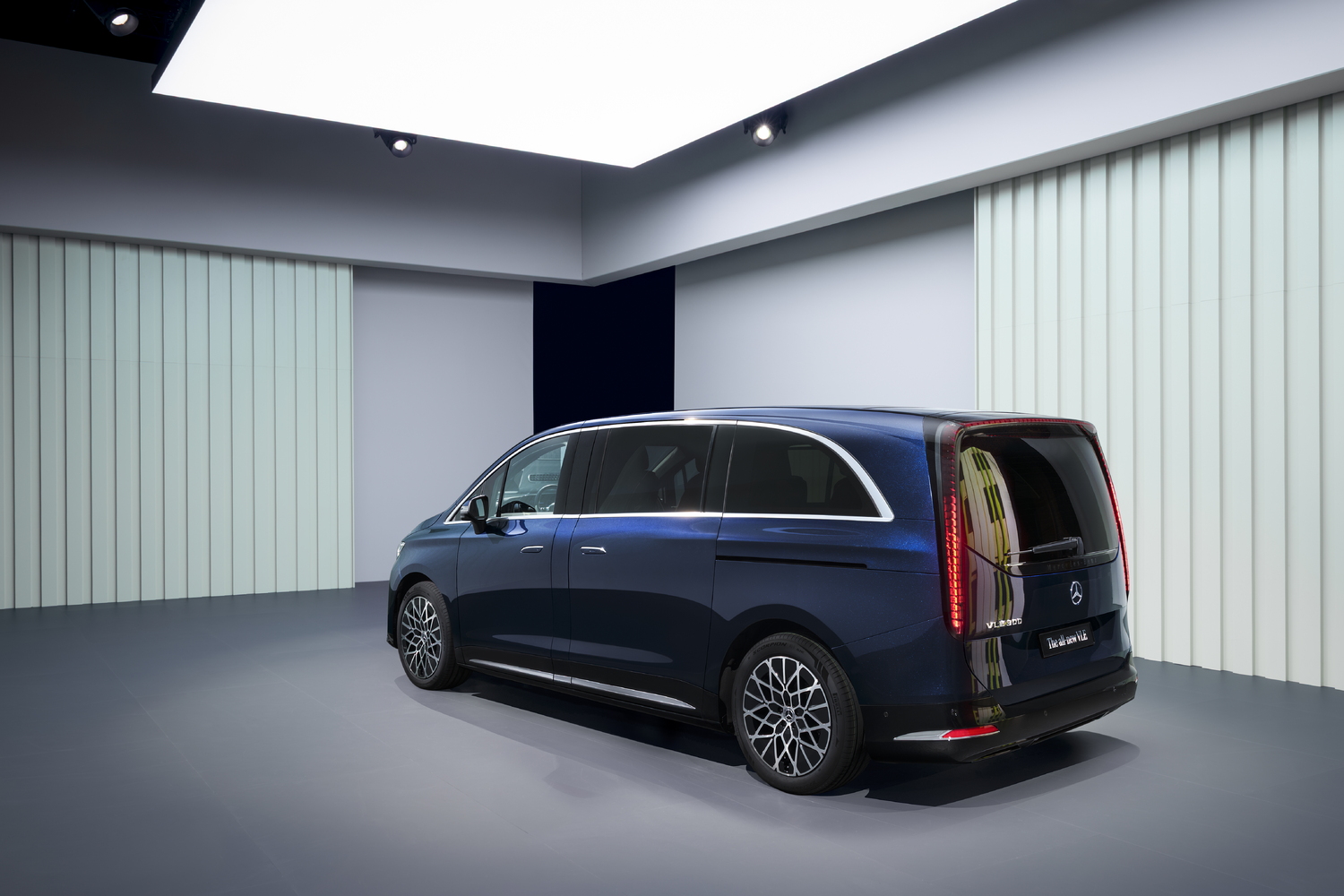
The appearance of the Mercedes-Benz VLE differs noticeably from the traditional form of a large passenger van. A low, aerodynamically streamlined silhouette, smoothly shaped roof, visually compact front section and soft transition toward the rear make the vehicle look more dynamic and cohesive. Despite its substantial exterior dimensions, the body does not appear heavy because its surfaces are united into a single volume and the decorative elements do not interrupt the overall sculptural flow of the form.
The drag coefficient of 0.25 stated by Mercedes-Benz shows that the model's distinctive appearance is determined not only by aesthetics but also by efficiency. Clean side surfaces, carefully developed transitions between body panels and an elongated glazing line help reduce aerodynamic resistance while also creating the image of a modern electric Grand Limousine that looks equally natural outside a business center, private residence, hotel or business aviation terminal.
This restrained expressiveness is particularly close to the KLASSEN approach. The vehicle does not need to emphasize its status artificially with overly aggressive bumpers or contrasting decoration, because its premium character is already embedded in the proportions, surface quality and lighting graphics. As part of an individual project, the exterior can be complemented by special paintwork, exclusive wheels, personalized details and signature KLASSEN elements, but all changes should support the original VLE architecture rather than compete with it.
An electric platform suitable for extended VIP journeys
The Mercedes-Benz VLE is equipped with an 800-volt electrical system and, in higher versions, receives a traction battery with a usable capacity of 115 kWh. The stated driving range exceeds 700 kilometers according to the WLTP cycle, while DC fast-charging power reaches 300 kW. Under suitable conditions, 15 minutes of charging can add enough energy for approximately 355 kilometers of further travel, which makes the VLE suitable not only for city transfers, but also for intercity routes, business travel and long-distance journeys.
For KLASSEN passengers, the advantages of the electric platform are most noticeable in smoothness and quietness. The absence of a conventional internal-combustion engine reduces the constant low-frequency background noise, while continuous torque delivery without gear changes creates a calmer driving character. In such a vehicle, it is easier to conduct a confidential conversation, work with documents, participate in a video conference, watch a film or rest without being distracted by vibration and abrupt changes in powertrain sound.
AIRMATIC air suspension with body-level adjustment over a 40-millimeter range improves ride comfort and allows the vehicle height to be changed for easier entry or additional ground clearance. Rear-wheel steering with a steering angle of up to seven degrees reduces the turning-circle diameter between curbs to 10.9 meters, allowing the large VLE to remain maneuverable on narrow streets, in enclosed parking facilities and on approaches to buildings.
Electric sliding doors on both sides simplify entry and exit, while fully retractable windows in the doors preserve the familiar feeling of an open space. For the KLASSEN project, these features matter not only from the standpoint of everyday convenience, but also as part of the overall concept: a large executive vehicle should remain natural to use, should not require special actions from the passenger and should provide comfort even before the passenger takes a seat in the VIP cabin.
MVE_1_1721 interior: six seats and a complete space for communication
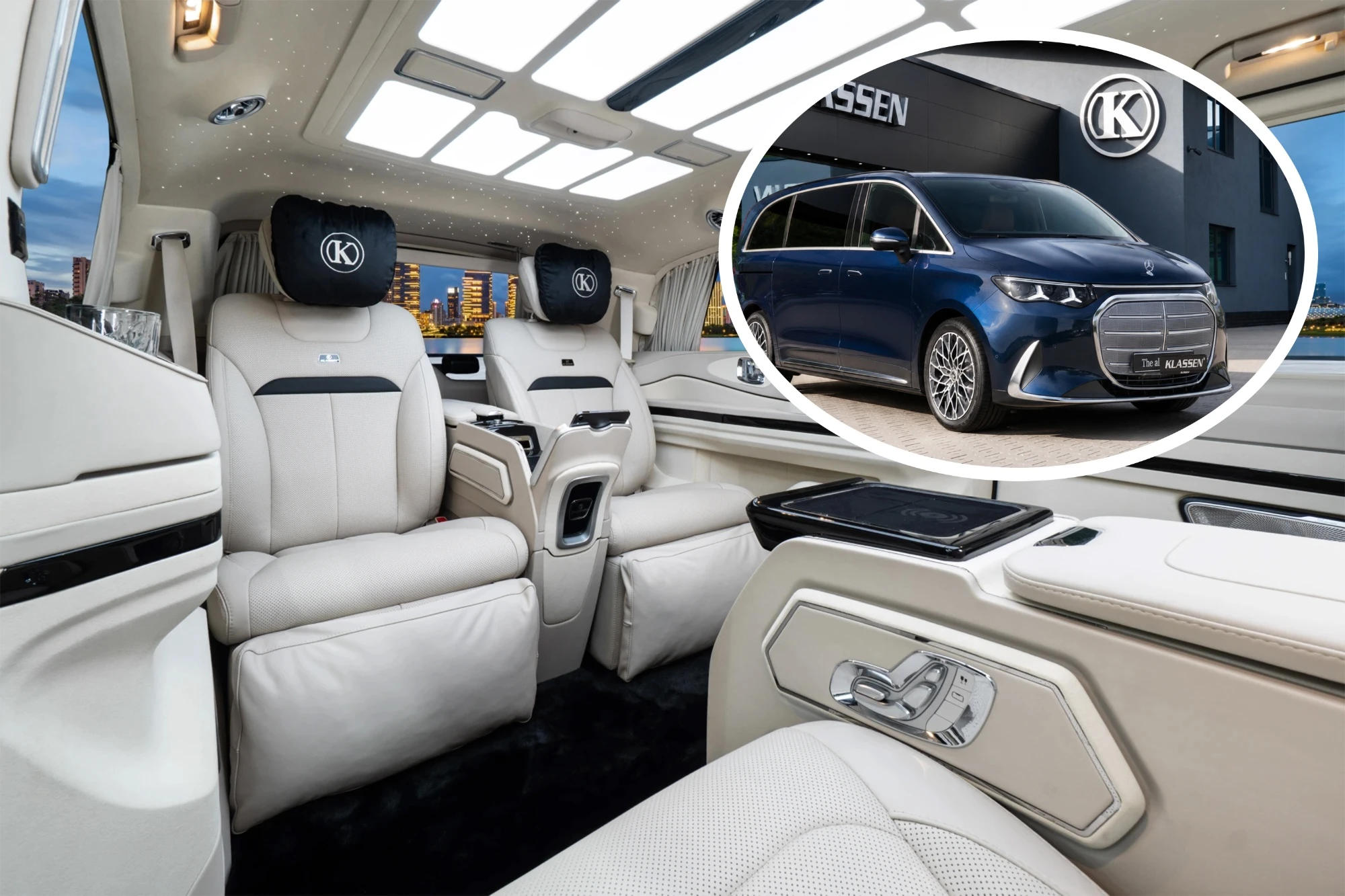
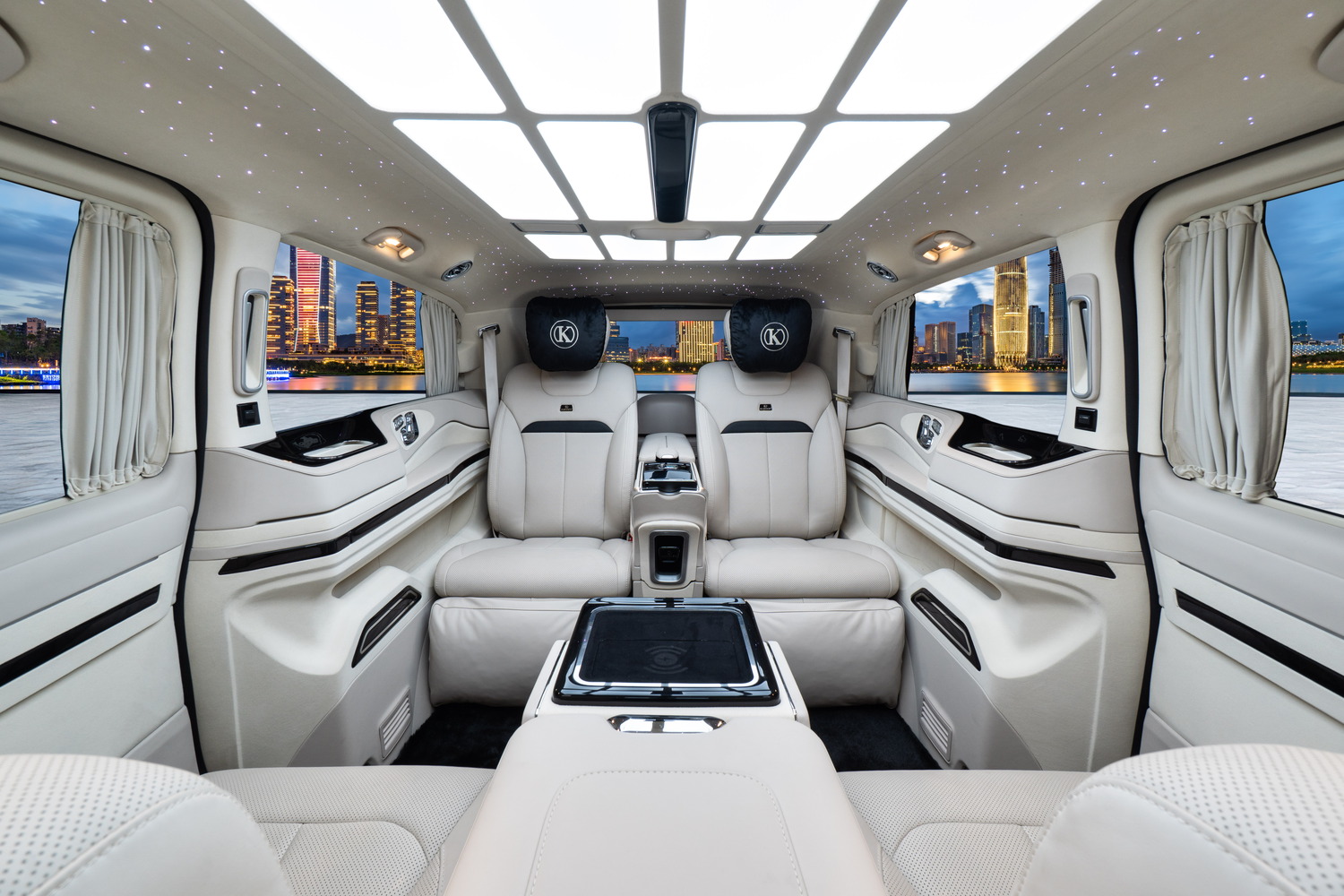
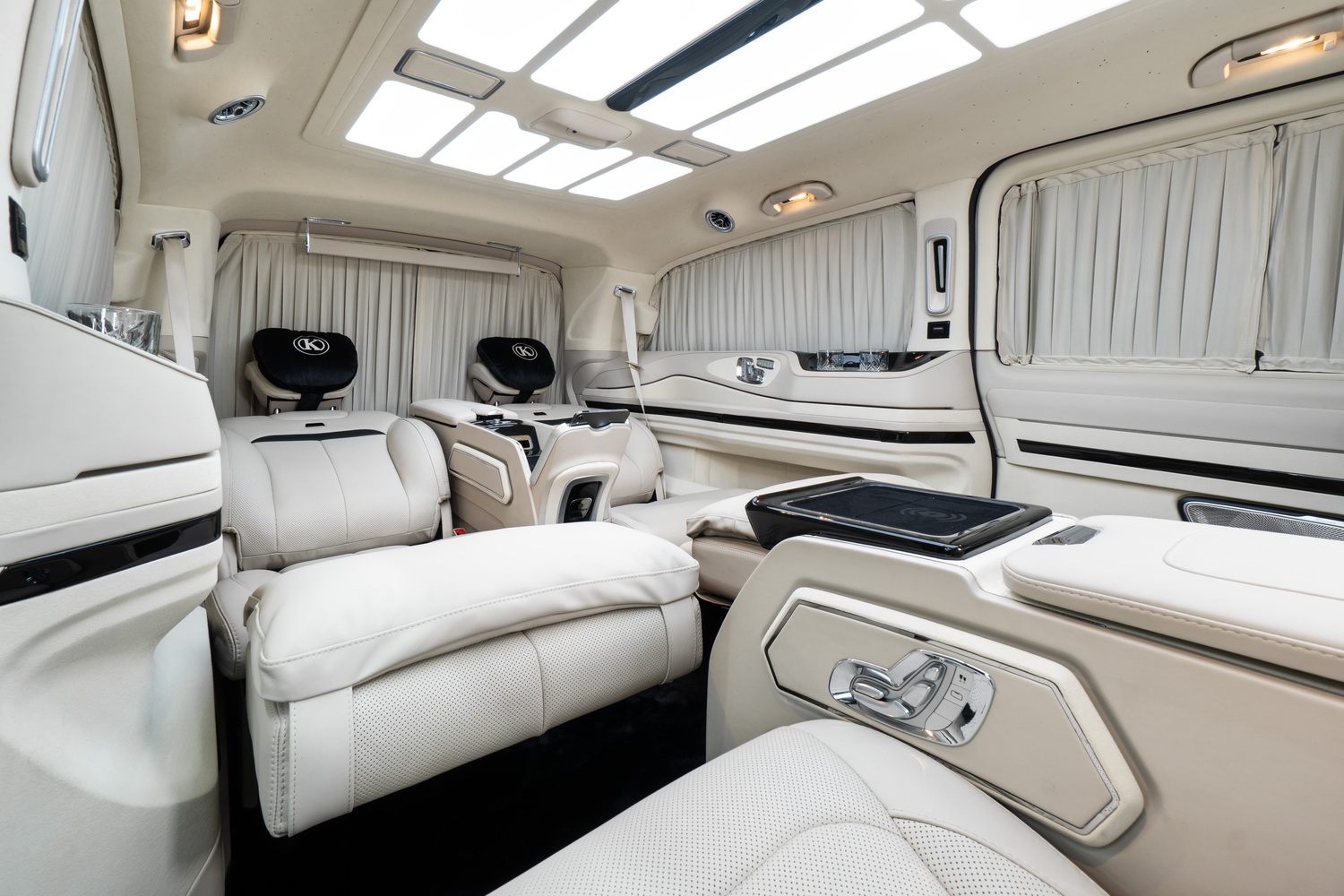
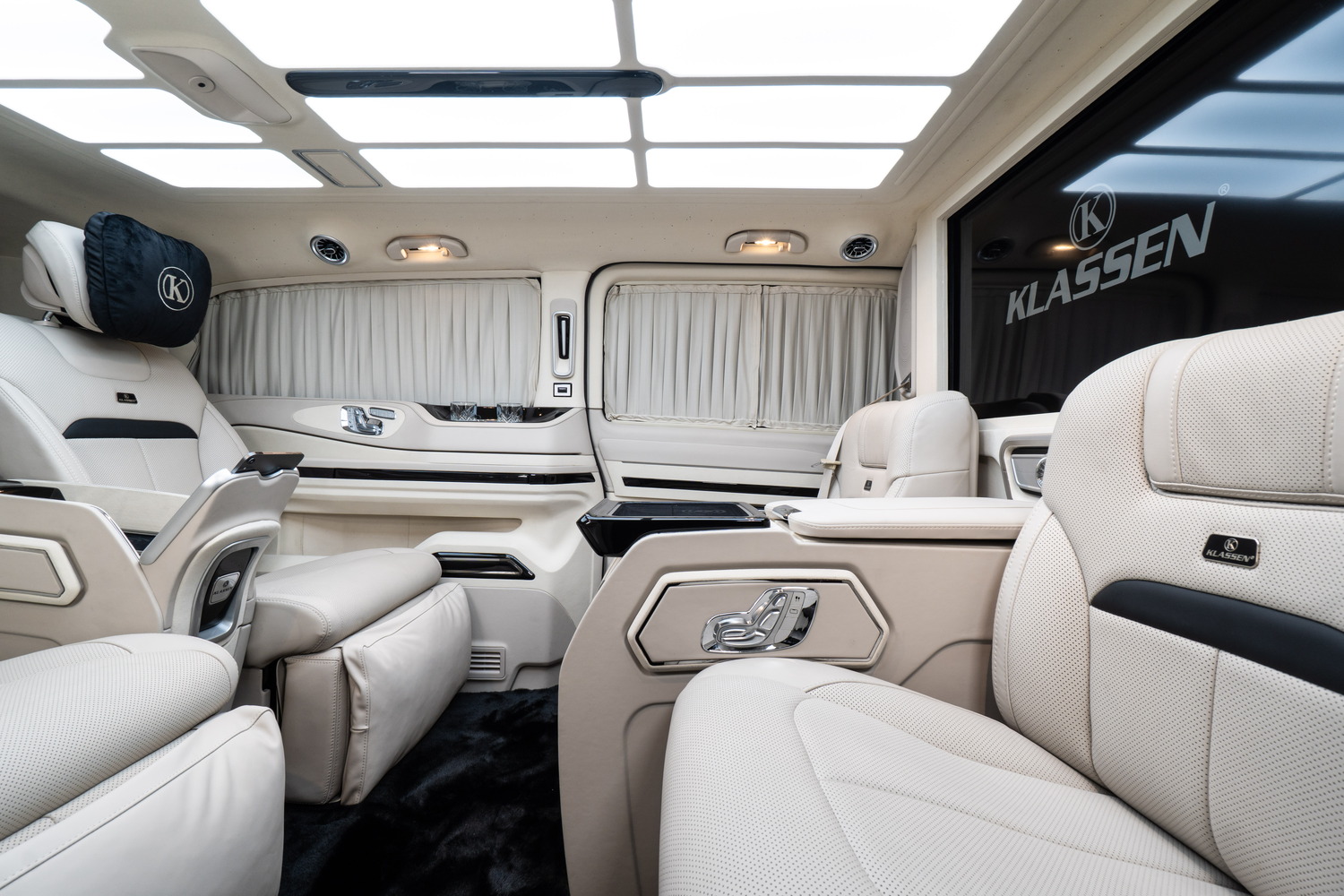
The architecture of the future VLE KLASSEN cabin will be based on the MVE_1_1721 configuration. Unlike two-seat VIP interiors focused entirely on the owner and one accompanying passenger, this layout offers a more versatile scenario. Two primary Luxury seats are installed in the rear, while two additional individual vis-à-vis seats are positioned opposite them on the partition side. Together with the driver and front-passenger seats, the vehicle is designed for six people.
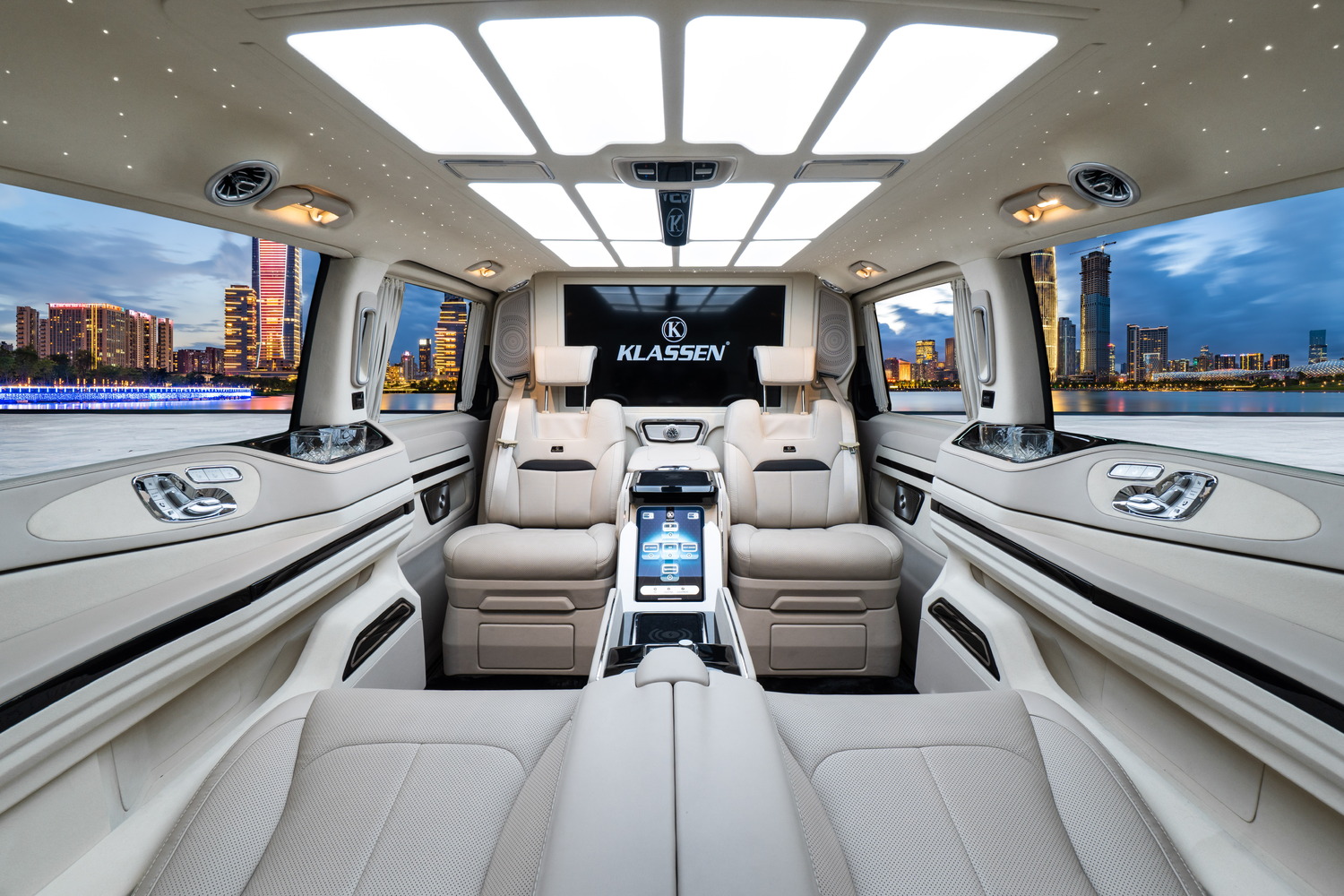
This arrangement makes it possible to use the cabin as a mobile meeting room where four passengers can communicate face to face without changing the position of the main seats or installing temporary seating. At the same time, the central area remains organized and functional: an individual console is located between the main seats, while a separate module with a refrigerator, wireless charging and a minibar is positioned between the vis-à-vis seats. Each element has its own purpose and is simultaneously integrated into a single symmetrical interior composition.
When this concept is transferred to the new electric platform, the mounting geometry, equipment placement, internal routing and construction of the decorative panels will be redesigned specifically for the VLE body. In other words, this is not a mechanical installation of a ready-made V-Class interior, but the preservation of the complete logic, equipment and visual character of the MVE_1_1721 in a new vehicle, with every component adapted to the architecture and requirements of the next Mercedes-Benz generation.
Two primary Luxury seats with a full range of comfort functions
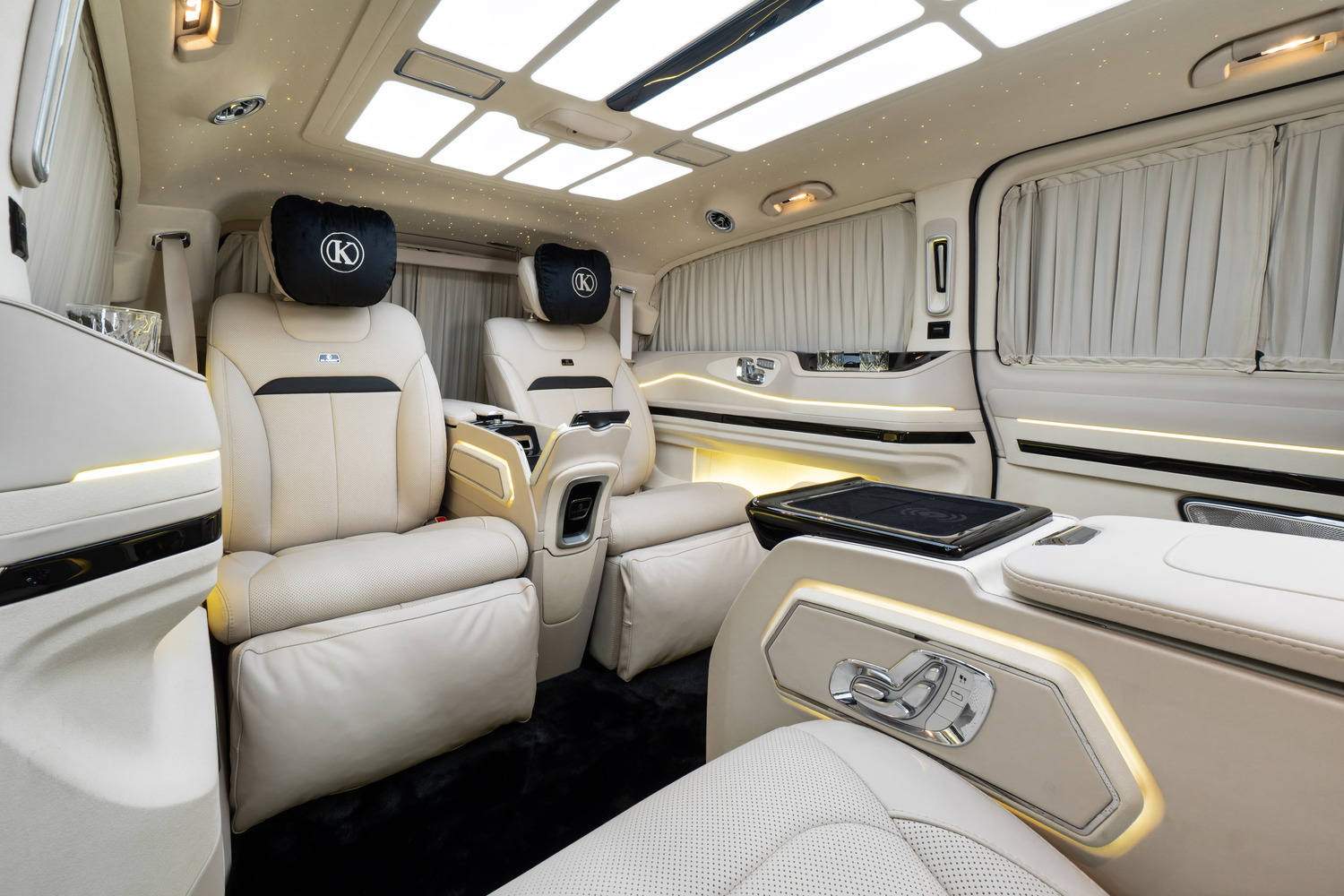
The center of the VIP zone is formed by two individual Luxury seats intended for the owner and primary passenger. Special mounting structures are manufactured for their installation, designed according to the floor geometry and load distribution within the vehicle. The seats are equipped with three-point safety belts, while the mounting and restraint-system elements are engineered with applicable legal requirements and European standards in mind.
Electric adjustment is controlled by separate units programmed with a complete range of functions. The passenger can select the seat position, change the backrest angle, adjust the leg support and create a comfortable seating position for either work or relaxation. The electronics combine all mechanisms into a coordinated system, allowing the seat configuration to change smoothly without requiring the passenger to operate each actuator as an independent device.
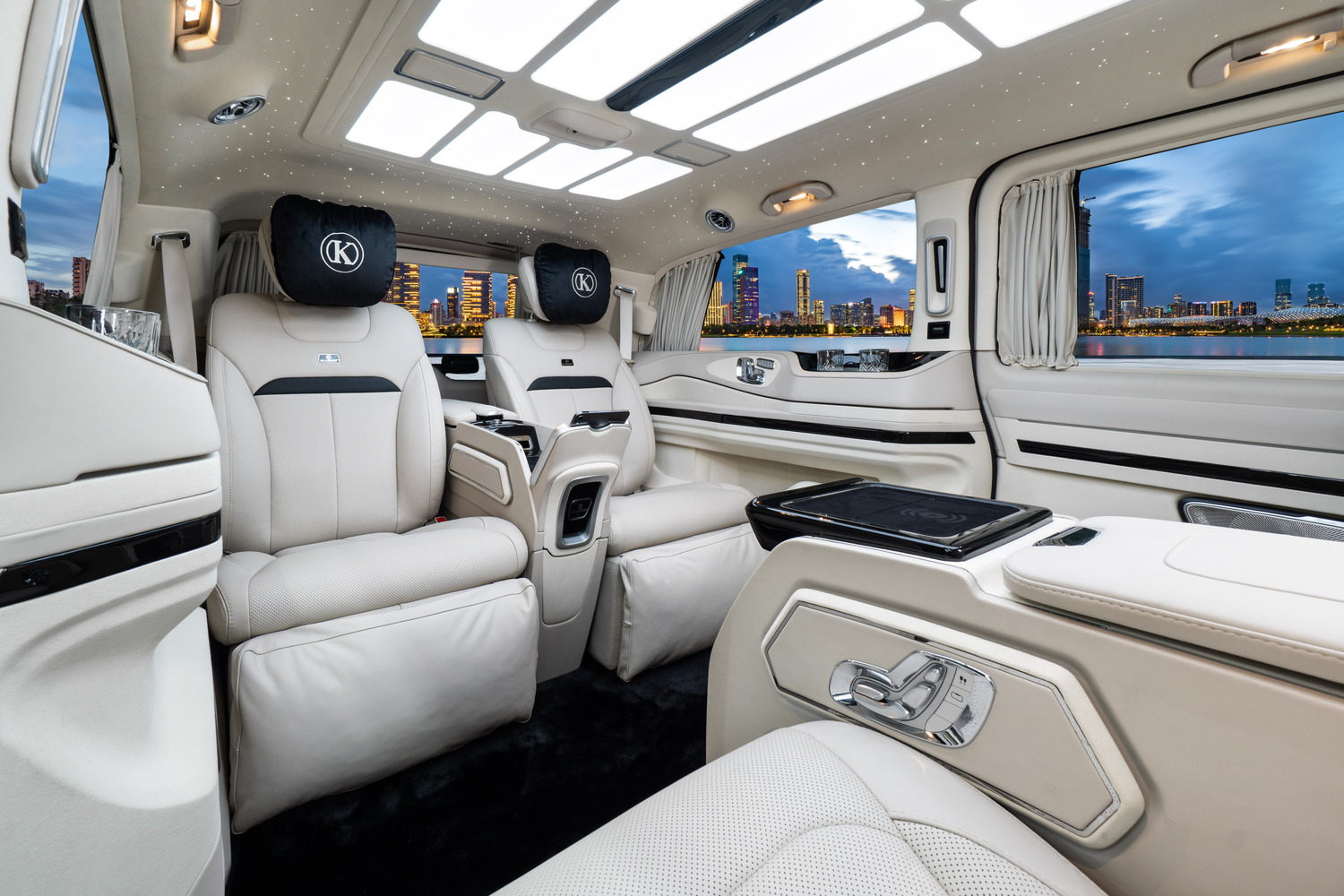
Both Luxury seats receive heating, ventilation and massage functions. Perforated leather upholstery ensures the ventilation system works correctly and keeps the seat surface at a comfortable temperature in warm weather, while heating makes extended winter journeys more pleasant. The massage function helps reduce fatigue on the road and is especially useful in a vehicle designed for long transfers and intercity travel.
Electrically adjustable KLASSEN leg rests allow the seats to move into a relaxed position and are complemented by separate soft cushions. Comfort cushions are also installed on the headrests to support the neck and head. All visible sections of the seats and center console are finished in natural leather selected in accordance with the individual color concept, allowing technically complex seats to be perceived as complete elements of the interior architecture.
Center console with KRS, iPad and integrated Nespresso coffee machine
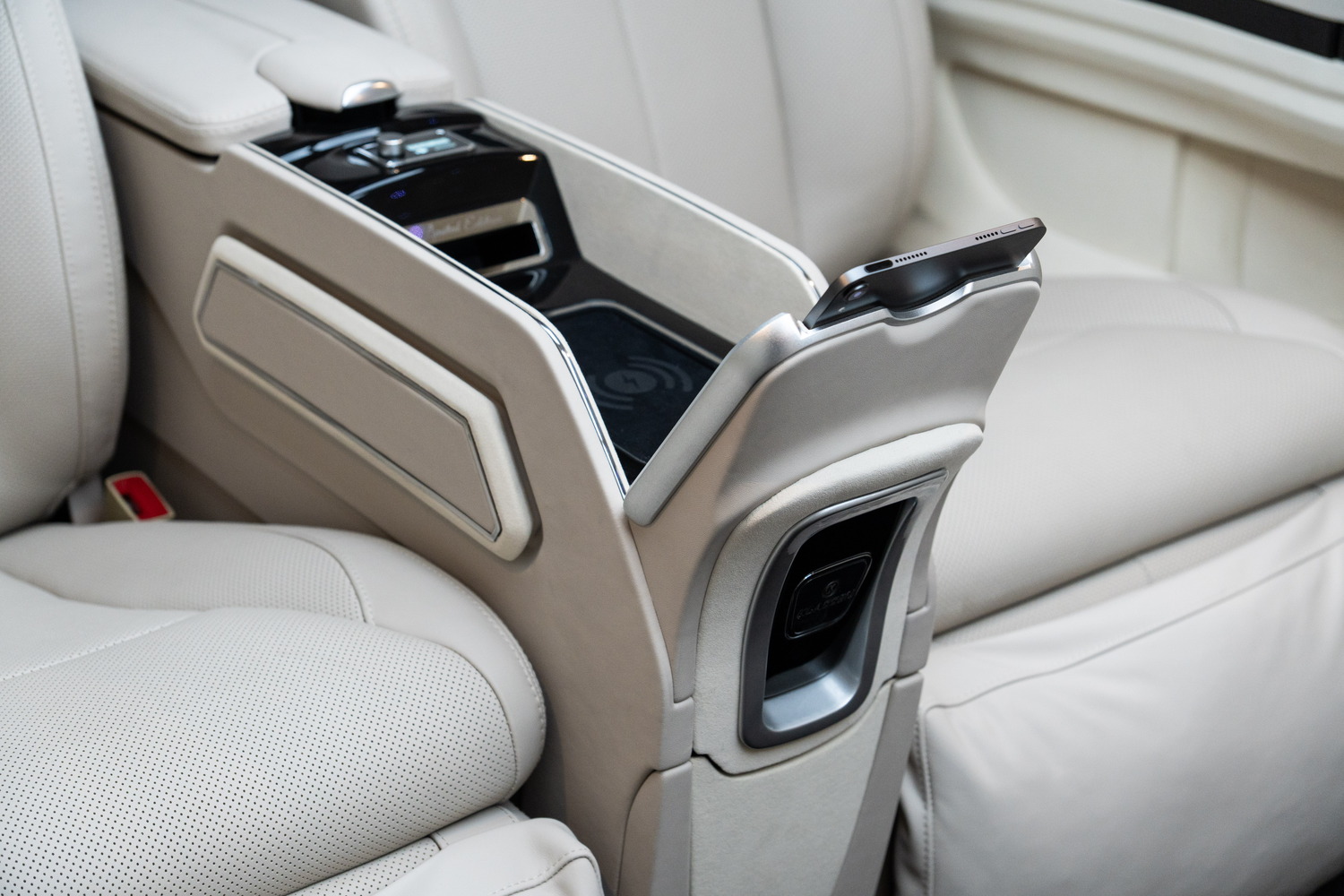
An individually manufactured KLASSEN center console is positioned between the main seats, with its shape precisely adapted to the geometry of the Luxury seats and the overall width of the aisle. It performs several functions at once: it serves as a shared armrest area, conceals technical components, provides storage for personal belongings and concentrates the main control functions within the passengers' natural reach.
The console integrates a compartment for small items, a wireless smartphone charging pad and an iPad holder. The tablet can be used as a personal screen, work tool or interface for selected cabin functions without having to hold it or install temporary mounts. KLASSEN equipment is controlled through the KRS system, which combines the available functions and allows settings to be changed directly from the passenger area.
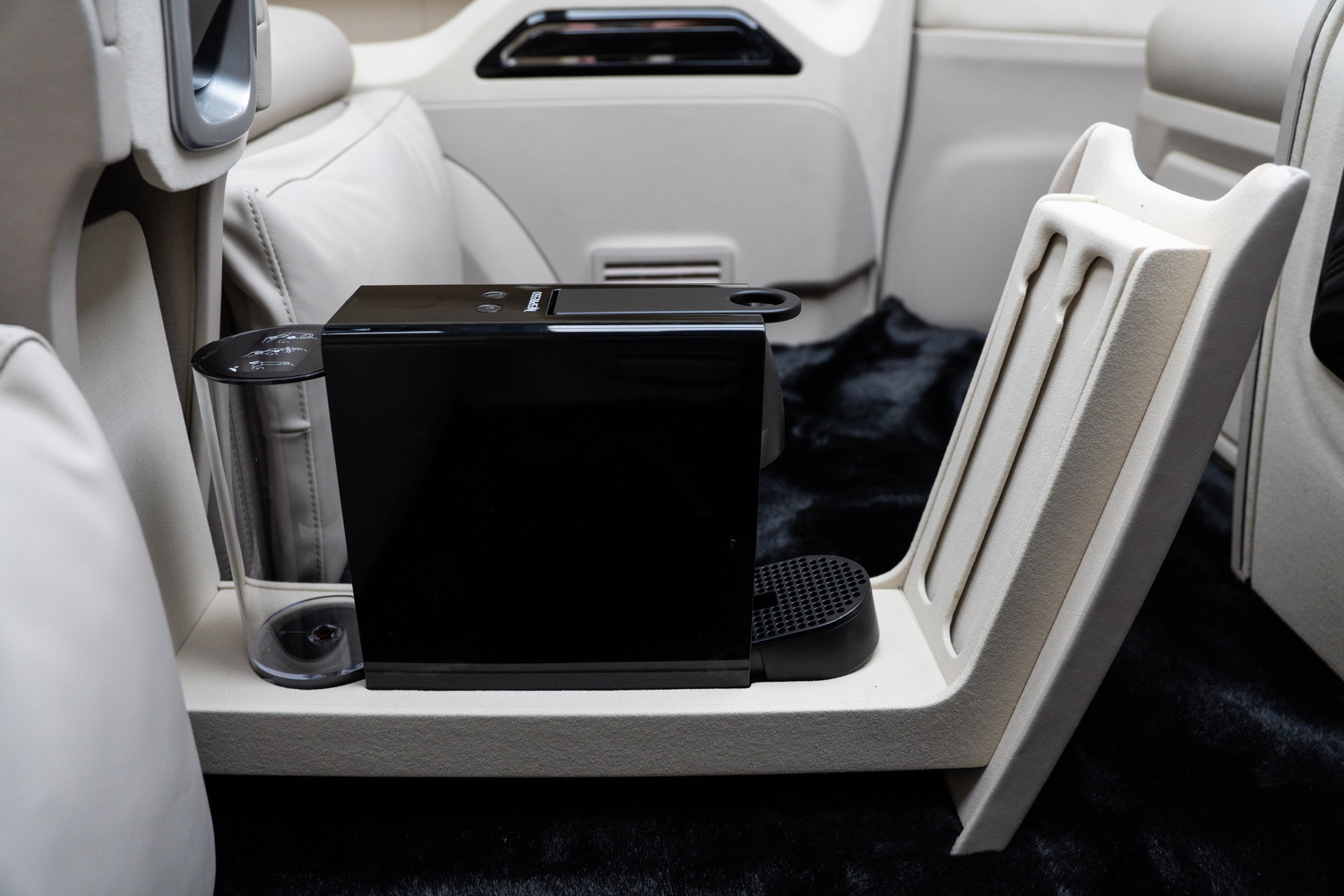
A special feature of this console is the Nespresso coffee machine integrated inside the armrest and equipped with an electric extension mechanism. In its normal position, it remains completely hidden and does not disrupt the clean cabin geometry; when needed, it rises smoothly into its operating position. This gives the passenger the ability to prepare coffee during the journey without turning the interior into a display of permanently exposed household equipment.
KLASSEN partition and two electric vis-à-vis seats
The passenger compartment is separated from the driver area by a full KLASSEN partition. It creates a visual and functional boundary between the two sections of the vehicle, increases privacy and at the same time serves as the basis for multimedia equipment, additional seats, storage systems and decorative elements. An electric mechanism for raising and lowering the television is integrated into the partition, so the large screen appears only when it is actually needed.
On the VIP side, two separate vis-à-vis seats are integrated into the structure opposite the primary Luxury seats. Unlike simple folding seats, they have electric adjustment, are equipped with three-point safety belts and are designed for full use while the vehicle is in motion. Their position allows four passengers to converse in a natural seating position, conduct a meeting or work together with materials placed on the tables.
Pull-out drawers are located beneath the vis-à-vis seats, providing additional storage for documents, accessories and personal belongings. This solution uses the partition volume as efficiently as possible and eliminates separate boxes or bags that could clutter the aisle. The drawer fronts are matched to the surrounding trim so that, when closed, they are perceived as part of the overall panel.
Refrigerator, retractable minibar and signature KLASSEN clock
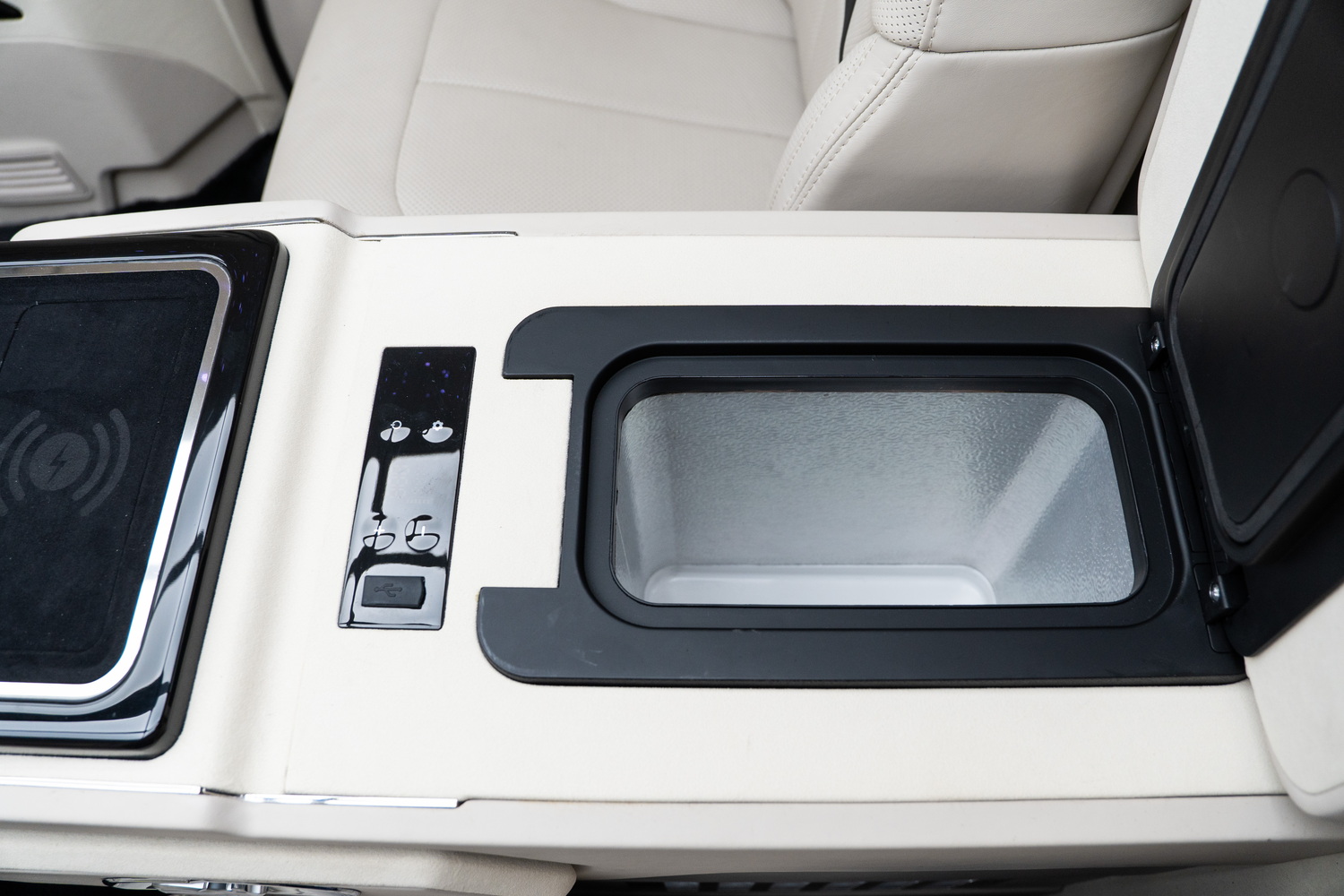
A separate central armrest is positioned between the two vis-à-vis seats, with a compact refrigerator integrated inside. It is intended for cooling beverages and remains within immediate reach of the passengers without occupying the space between the primary Luxury seats. A wireless charging pad is provided nearby, giving passengers in the additional seats their own access to basic comfort functions.
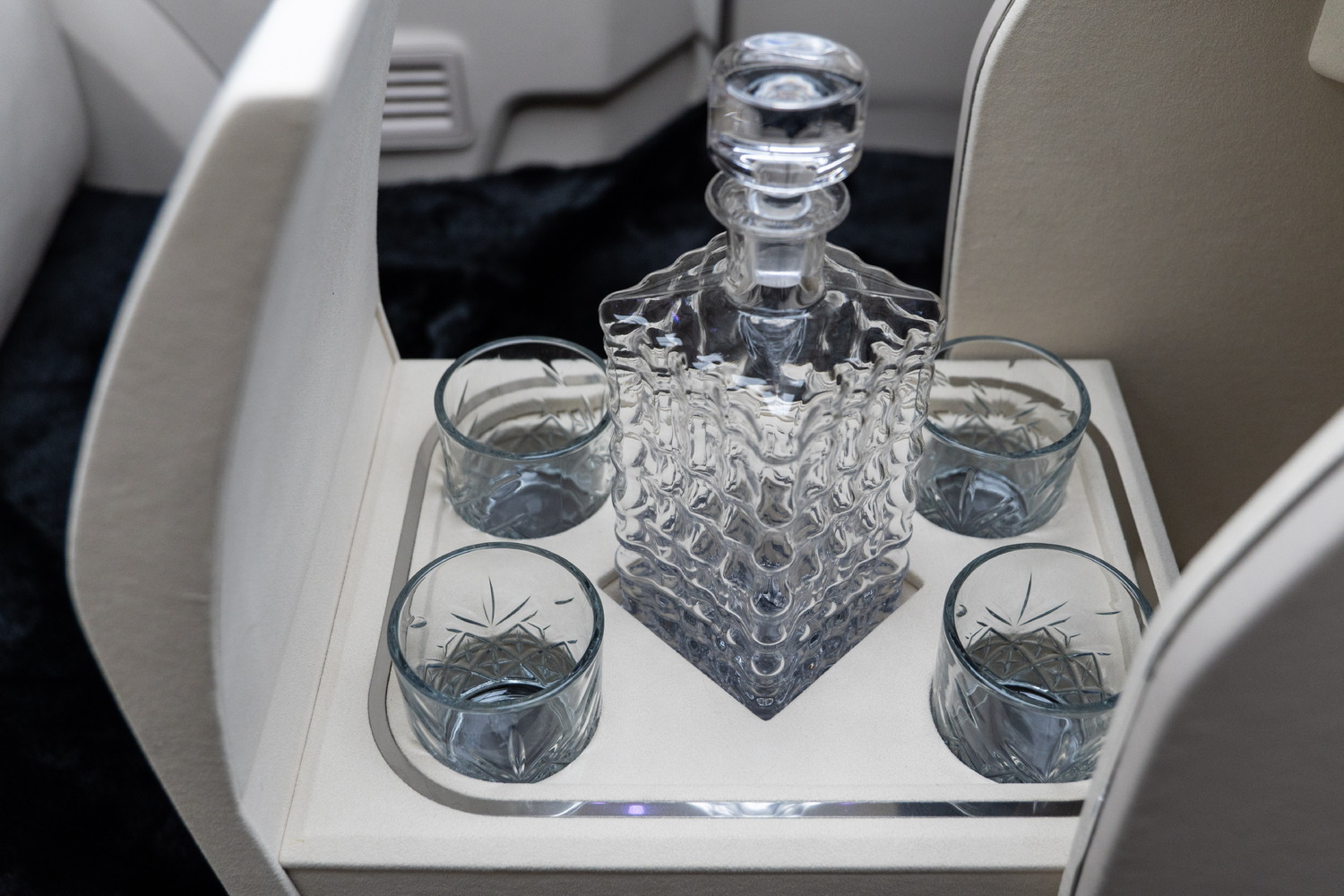
The same module also incorporates an electrically retractable minibar with four holders for glasses and bottles. After use, it retracts completely into the console, preserving open space and a clean cabin appearance. This type of mechanism is especially important for a KLASSEN interior because items needed only occasionally should not remain permanently visible or influence the way the finish is perceived.
The partition composition is completed by a signature insert with a KLASSEN clock. It becomes a visual accent between the functional elements and emphasizes the symmetry of the front section of the VIP zone. The partition trim is individually executed and combines natural leather, fine wood, chrome details and the selected color palette, so the television, seats, bar and storage systems do not look like separate installed modules.
Ceiling structure with starlight headliner and KLASSEN lighting
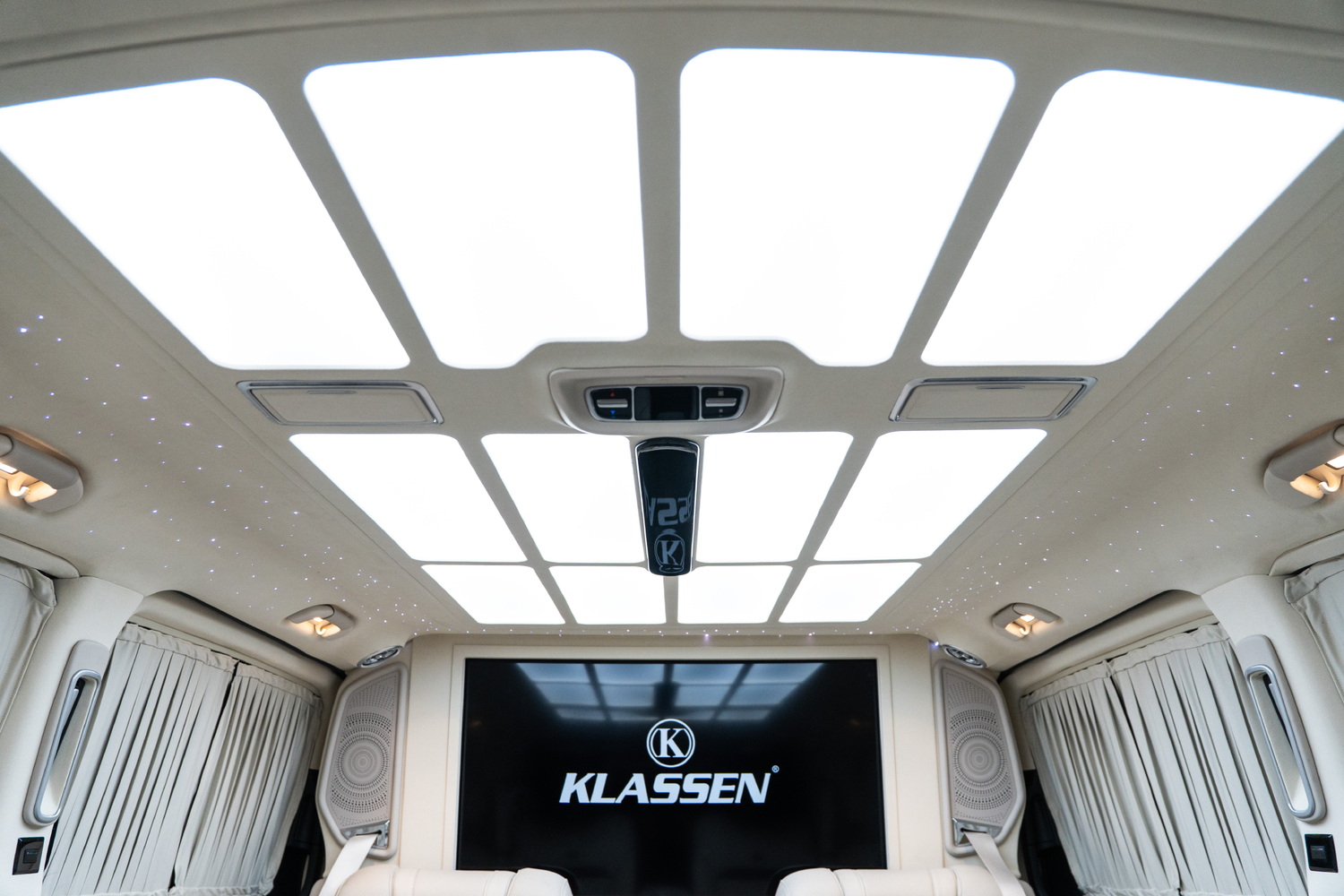
A new ceiling structure is created for the VIP zone, allowing lighting and decorative elements to be integrated into a single geometry. The headliner and pillars receive individual upholstery, with the shade and texture coordinated with the seat leather, side panels and floor covering. As a result, the upper section of the cabin does not appear as a separate decorative surface, but continues the overall architecture from the partition to the rear of the vehicle.
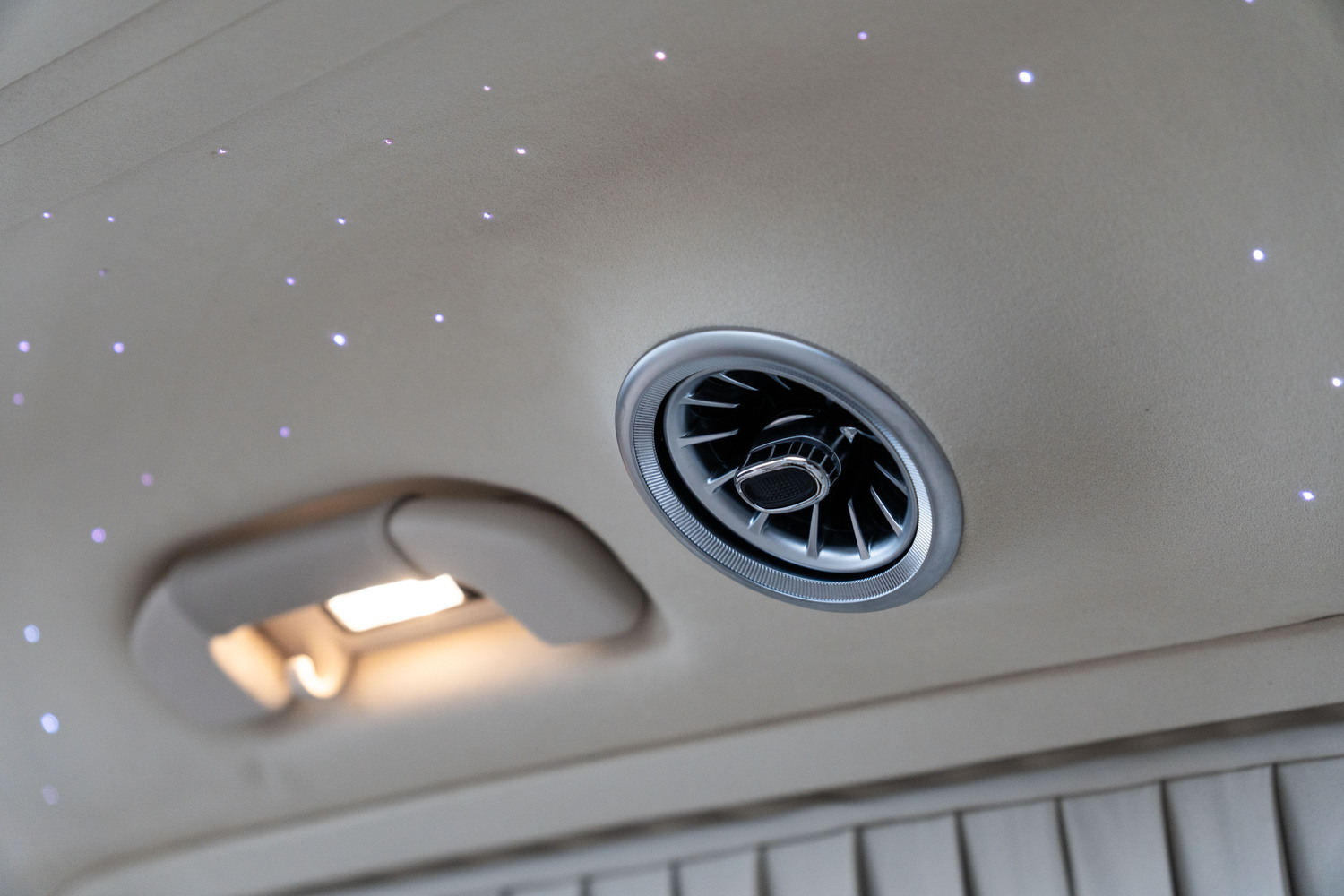
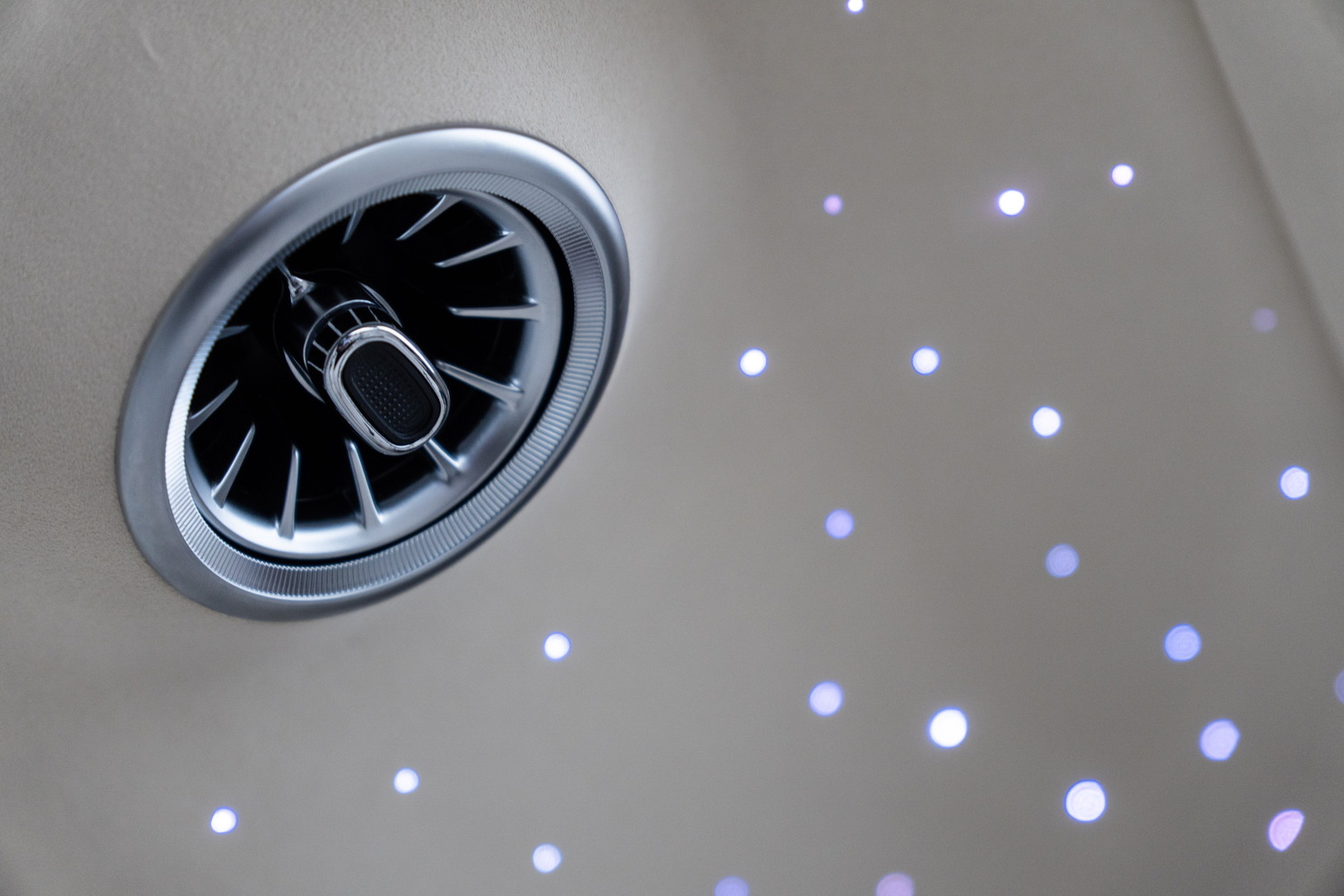
The main ceiling lighting is executed in KLASSEN's signature design and complemented by a combined starlight headliner. Point light elements create a soft evening atmosphere, while the main lighting provides sufficient brightness for work, reading and communication. Separating the lighting scenarios makes it possible to use the cabin differently throughout the day instead of being limited to a single decorative mode.
Two MAYBACH vanity mirrors intended for the passengers in the primary seats are integrated into the ceiling area. Separate hooks and a clothes rail are provided for garments, allowing a jacket, coat or other item of clothing to be hung without placing it on a seat. These elements remain visually unobtrusive but make the vehicle more convenient in real everyday use, particularly when traveling to business meetings and formal events.
New floor, additional insulation and combined VIP-zone flooring
The floor base is engineered as a separate structural and installation platform to which the seats, partition, consoles and other equipment elements are secured. It is calculated in accordance with applicable legal requirements and European standards, as well as the specific characteristics of the VLE electric platform. The necessary channels for wiring and communications are provided inside so that technical lines do not occupy usable space and remain accessible for servicing.
The body receives comprehensive high-quality sound and thermal insulation. In an electric vehicle, this work is especially important because once engine noise is eliminated, tire, wind and road-surface noise become more noticeable. Additional insulation helps make use of the VLE's natural advantages and creates a calm acoustic environment in the passenger area where there is no need to raise one's voice or increase the volume of the audio system.
The VIP zone receives additional carpeting selected to match the overall color scheme. It can be combined with a two-piece wooden floor featuring chrome decorative elements and a removable carpet section. This combination preserves the expressive character of natural wood in open areas while at the same time providing a soft and practical surface where passengers place their feet.
Leather and wood side panels, curtains and ambient lighting
The side walls of the passenger compartment are manufactured from scratch because their shape must take into account the position of the four seats, retractable tables, ventilation ducts, curtains, lighting lines and internal mechanisms. The panels receive individual upholstery, while natural leather, fine wood and chrome elements are used in their finish. The direction of the wood grain, the position of the joints and the proportions of the inserts are coordinated in advance so that both sides of the cabin appear symmetrical and continue the composition of the partition.
The sliding-door opening mechanism is integrated directly into the side panel, remaining accessible to the passenger without disturbing the clean surface. Single-layer curtains with guide rails are provided for the side and rear windows. The side curtains are electrically operated, allowing the level of lighting and privacy to be changed from the passenger seat, while the guide system keeps the fabric in the correct position while driving.
RGB lighting runs along the contours of the interior elements, complementing the ceiling lighting and starlight headliner. It allows the cabin atmosphere to be adjusted according to the time of day and the intended use of the vehicle: more neutral light is suitable for work and meetings, while subdued color accents create a calm environment during an evening journey. The lighting is integrated into the panel architecture and does not look like a separate decorative strip.
Two retractable tables and a complete range of work connections
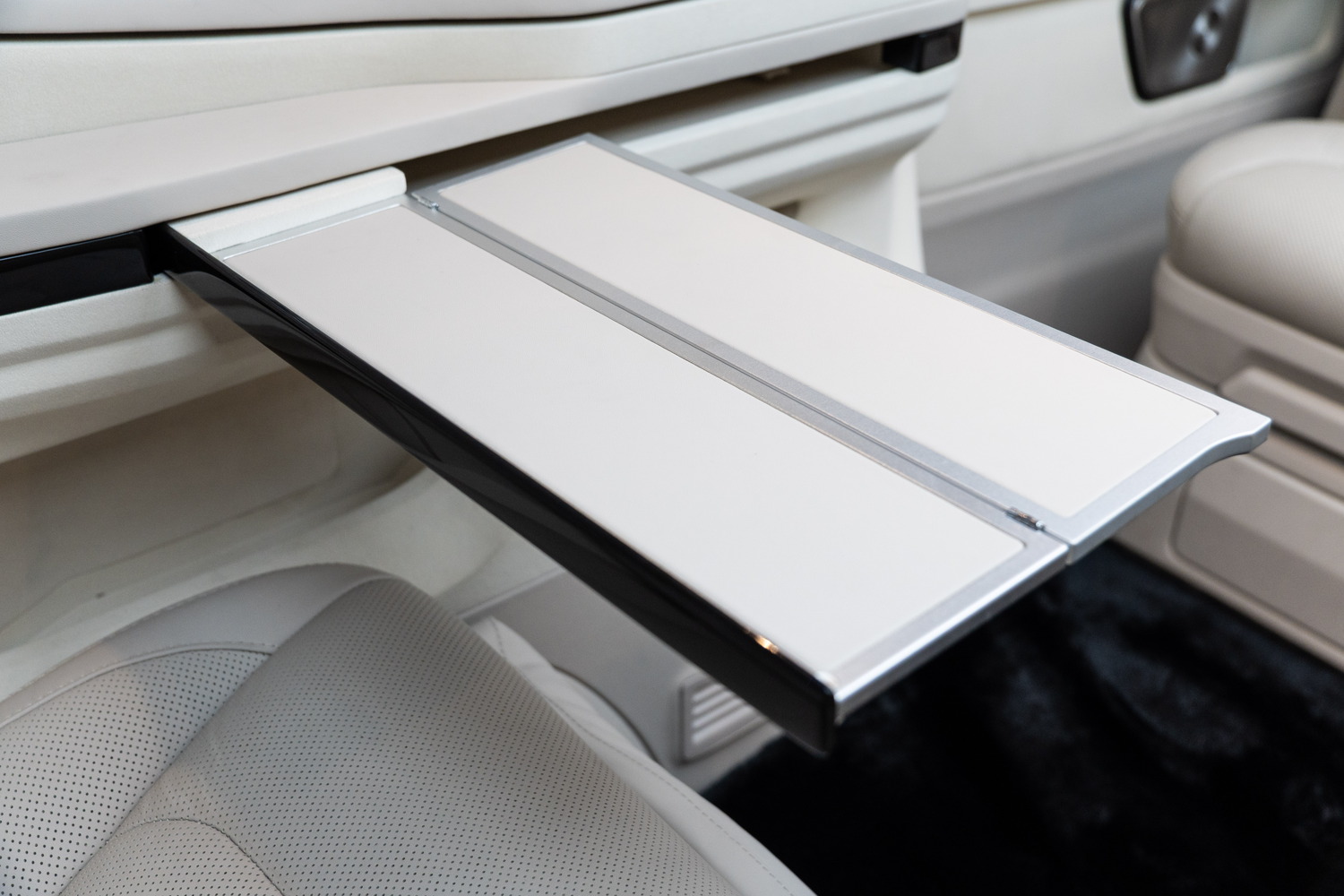
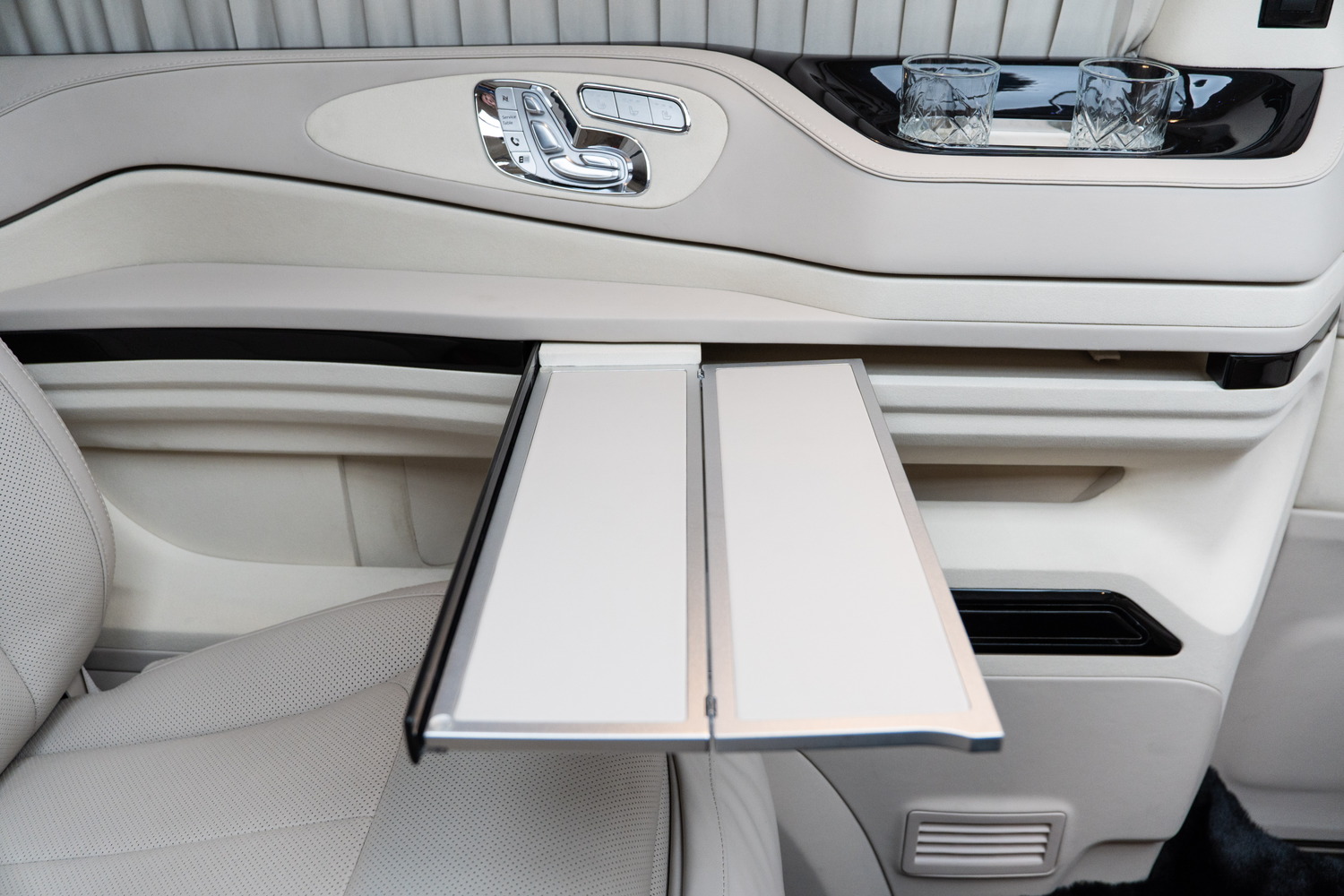
Two individual tables are integrated into the side walls, extending sideways and disappearing completely inside the panels when folded. Each primary passenger receives a personal work surface for a laptop, documents, tablet or drinks. Thanks to the separate design, the tables can be used independently without occupying the central aisle or restricting access to the console between the seats.
For connecting equipment, the cabin is fitted with a 220-volt power socket, a USB data port, a separate USB charging port and an HDMI input. The main switch for the additional equipment is located directly in the VIP zone, allowing the passenger to shut down the installed systems centrally. This equipment turns the VLE KLASSEN into a complete mobile workspace where a laptop can be connected, an image can be displayed on the large screen, devices can be charged and work can continue without temporary adapters or cables stretched through the cabin.
40-inch television, Apple TV and separate audio system
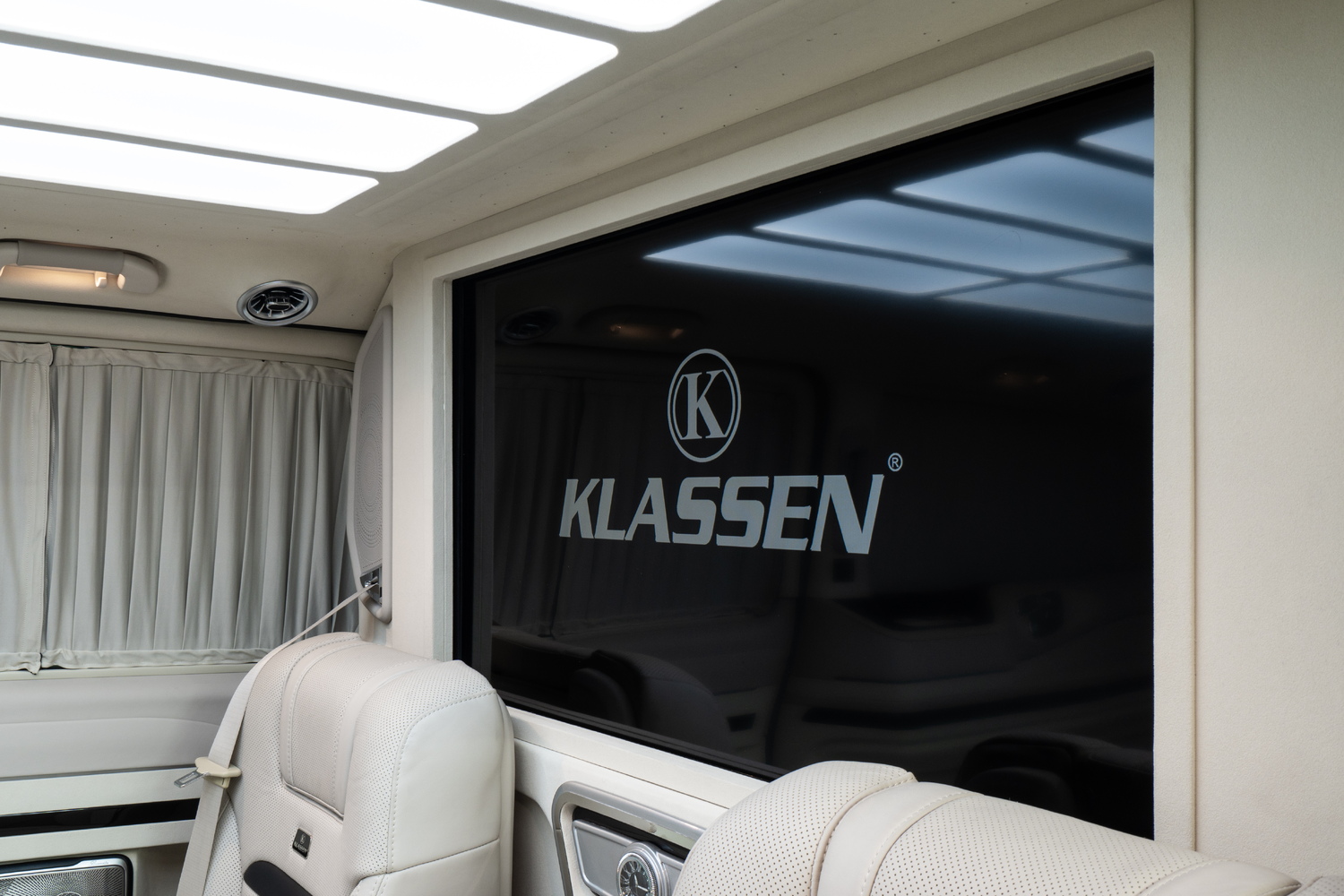
The main screen in the passenger compartment is a 40-inch LED television integrated into the partition and equipped with an electric lifting mechanism. When the screen is not in use, it lowers into the structure and frees the visual space; when activated, it is positioned opposite the primary Luxury seats. This format is suitable for films, presentations, news, video communication and displaying content from external devices via HDMI.
The multimedia system includes Apple TV, providing access to compatible streaming services and the owner's personal media library subject to regional platform availability and the account being used. A 12-to-220-volt power converter supports additional electronics and allows familiar household-powered devices to be used in the cabin.
A dedicated audio system with four two-way speakers and a separate subwoofer is installed for the VIP zone. Speaker placement is calculated so that sound reaches both the primary and additional passenger seats evenly, while the low-frequency channel retains depth when watching films and listening to music. The audio system becomes part of the KLASSEN interior and is tuned to its actual volume, finishing materials and additional sound insulation.
An intercom with hands-free functionality is provided for communication with the driver. It allows the partition to remain closed while necessary instructions are transmitted to the front of the vehicle without compromising the privacy of the passenger compartment. The design takes into account that the quality of internal communication while driving may depend on speed and external noise, so the position of microphones and speakers is coordinated with the acoustics of the completed cabin.
Adapted climate system for the enclosed VIP cabin
The climate-control air ducts are reworked to accommodate the new partition, ceiling structure and individual side panels. Adapted air vents are installed in the VIP zone, with their color and shape matched to the surrounding trim. This prevents the ventilation elements from appearing like leftover components from the standard cabin and visually integrates them into the overall architecture.
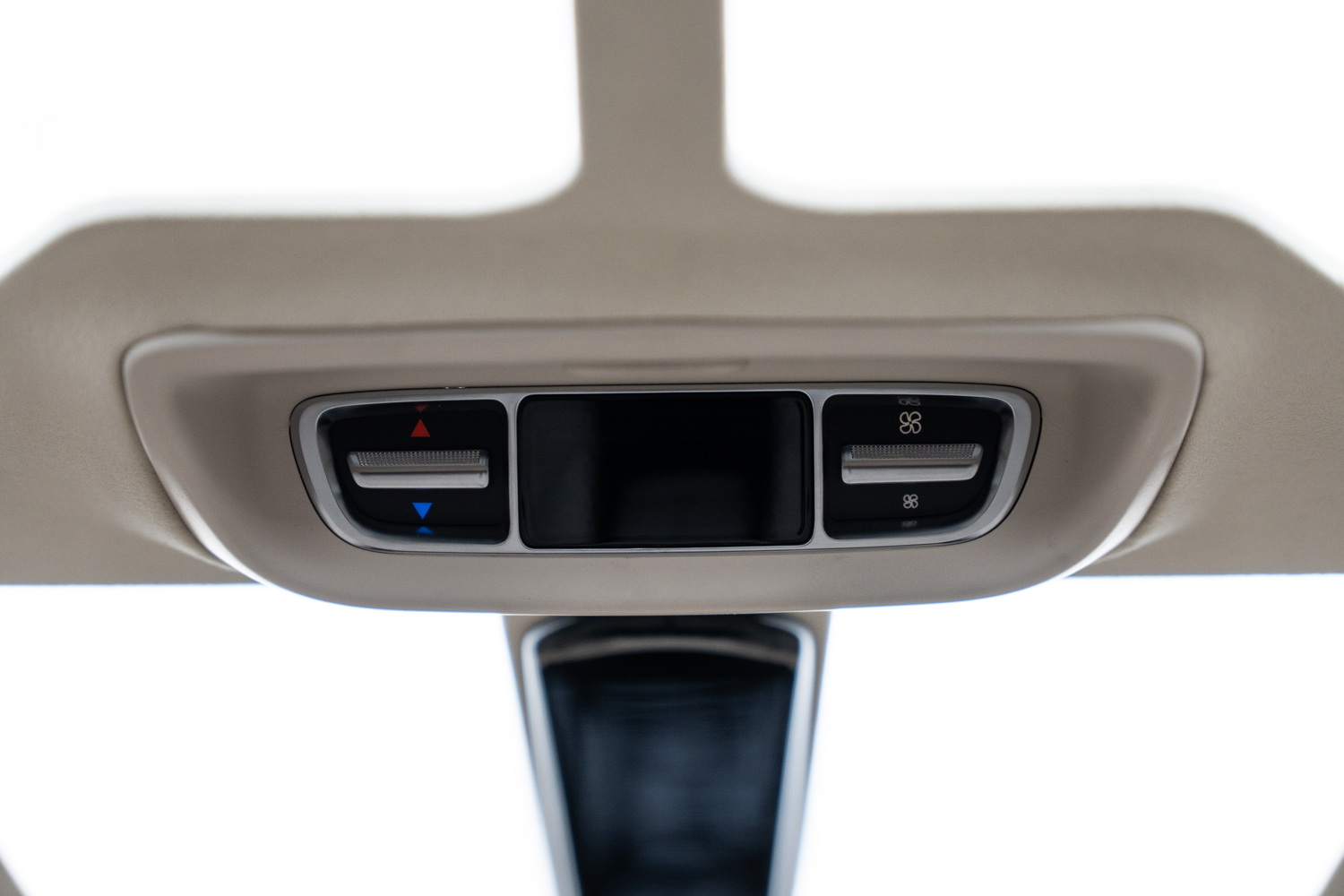
Changing the duct configuration can reduce its performance by approximately ten percent, so the position of the air ducts and outlets is determined during the engineering-development stage of the project. The climate-control panel is relocated to an area convenient for passengers, allowing temperature and airflow intensity to be adjusted from within the VIP zone without addressing the driver or opening the partition.
Driver area as a continuation of the overall interior concept
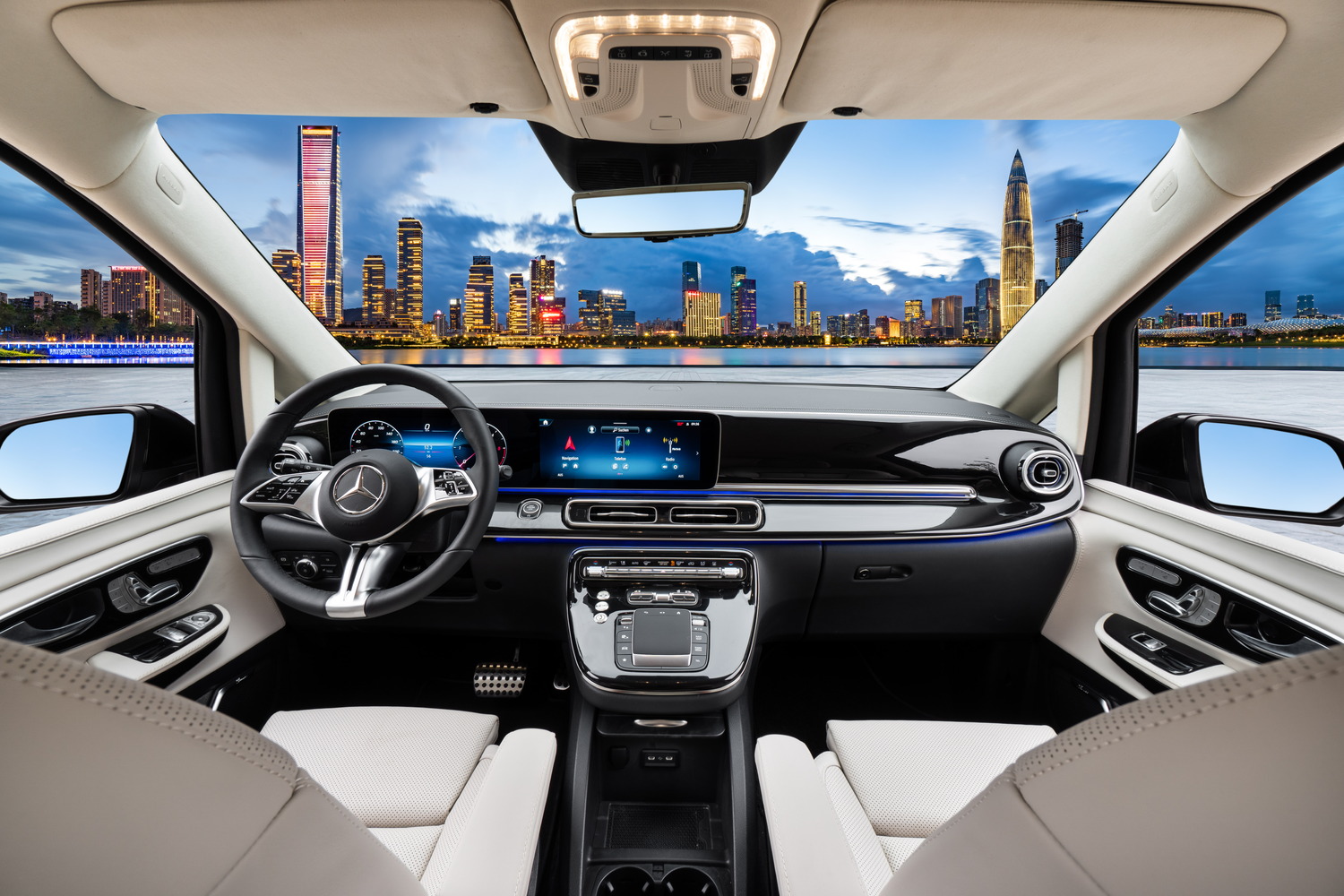
Despite the physical separation of the cabin, the front section of the vehicle should not feel like a space from a different project. The original Mercedes-Benz seats with Nappa 447 trim can be retained for the driver and front passenger, or they can receive new upholstery in the same style as the VIP zone. The second option makes it possible to continue the selected leather, color and decorative stitching into the front section, especially if the partition is occasionally left open.
The original steering wheel receives a leather finish, while the cockpit is enhanced with fine-wood inserts. Individual floor mats are manufactured for the driver and front passenger to match the materials used in the rear cabin. These changes do not overload the driver's workplace with decorative details, but they eliminate the abrupt transition between the standard Mercedes-Benz interior and the personalized KLASSEN passenger zone.
Individual electronics and the quality of hidden components
Visible technical elements in the VIP zone receive a Soft-Touch coating that reduces the characteristic shine of plastic, creates a pleasant matte texture and helps visually combine parts made from different materials. This finish is especially important in areas passengers touch regularly, because the perception of quality is formed not only by natural leather and wood but also by the tactile properties of small switches, frames and panels.
Behind the decorative surfaces is a large system of mounts, wiring, guides, insulation materials and other consumable components required for reliable operation of the equipment. These details are not visible in the finished vehicle, but the quality of their engineering and installation determines the durability of the electric mechanisms, the absence of unwanted noises and the ability to service the interior later. When adapting the MVE_1_1721 to the VLE, all hidden systems will be developed specifically for the new platform rather than transferred according to an old scheme.
Control of KLASSEN functions is combined within the KRS system, although the final set of electronic scenarios can be adapted to the owner's requirements. The project can include individual lighting modes, separate image sources, additional videoconferencing solutions, personalized actuator logic and other functions corresponding to the intended use of the vehicle.
Mercedes-Benz VLE KLASSEN MVE_1_1721 as a next-generation mobile lounge
The new VLE provides a technological basis that is inherently suited to the format of a modern executive vehicle: quiet electric drive, more than 700 kilometers of range, fast 800-volt charging, air suspension, high maneuverability, advanced digital architecture and a spacious body with convenient sliding doors. KLASSEN complements these qualities with an interior in which every element is designed around real use scenarios rather than visual impact alone.
The cabin based on MVE_1_1721 combines the comfort of two primary Luxury seats with the versatility of two electric vis-à-vis seats. This layout is equally suitable for trips with the owner and accompanying passengers, business discussions on the move and executive transfers. The Nespresso coffee machine, refrigerator, retractable minibar, two work tables, wireless chargers and iPad holder provide everyday and working convenience, while the partition, curtains and carefully designed acoustics create the required level of privacy.
A large television, Apple TV, a dedicated audio system, numerous connections and an intercom transform the vehicle into a mobile office and multimedia space. Natural leather, fine wood, chrome, soft carpeting, a starlight headliner, KLASSEN lighting and RGB ambient lighting create a complete visual environment that retains its sense of quality both during the day and on an evening journey.
The specific execution of every Mercedes-Benz VLE KLASSEN will be determined individually. Leather colors, wood species and shade, decorative stitching, lighting configuration, digital functions and individual equipment elements can be adapted to customer requirements, while the foundation of the project will remain the carefully developed MVE_1_1721 architecture with all of its key capabilities and a complete four-seat VIP zone.
If the new Mercedes-Benz VLE interests you as the basis for a future VIP vehicle, the specialists at KLASSEN are already ready to discuss an individual project with an interior in the style of MVE_1_1721. Contact our manager to define the materials, color concept, electronic equipment and other features of the future vehicle, as well as to receive information about possible production times and the preliminary-order process.
Mobile phone: +49 172 857 45 05
Email: sales@klassen.de